Chain vs. Belt Garage Door Openers: Compare the Whole System
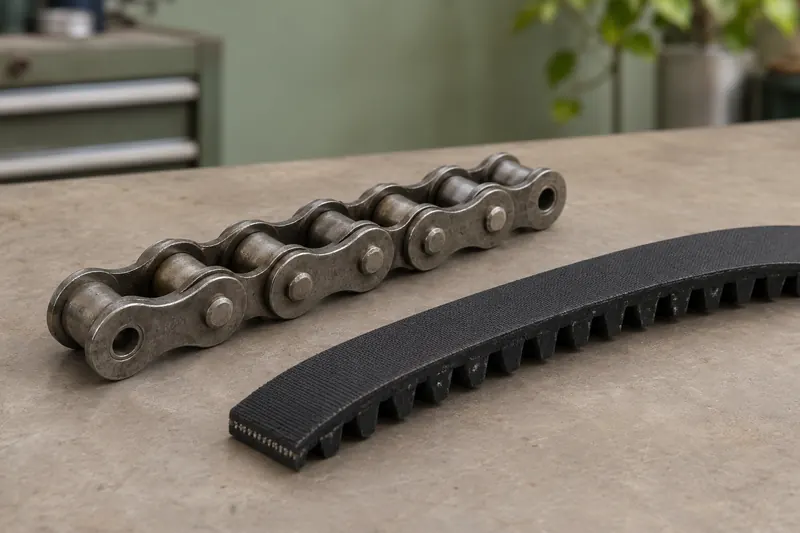
A belt drive is often worth considering when noise near living space matters; a chain drive may also suit the job. Compare the exact models, motor characteristics, door limits and installed package. Neither drive type fixes a binding or unbalanced door.
The drive is the mechanism that moves a ceiling opener’s trolley along its rail. A chain system uses metal links; a belt system uses a reinforced belt. That difference matters, but it is only one part of choosing an opener.
1. Confirm that the door is suitable first
Record the door type, height and available clearances, then compare them with each model’s instructions. Ask the installer to check door condition and balance before selecting equipment. Do not choose a more powerful opener as a cure for a damaged spring or difficult movement. Use the guide to choosing the right opener capacity for the measurements and model limits that drive type alone cannot answer.
2. Compare noise in the context of the house
A reinforced belt generally reduces drive noise and vibration compared with a metal chain, making it useful to consider near bedrooms or other living space. But the motor, start-and-stop behavior, mounting and door hardware also contribute. Modern DC chain-drive products can differ substantially from an old AC chain opener. Listen to exact comparable models if possible; a marketing demonstration is not a promise of the same sound level in your garage.
3. Compare the complete model specification
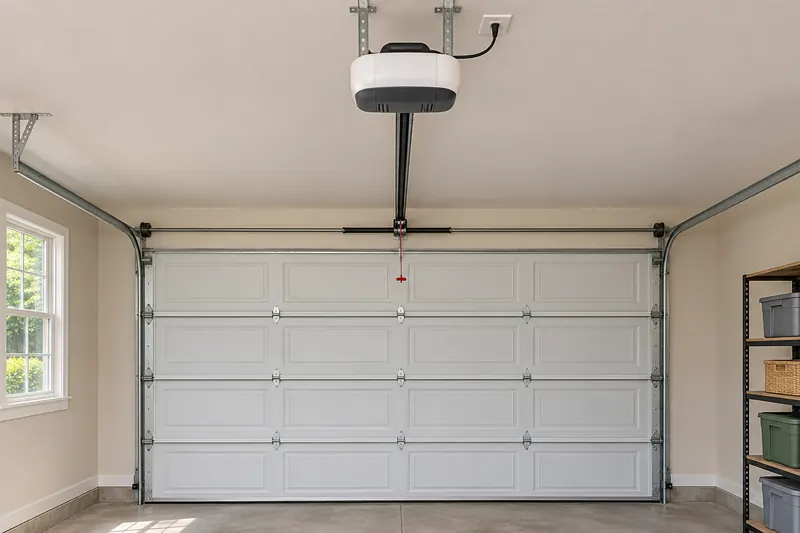
List the rail length, supported door types, included controls, lighting, battery backup and any desired connectivity for each candidate. Check whether a taller door needs a separate approved extension. Do not assume a feature is included because it appears on another model with the same drive type. Confirm which accessories and safety devices belong to the supplied system rather than planning to reuse mismatched parts.

4. Ask about care and replacement parts
Read the maintenance section for the exact opener and ask the installer to show which checks are homeowner tasks. Do not oil a belt, tighten a chain or open a housing based on a generic comparison article. Lubrication and tension procedures are product-specific. Ask how a damaged drive or rail would be serviced and what the written parts and labor terms actually cover; do not interpret a motor warranty as whole-system coverage.
5. Compare the installed proposal
Ask for the same door application, required accessories, removal of old equipment and completion checks in both proposals. Record any differences rather than comparing only boxed-unit prices. The guide to comparing complete opener installation quotes helps separate hardware from installation scope. Choose the combination that meets the door requirements and household priorities, not the drive name alone.
When switching drive type is not a small parts swap
Treat a move from chain to belt as a model and system compatibility question. Do not assume the existing motor, rail, trolley, brackets, controls or sensors can be mixed with a different drive. Use a manufacturer-approved configuration and have a qualified installer resolve uncertain fit. If the current door has a safety fault, deal with that before evaluating a quieter replacement.
Common questions
Is a belt opener always silent?
No. A belt can reduce drive noise, but the motor, mounting and moving door still produce sound. Actual results depend on the installation.
Is a chain opener automatically stronger?
No. Capacity and approved door applications belong to the exact model specification, not to the drive label alone.
Can I change only the chain to a belt?
Do not assume that conversion is supported. The drive, rail, trolley and motor must form an approved compatible configuration.