How to Choose a Garage Door Color That Fits Your House
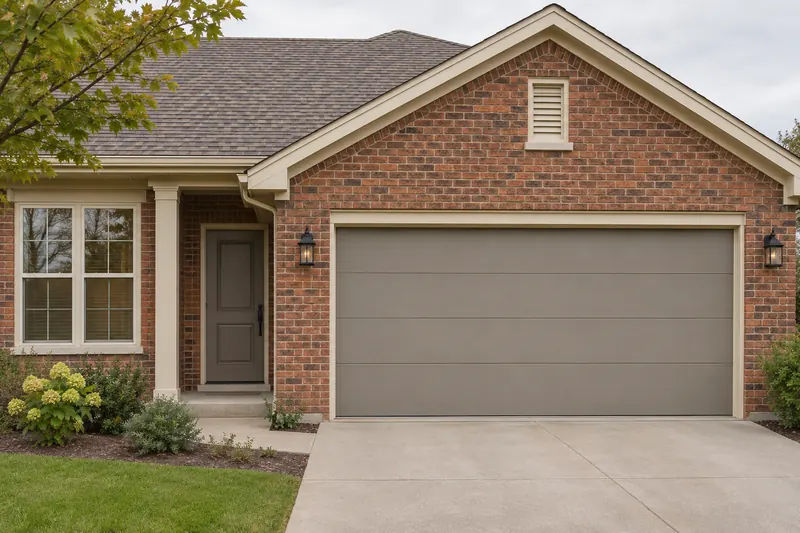
Start with the exterior materials you are keeping, decide whether the garage door should blend in or provide contrast, and compare a short list of physical samples outside. Confirm the exact door’s approved finish options before committing. A pleasing color on a screen is not proof that the paint or factory finish suits your door.
Choosing a color and choosing a coating are related but different decisions. This guide helps you narrow the appearance before ordering a new door or planning a repaint. You do not need to start with a trend or a rule that every garage must match the front door. The right shortlist depends on the whole facade, the door’s construction and any approval requirements for your property.
1. List the colors that will stay
Look at brick or stone, roof, siding, window frames, trim and the entry door. Separate fixed materials from items you already plan to repaint. Start with the largest permanent surfaces rather than a small decorative accent. Notice whether the neutrals look warm, cool or mixed in daylight. If the brick contains several tones, test a sample against the whole wall, not just one unusually pale brick. A phone photo is useful for comparing overall balance, but keep the physical materials as the color reference.
2. Decide how much attention the garage should receive
For a quieter result, try a door color close in lightness to the surrounding wall or trim. For a stronger focal point, test a deliberate contrast that still relates to another part of the house. These are design choices, not guarantees that a particular color improves resale value. Stand at the usual approach to the house and consider the entire door width. A dark swatch that looks subtle in your hand can become a large visual block across a double garage.
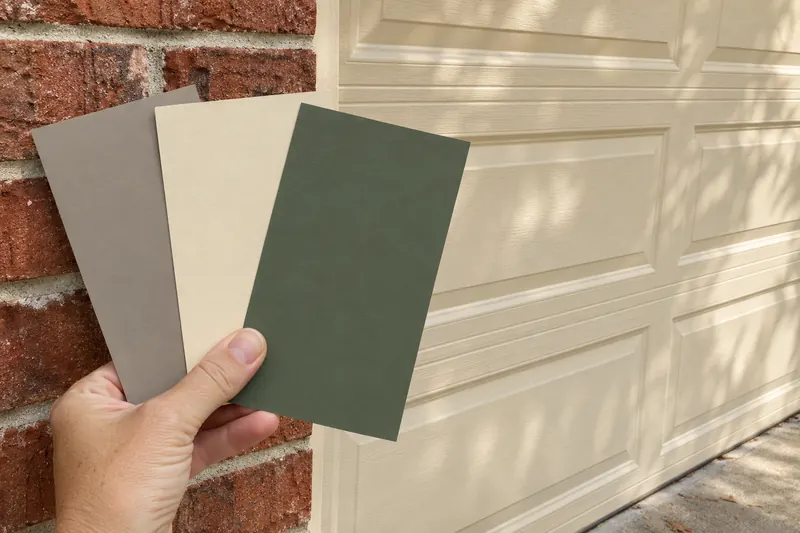
3. Reduce the shortlist to two or three finishes
Compare actual available finishes rather than collecting many similar online images. One candidate can blend with the facade, one can create contrast and one can draw on a fixed material such as stone or brick. Include the finish texture and sheen in the comparison: a wood-look pattern, smooth paint and textured factory surface do not read the same way. Ask for a representative sample of the exact product, especially where a patterned finish varies across a panel.
4. View the samples outside at different times
Hold or place samples safely beside the closed door and adjacent materials without attaching anything to moving joints, tracks, seals or sensors. View them in morning light, later light and shade when practical. Compare one at a time as well as side by side. Note any unwanted pink, green or blue cast next to the trim. Do not judge a final match from a backlit phone or a small product thumbnail. If repainting, use only a test method allowed for the existing surface; do not start applying unapproved paint just to test a color.

5. Check the door’s finish restrictions before buying
Identify the manufacturer, model, material and existing finish. Ask whether the proposed color and coating are approved for that construction, including any heat or light-reflectance limits. Dark finishes can absorb more solar heat, but there is no single color rule for all garage doors. Clopay’s published guidance illustrates that restrictions can be model-specific and may involve a particular paint system. A factory dark finish does not automatically approve any dark field-applied paint. For the coating and preparation decision, follow painting a garage door with the right material and finish.
6. Record the approved choice precisely
Confirm any applicable owner, landlord or association approval before ordering. Save the manufacturer’s finish name, color code where supplied, sheen, sample reference and written approval. If replacing the door, make sure the quote identifies the selected finish and any additional charge, rather than saying only “gray.” The guide to comparing complete garage-door installation quotes helps keep appearance options separate from the rest of the project. Retain the final sample or order record for later touch-up questions.
A simple way to make the final decision
Give each candidate four checks: works with the permanent facade; looks acceptable in different light; is approved for this door; fits the actual order or repaint plan. Reject a color that fails a technical requirement even if it looks best online. If the remaining choices are all suitable, choose the balance you prefer rather than searching for a universal “correct” shade. There is no need to add decorative hardware or change the rest of the facade to justify a sensible finish.
Common questions
Must the garage door match the front door?
No. Matching is one option. A related neutral or a deliberate contrast can also work; compare the whole facade with physical samples.
Can any garage door be painted black?
Do not assume so. Confirm the door model’s material, coating and heat-related restrictions with its manufacturer before choosing a dark repaint.
Is a screen preview enough to approve the color?
Use it to compare broad ideas, not as the final color reference. Check the exact physical finish sample in the light at your house.