How to Choose a Garage Door Installer

Choose an installer you can identify, whose experience matches your door system, and who explains the work and support in writing. Check the company and the person doing the installation separately. A familiar logo, a low price or a badge on a website is a starting point for questions, not the whole decision.
This guide helps you choose the provider for a residential garage door project. For comparing products and prices, use our garage door installation quote guide.
1. Establish who will be responsible
Before discussing a deposit, ask for the business name that will appear on your agreement, its contact details and the name of the company that will send the crew. Keep those answers together. A useful question is: “If the door needs attention after installation, which business do I contact?”
Ask whether the installers are employees or subcontractors, who supervises the job and who handles a return visit. Subcontracting alone does not answer whether a company is suitable; unclear responsibility leaves you without a reliable contact.
Build a short list from people you trust and from relevant manufacturer or industry directories. Read recent reviews for patterns, then ask a reference about a similar installation: Was the agreed door supplied? Who resolved unfinished work? Did the company respond afterward?

2. Check qualifications for your location and project
Verify any required contractor license or registration with the authority responsible where the property is located. Match the listed business to the one in your agreement. Licensing categories and requirements vary; a badge from a trade organization is a separate credential.
Ask for evidence of liability insurance and applicable worker coverage, and clarify who covers the crew actually attending. Ask the installer to identify any permit or inspection requirements for your project and who will arrange them. If an answer is unclear, check with the local building department before committing.
Industry credentials can add useful information. IDEA dealer accreditation concerns a company location, while technician certification concerns an individual and a particular discipline. Check a claimed credential in the issuing organization's directory, including the company location or technician name. These voluntary credentials do not guarantee workmanship or replace applicable licensing.
3. Look for experience with the complete system
Describe the proposed door, the existing opener and any unusual space constraints. Ask who will confirm that the selected sections, track, hardware and opener work together. Someone who has installed a similar door should be able to explain what they need to inspect before committing to a specification.
Use concrete questions:
- Have you installed this door model with this track arrangement?
- What information is still needed from a site visit?
- Which existing components are proposed for reuse, and how will compatibility be established?
- Who will resolve a mismatch discovered before installation?
An offer to keep every old component deserves an explanation. Track and door sections form a system; appearance alone does not establish a compatible fit. Our guide to new doors on old tracks explains that decision in more detail.
Keep the inspection professional. Do not loosen hinges, bottom brackets, cables or springs to help prepare a quote. Garage door installation and work on loaded components belong with trained door technicians.
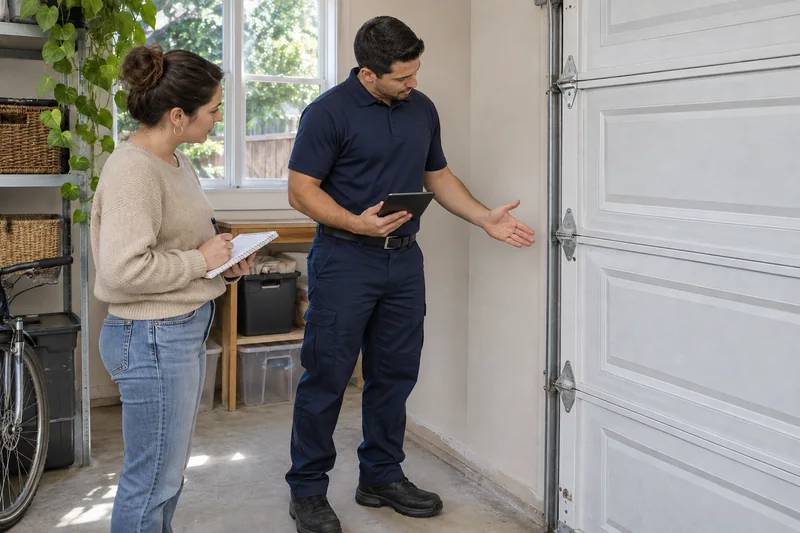
4. Agree on communication before the crew arrives
Compare written proposals from more than one provider. Ask about differences in scope rather than treating the lowest total as the deciding factor. Keep the agreed model, work, estimated schedule and price in the agreement; promises made on a call should not disappear from it.
For choosing the installer, the useful test is how clearly the company answers ordinary questions. Who sends schedule updates? Who approves a substitute product? How will you see and approve a change before extra work starts? Record a contact and a method for each, rather than assuming the crew and sales office share the same understanding.
Pressure to decide immediately or pay the entire job upfront is a reason to pause. Check local rules for deposits and contracts; there is no single percentage or cancellation rule that fits every project and location.
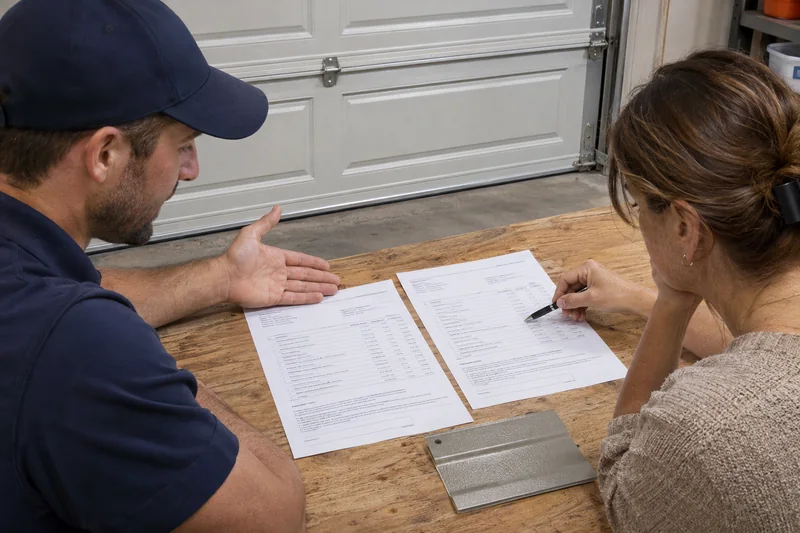
5. Separate product coverage from installation support
Ask for two answers: what the door manufacturer covers and what the installer covers. Request the documents, the contact for a claim, any labor or visit charges, and the terms that apply to the exact product and project.
For example, Clopay's published installation warranty applies to qualifying replacement doors installed by specified authorized dealer tiers, with exclusions. It is not a promise that every Clopay installation has identical coverage. Amarr also directs owners to the installing dealer for assessment of a possible product warranty issue. Check the actual paperwork rather than relying on the word “warranty” in an advertisement.
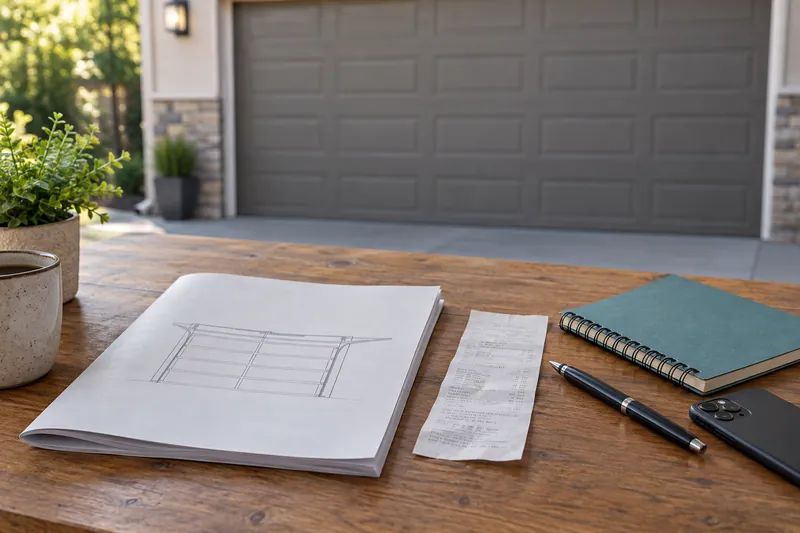
6. Plan a useful handover
Before booking, ask what you will receive when the work is complete. A practical handover list includes the installed model information, manuals, warranty documents, the service contact and an explanation of routine owner checks.
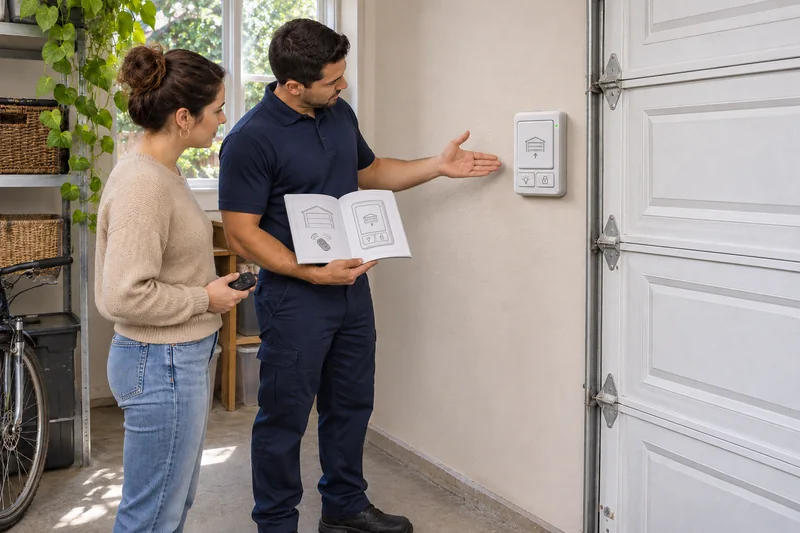
Ask the installer to demonstrate operation and the safety checks specified in the door and opener manuals, with everyone clear of the moving door. Have any unfinished items recorded with an agreed next step. Keep the completion record with the agreement so a later service visit does not start from memory.
Common questions
Does a manufacturer dealer listing prove an installer is right for my job?
It helps confirm a relationship with that brand. Still ask about your exact system, the crew, coverage and aftercare. A directory result does not describe every proposed installation.
Is an accredited company the same as a certified installer?
No. In IDEA's programs, accreditation applies to a company location; certification applies to an individual in a defined discipline. Verify the claim that is actually being made.
What if the installer cannot answer a technical question immediately?
Ask who will check it and when you will receive the answer. A clear follow-up using the manufacturer’s instructions is useful. Leave the affected specification open until it is resolved in writing.