Rust on a Driveway Gate: What to Check Before You Repaint
Two rusty spots on a gate can call for very different decisions. Discoloration on an intact panel may be a coating problem. Rust grouped around a hinge attachment, base plate or weld needs a closer professional look because those parts hold or guide the gate. Do not let paint be the first decision when the part’s condition is uncertain.
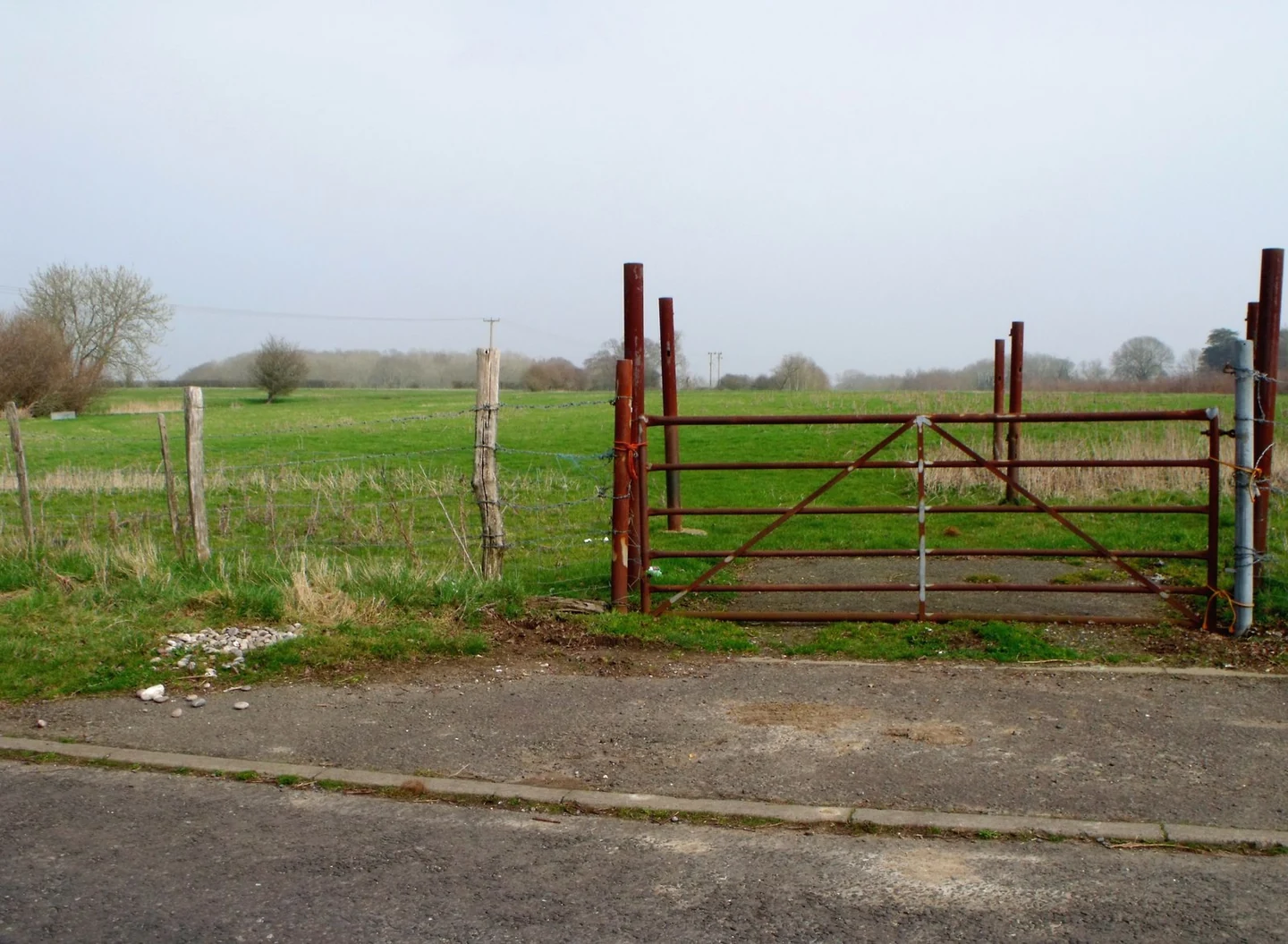
1. Photograph where it starts, not just how dark it is
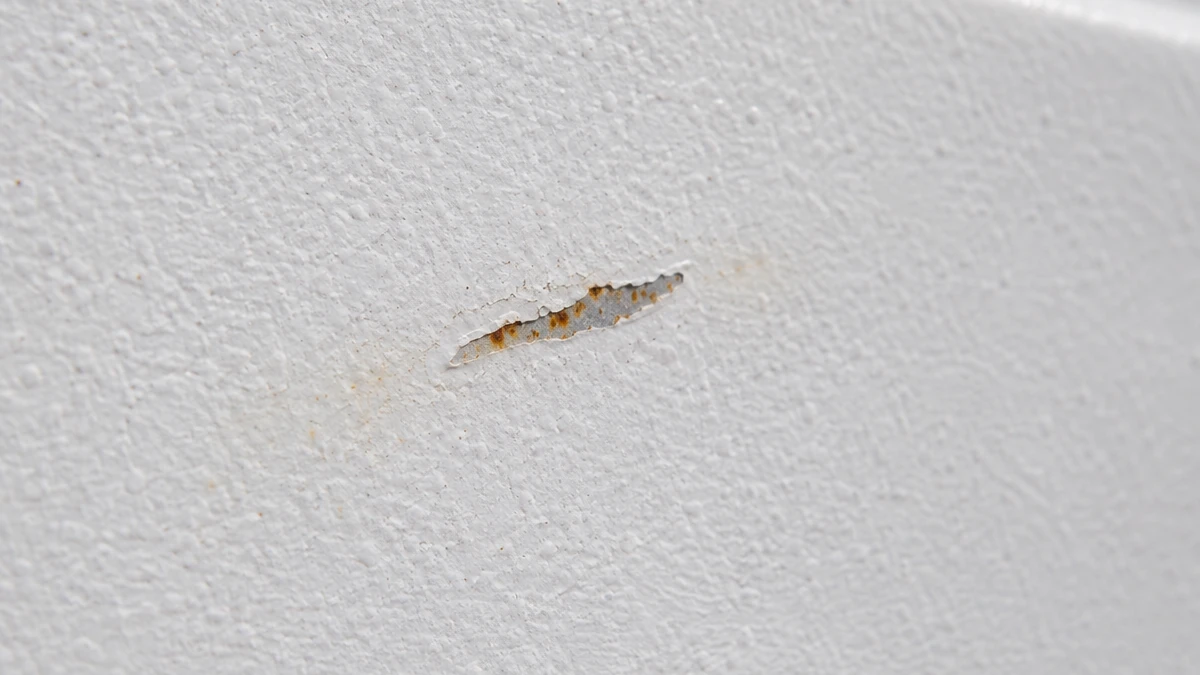
From a safe position with the gate stationary, take one wide photograph that shows the whole leaf and both ends of the opening. Then use the camera’s zoom to record the affected areas without reaching into a pinch point. Note if the mark is on a decorative panel, along a frame seam, next to a hinge or roller support, at a post base or around the operator attachment. If it repeatedly shows up after irrigation or rain, record where water lingers nearby. Color alone does not tell you how deep the deterioration goes.
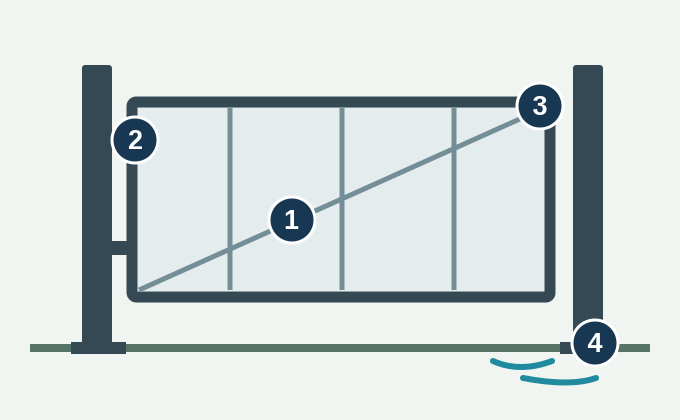
2. Identify the signs that change the job
Flaking layers, pits, holes in tubing, opened seams, distortion and cracks are more useful to report than “it looks rusty.” Stop using the gate and keep people clear if you see a leaning post, a loose support, a broken connection, or a gate that visibly sags or has shifted. Do not run it again to reproduce a noise or see whether the motor can still move it. Use an independent entrance if one is available and arrange qualified service.
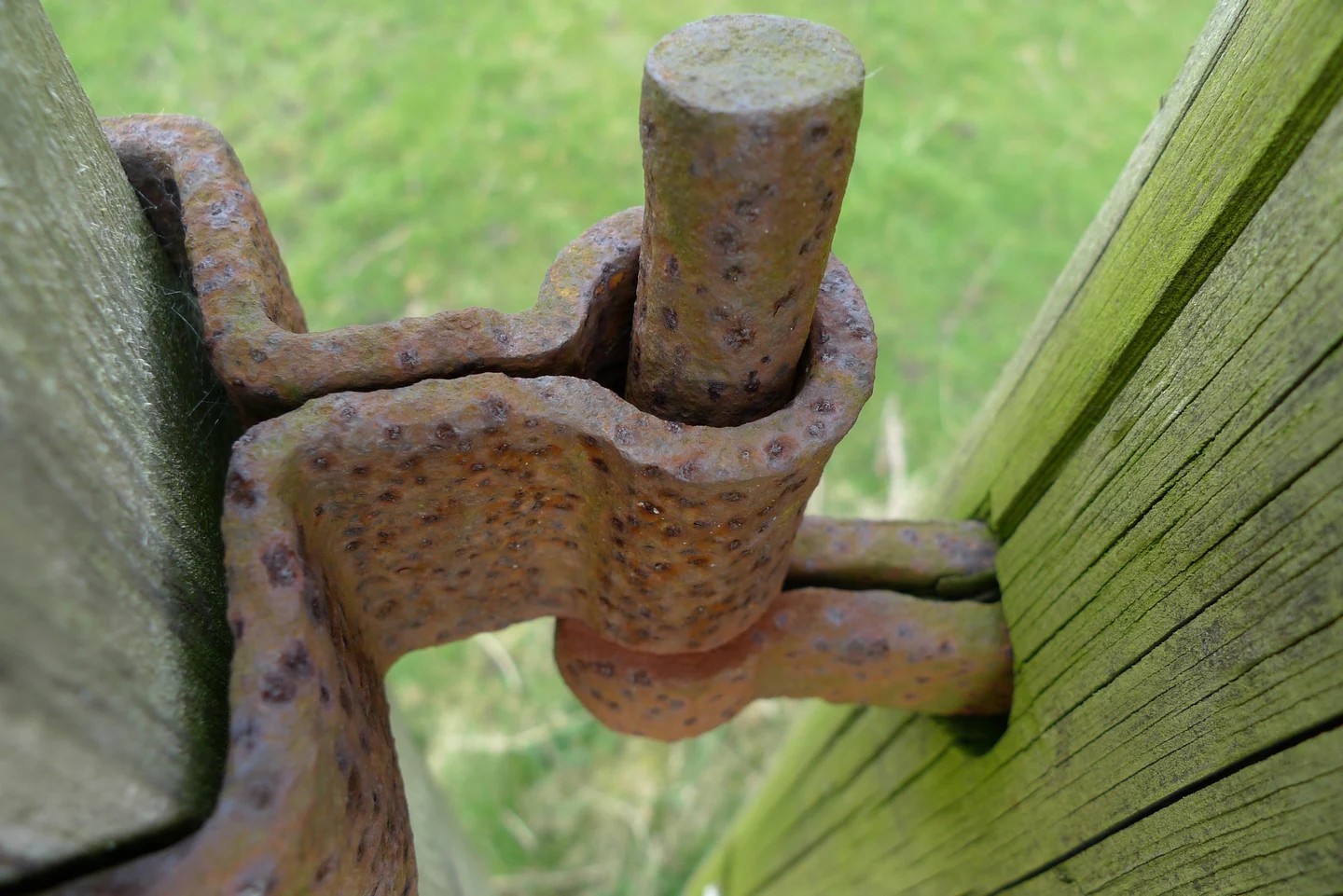
3. Separate a finish quote from a repair assessment
Ask the professional to identify the base metal and coating, assess the condition of the connections and supports, and explain which areas can be refinished and which need repair or replacement first. Discuss repeated wetting where it exists. On a powered gate, ask what safety verification the repair scope includes before normal operation returns. A coating quote is not a verdict on the strength of a hinge, post or frame.
4. Record the decision before work starts
Save dated wide and detail photos, the assessment and the written work scope. If the proposal is finish-only, ask what evidence supports that decision and which finish system is compatible with the existing material. If the gate’s condition is still uncertain, don’t sand, drill, loosen or paint over a suspect connection to find out. A photo is useful documentation, not a strength test. If a professional repairs a load-bearing or guiding part, use the automatic gate handover checklist to confirm what should be demonstrated before the gate returns to use.
FAQs
Does brown staining mean the gate must be replaced? No. The location and actual metal condition matter; that cannot be established by color alone.
Can I paint over rust at a hinge? Don’t cover a suspect hinge or support before it has been assessed, and don’t coat moving bearing surfaces as an improvised fix.
Why might rust return at the bottom? Repeated wetting or coating damage is worth noting. Document where moisture stays rather than drilling drains or modifying the gate yourself.
Sources4
- HSE: Powered Gate Safety
- American Galvanizers Association: Coating Field Inspection
- nick macneill · nick macneill · CC BY-SA 2.0 · Resized and converted to WebP.
- benjgibbs · benjgibbs · CC BY 2.0 · Resized and converted to WebP.
Related Posts
 Practical Guide
Taking Over a New Automatic Gate: An Owner’s Handover Checklist
A new gate should come with an understandable operating plan, not just a demonstration that the motor runs. Arrange the handover while the installer is present. The DoorKing 6300 manual includes a joint installer/property-owner checklist; DASMA also publishes an owner checklist. Use the documents fo
 Practical Guide
Removing Surface Rust From a Garage Door
Check whether garage-door rust is a small finish defect or serious corrosion. Learn what to inspect, when to stop, and how to confirm an approved repair.