Childproofing the Garage-Door Area: Controls, Clear Space and Safety Checks
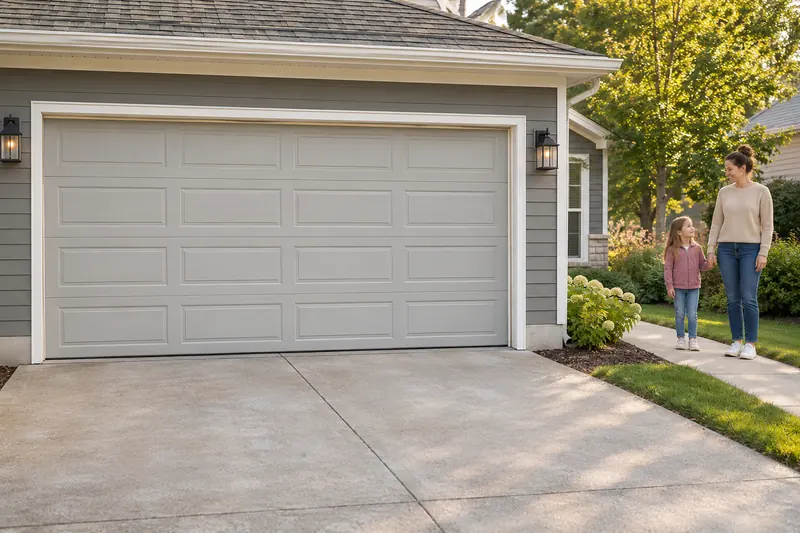
Keep children out of the door's travel area, put controls beyond their access and watch every closing cycle. Check the manufacturer's safety-test instructions regularly. A failed reversing system or damaged door needs service before normal use resumes; a phone alert is not a substitute.
A garage door cannot be made child-safe by one lock, sensor or smart notification. Combine adult supervision, control storage and a clear operating area with a properly maintained door system.
1. Set a household rule for door movement
An adult operates the door while children wait in a place away from the opening, tracks and moving sections. Nobody races a closing door or rides it. Before pressing a control, account for children and pets on both sides. Keep the moving door in view until it stops; do not walk away while it closes. Explain the same routine to visitors and caregivers instead of relying on children to recognize every hazard.
2. Keep activation controls inaccessible
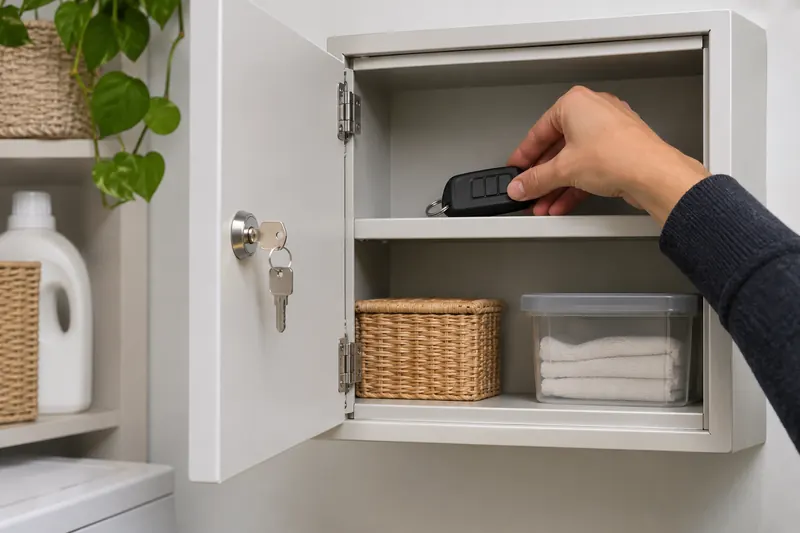
DASMA recommends mounting the wall button at least five feet above the adjacent walking surface and out of children's reach. A nearby step, stored box or chair can change what is reachable, so inspect the area as well as the height. Keep handheld controls secured. If relocation is needed, have the installer follow the exact control instructions. Do not assume a vacation or LOCK setting disables every possible input: its scope is model-dependent.
3. Clear storage from the operating area
Move toys, scooters and loose items to storage away from the door and its tracks. Check where children tend to leave shoes or balls, including the outside approach. Leave access to the pedestrian exit clear. Do not add a chain, gate, cord or homemade barrier across the overhead door's travel area. Do not tie up the emergency-release cord or alter the release mechanism to keep it away from children; ask the installer about the correct arrangement.

4. Arrange an adult-only safety check
Follow the manufacturer's monthly reversing-test instructions with children and pets kept away. Never use a person, hand or animal as the test obstruction. The photoeye check and the contact-reversal check are separate; passing one does not prove the other works. Our guide to testing garage door sensors helps distinguish the checks. If the door does not behave as its manual requires, stop normal operation and arrange qualified service rather than holding a button to force it closed.
5. Treat mechanical damage as a separate hazard
From a safe position, look for a crooked door, a loose panel, a displaced track or visibly damaged cables. Do not touch a frayed cable or loosen a bottom bracket. Fingers must stay out of section joints and moving hardware. Keep children away from a damaged system and request inspection. If spring work is proposed, the guide to planning garage door spring replacement explains the professional-service boundary without turning it into a household repair.
Give every caregiver the same short checklist
Agree on where children wait, who holds the remote and what to do if the door stops unexpectedly. Write down the model and the service contact with the manual, away from public view. After maintenance or a control change, review the routine again. A safe routine should not depend on a child remembering a complicated instruction during door movement.
Common questions
Do photoeyes make supervision unnecessary?
No. Children must stay clear of moving doors even when the safety system passes its checks.
Can I test reversal with my hand?
No. Keep people and pets out of the test area and use only the method and object specified by the manufacturer.
Should I tie up the emergency-release cord?
Do not modify the release mechanism as a childproofing shortcut. Ask the installer to verify its correct installation and keep children away from the system.
What if the opener lacks a working reversing system?
Stop normal operation and arrange professional assessment. Repair or replacement must restore the required safety functions before use resumes.