Garage Door Flood Preparation: Barriers, Limits and Safe Exits
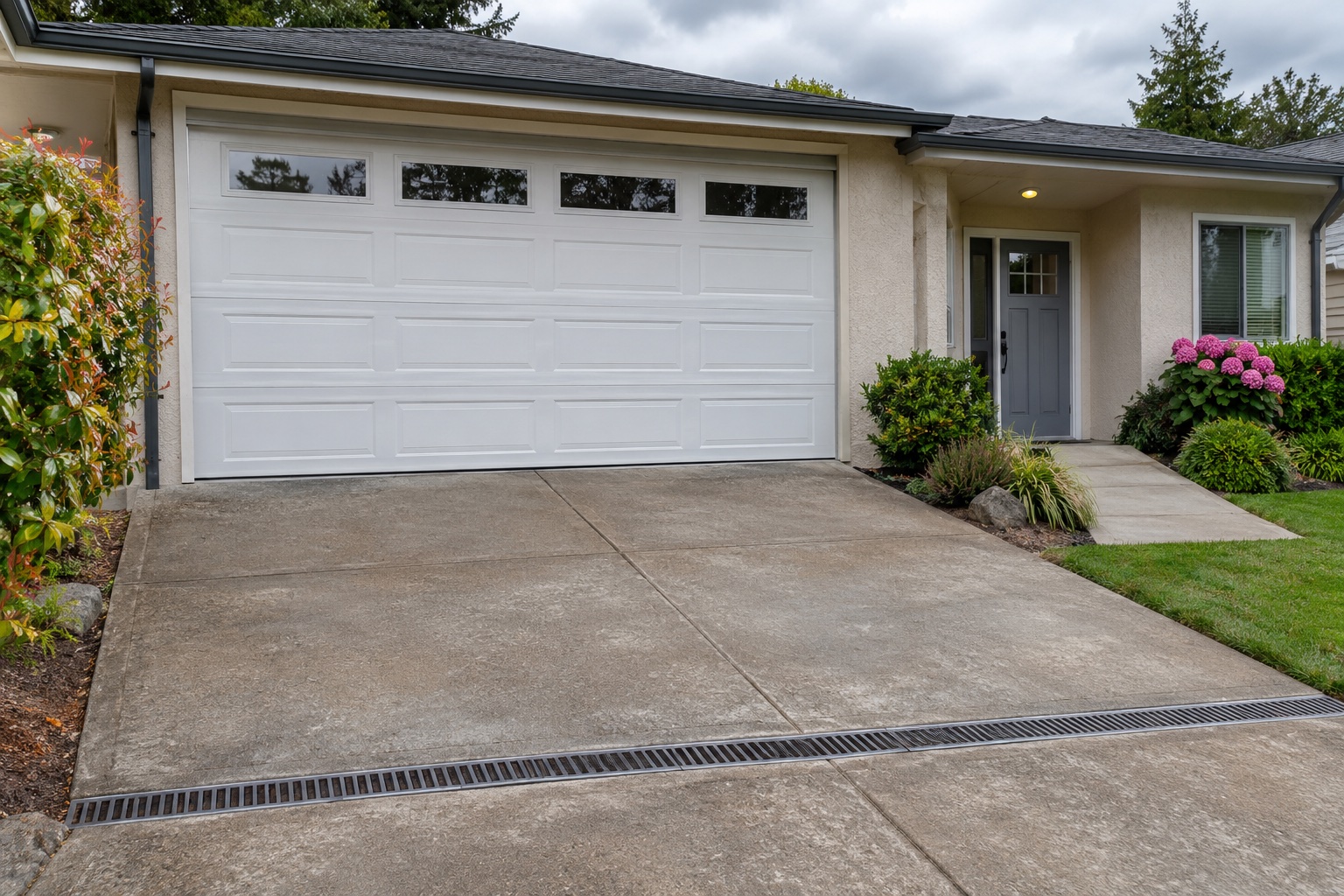
A bottom seal is not a flood-protection plan. Water can approach the garage from the driveway, ground, walls or drains, and blocking one opening does not establish that the building can safely resist flooding. Plan early with the property conditions in mind, not while water is already rising.
1. Describe the problem before choosing a product
Record where water has appeared, what weather caused it and whether it was a small rain leak or broader flooding. Photograph conditions only when safe. A puddle after wind-driven rain and rising neighborhood floodwater need different responses. Do not test a theory by deliberately flooding the garage or blocking drainage.
2. Separate routine maintenance from engineered protection
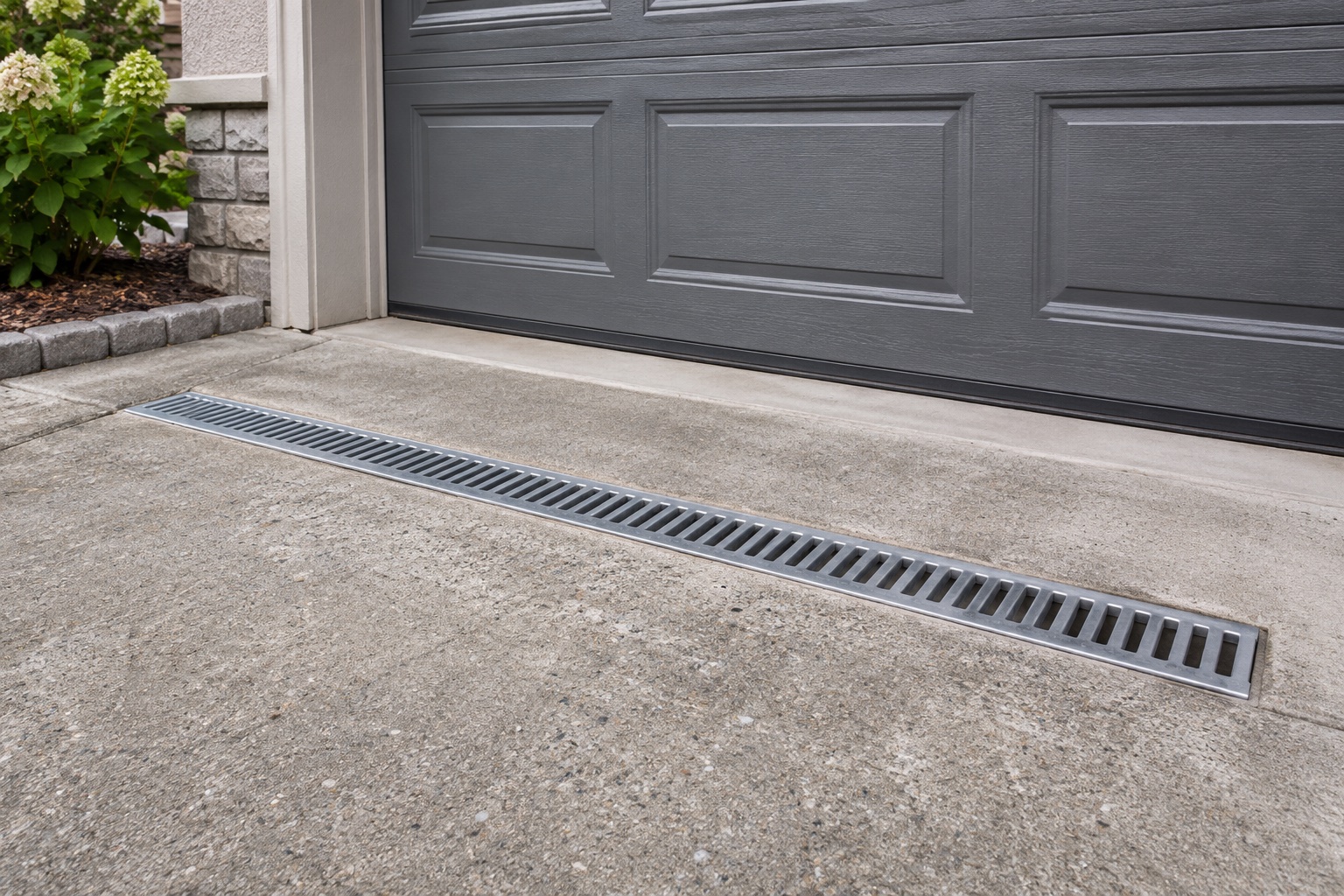
Before severe weather, arrange safe clearing of accessible drainage paths and address known defects. Ask a qualified contractor about persistent runoff or grading problems. Do not redirect water onto neighboring property or alter shared drainage without the required review. Routine seals and drainage maintenance may address small entry points; they do not demonstrate a flood-rated assembly.
3. Ask what a barrier actually protects
Before purchasing, ask the supplier to identify the product's tested conditions, required mounting surface, installation method, inspection needs and limitations. Have suitability for the building assessed. Do not invent a safe water depth from the barrier's height. Ask how leakage is managed and what happens if water exceeds the design conditions. Do not seal required flood openings or assume a temporary barrier satisfies building requirements.
4. Preserve a usable escape plan
Decide in advance who installs any approved temporary protection and when the household will leave instead. A barrier must not trap someone or block the only planned exit. Keep essential documents and valuables in a safe higher location before the threat arrives. Household safety and evacuation take priority over protecting a vehicle or finishing a barrier.
5. Keep away from water and electrical equipment
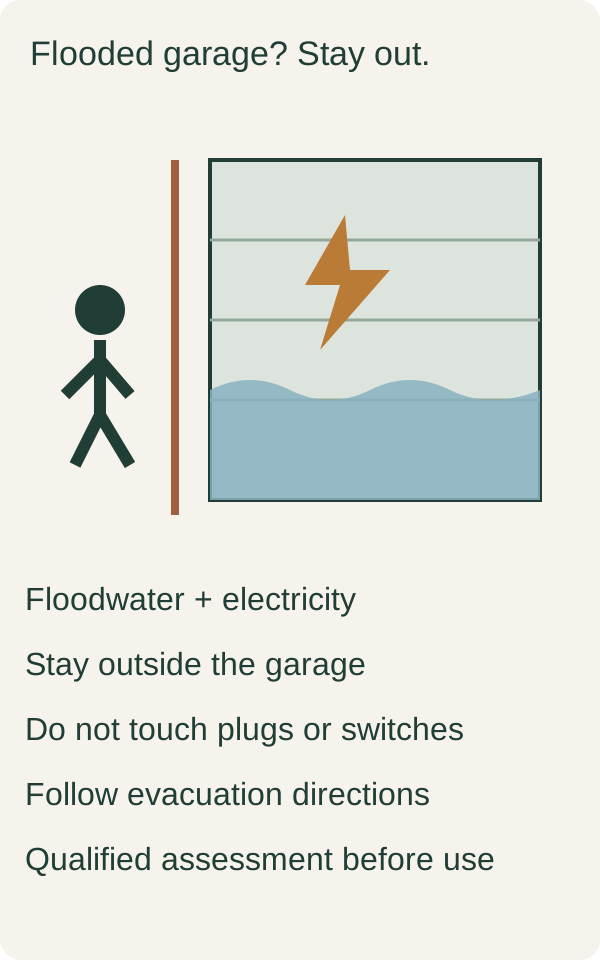
Follow emergency instructions and do not walk or drive through floodwater. Do not enter a flooded garage to unplug an opener, operate a breaker or retrieve tools. Wet electrical equipment requires qualified assessment; the end of the rain does not prove it is safe. Any utility-isolation plan should be arranged ahead of time with appropriate professionals, not improvised while standing in water.
6. Reopen only after safe assessment
Do not run a wet, displaced or damaged opener to see whether it still works. Arrange inspection of affected electrical equipment and the door system. Document damage from a safe location and follow local return guidance. For ordinary weather leakage, read how to seal garage door gaps. Flood recovery requires a separate assessment before repairs or normal use.
Quick questions
Will a new bottom seal stop flooding?
Do not rely on it as a flood barrier.
Does a taller barrier guarantee protection?
No; product and building limits matter.
Should I delay evacuation to save the garage?
No.
Wind resistance is not flood protection. See Prepare Your Garage Door for Hurricane Winds.
Related Posts
 Practical Guide
Prepare Your Garage Door for Hurricane Winds
Check your garage door's wind-rating documents, arrange professional inspection and plan storm preparation without improvised bracing or unsafe operation.
 Problem Solver
How to Seal Garage Door Gaps: Find the Cause Before Buying a Seal
Locate garage door gaps and distinguish worn weatherstripping from floor, drainage or door-alignment problems.
Sources
Manufacturer instructions and references for this guide. Match the document to your exact product.
- National Weather Service: flood safetywww.weather.gov
- FloodSmart: advance damage-reduction planningwww.floodsmart.gov