Why Does the Garage Door Opener Light Stay On?
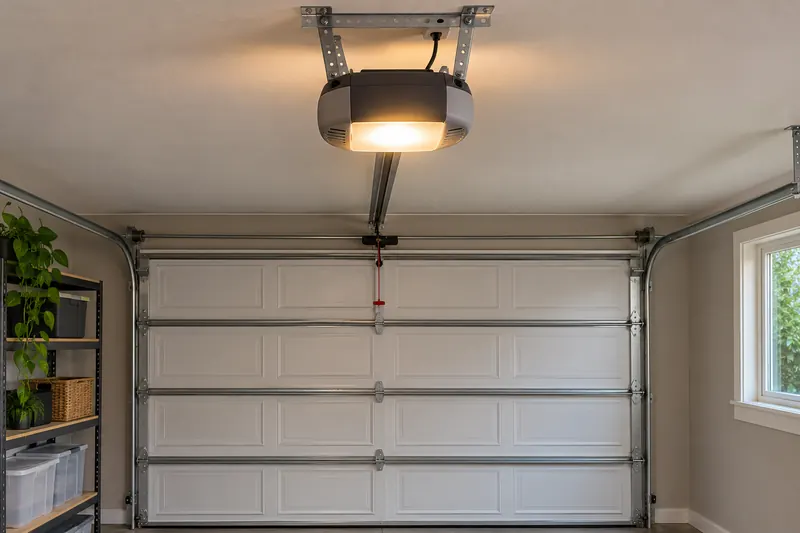
Identify the opener and wall control, check whether the light was switched on manually, and observe one complete timer interval without operating the door or walking past a motion control. Use the settings documented for that exact combination. Persistent lighting after those checks needs diagnosis, not a guessed replacement board.
A courtesy light that stays on is not automatically a failed motor or a bad bulb. Start by separating a normal lighting setting from a repeated trigger, then record what happens without opening the electrical housing.
1. Identify which light you mean
The large lamp lighting the garage is different from a small diagnostic LED near a LEARN button or a blinking safety-sensor indicator. Record the opener model, the wall-control model and whether the light is built in or a separate accessory. Keep any error pattern separate from the lighting complaint. If the unit also sounds an alert, use the guide to identifying an opener beep rather than silencing it as part of this check.
2. Check the ordinary light control
With the door stopped and the area clear, use only the normal LIGHT control described in your manual. On applicable Chamberlain Group multifunction controls, a light selected manually may stay on until the control is pressed again. Do not hold LEARN, LOCK or another button to experiment: a long press can change an unrelated setting. A control that does not match the manual is a reason to stop and identify it, not try a sequence from another model.
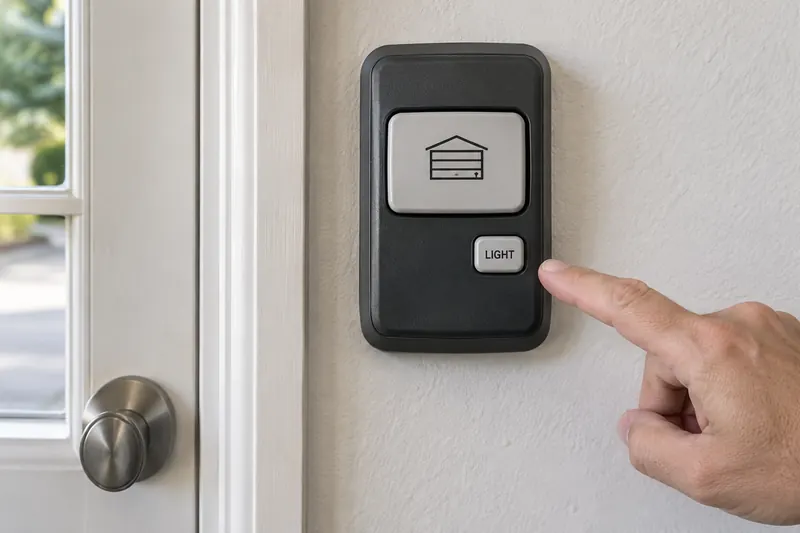
3. Observe the timer without retriggering it
Choose a period when nobody needs to use the garage. Note the time after the last normal door operation, keep people away from the door path and motion-control area, and wait the full delay specified for the model. Record whether the light turns off, turns off then comes back on, or never goes out. Repeatedly returning to inspect it can retrigger a supported motion feature. Do not assume that every opener uses a four-and-a-half-minute delay.

4. Distinguish motion lighting from safety detection
Some wall controls have a separate motion-light setting. Certain older Chamberlain Group systems also illuminated the garage when the photoeye beam was crossed; the manufacturer says later openers or replacement boards may lack that feature. Match both the opener and control to their instructions. Change only a documented lighting option, one at a time, and restore the preferred setting afterward. Never cover, disconnect or raise the safety photoeyes to stop a lamp from coming on.
5. Record the result before arranging service
If the lamp still stays on, give the technician the model numbers, selected settings and the observation times. A wall control, its wiring or the opener electronics can be involved; a lamp symptom alone does not identify which part has failed. Leave wire isolation and internal electrical testing to a qualified technician. If you notice smoke, a burning smell, sparking or damaged wiring, stop using the equipment and keep clear; do not continue this timer check.
A light problem is not a bulb specification
A timer complaint does not justify fitting a brighter bulb or exceeding the rating. If a replaceable bulb also needs attention, check the correct light bulb for your opener. Integrated LED assemblies and separate remote lights have their own instructions. For example, Chamberlain Group limits its 380LM troubleshooting page to the 3800 series and 8500; that page is not a universal procedure for newer wall-mount products.
Common questions
Should every opener light go out after the same number of minutes?
No. The delay and available settings depend on the opener and wall control. Use the documented interval instead of a universal countdown.
Can I block the safety sensors to keep the light off?
No. A lighting preference must never disable obstruction protection. Only adjust a supported lighting setting.
Does a light that stays on prove the logic board is bad?
No. Normal controls and repeated triggers must be checked first, and persistent faults need model-specific diagnosis.
Is the small blinking LED the courtesy light?
No. Record its location and flash pattern separately; diagnostic indicators and the garage illumination lamp serve different purposes.