Garage Door Screens: Choosing and Planning a Compatible System
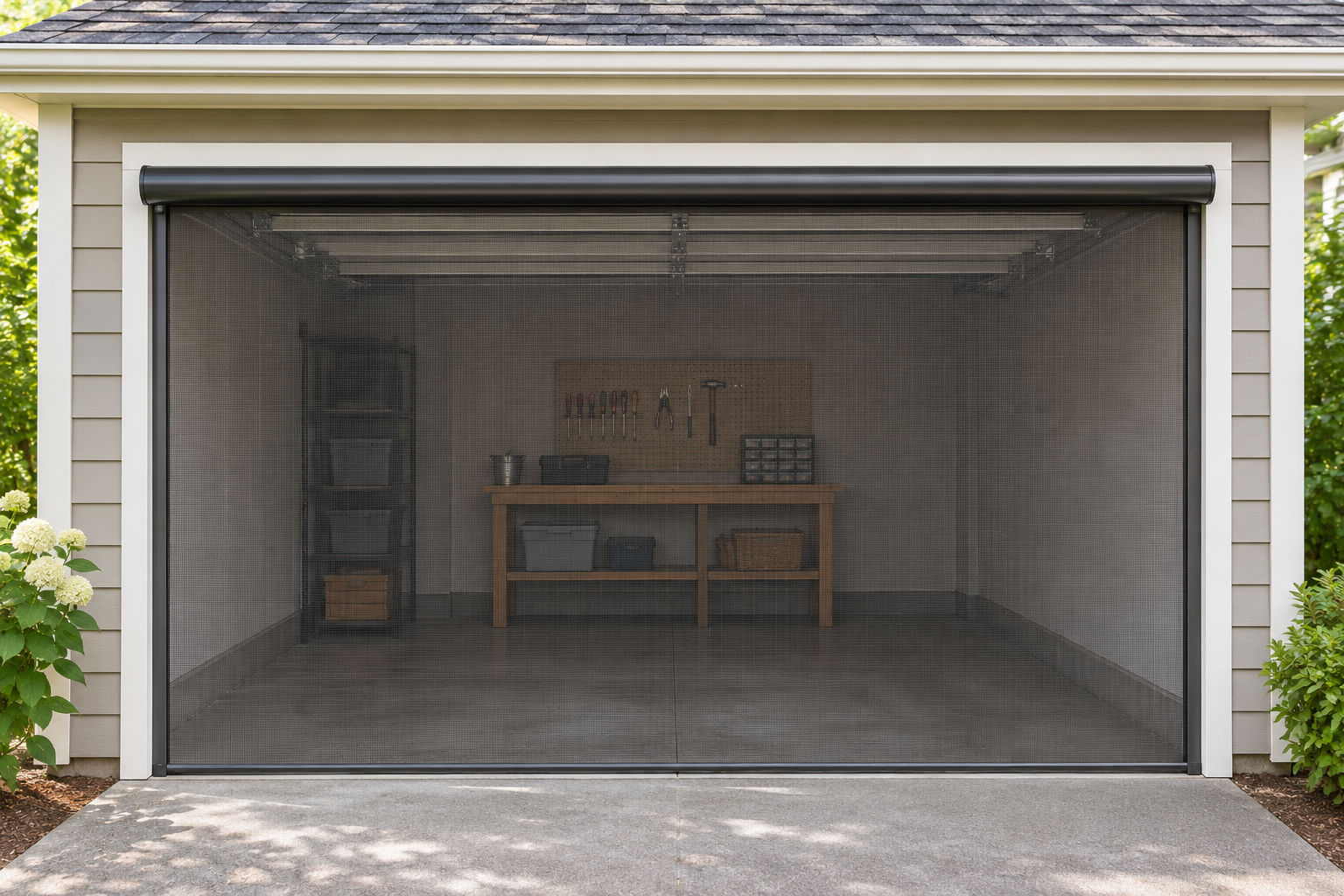
A garage door screen can make an open garage more pleasant for a quiet workbench session or an evening project. Choosing one starts with how it will share the opening with your existing garage door. A screen that matches the opening width can still collide with a door brace, obstruct a sensor, or leave too little room for a vehicle.
This guide compares screen arrangements and helps you prepare for a compatibility assessment. It is not a spring-adjustment or installation tutorial. Keep the solid garage door as the building’s normal closure, and have the proposed screen checked against its own manual and the door and opener instructions.
Start with the way you use the garage
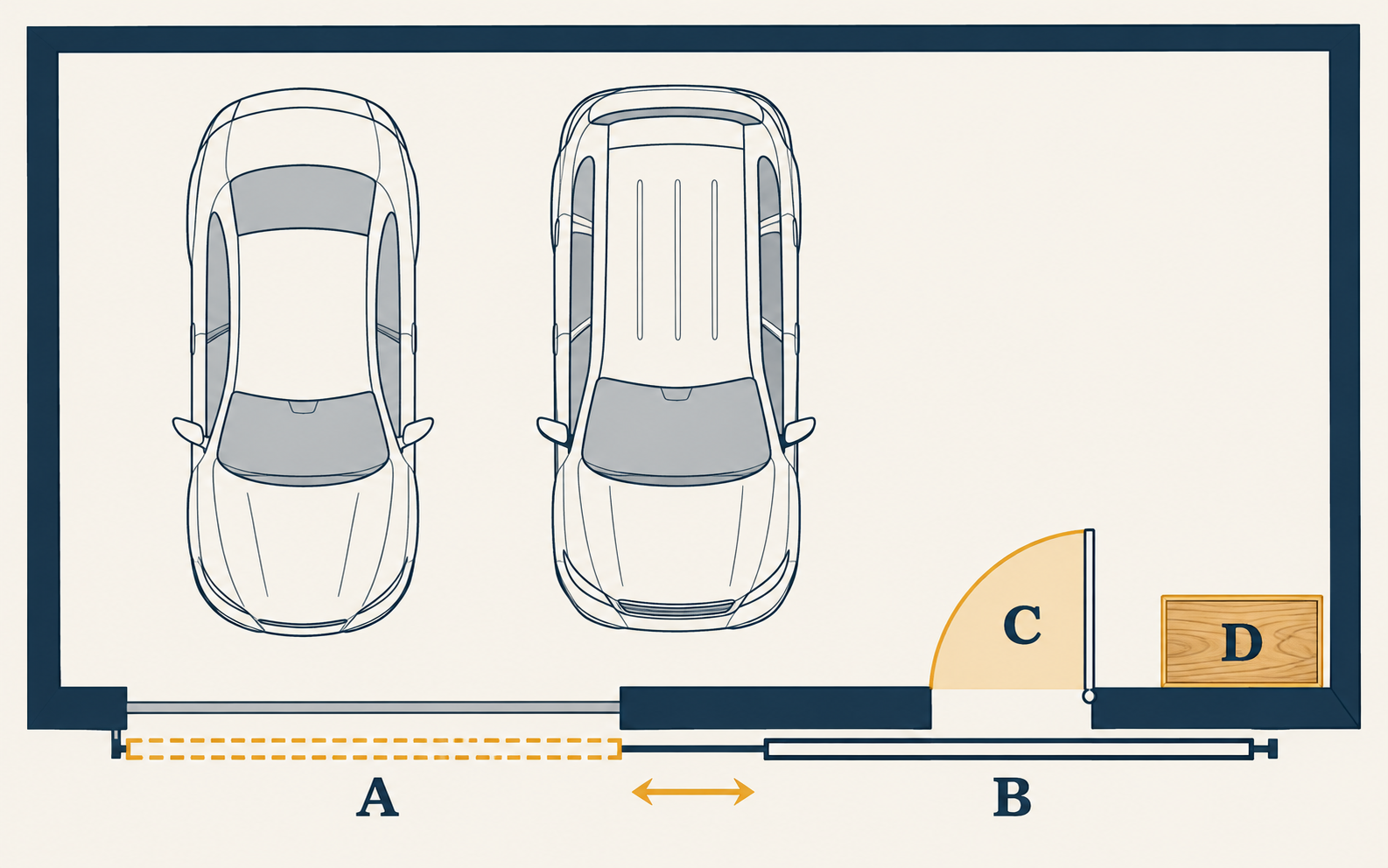
Write down how often a car, bicycle, wheelchair, or person needs to pass through. An occasional-use screen and one you open several times daily solve different problems. Think about who can comfortably reach its handles, whether a separate pedestrian opening matters, and where a removable screen will dry and be stored.
A screen addresses the open doorway. It does not replace door insulation, weather seals, or window treatments. It also does not automatically make the garage a permitted bedroom, office, or other habitable room. Before changing the use of the space, ask the local building department what applies to your project, including exits and any required permits. Check applicable association rules before ordering exterior hardware.
Compare the mechanisms, not just the mesh
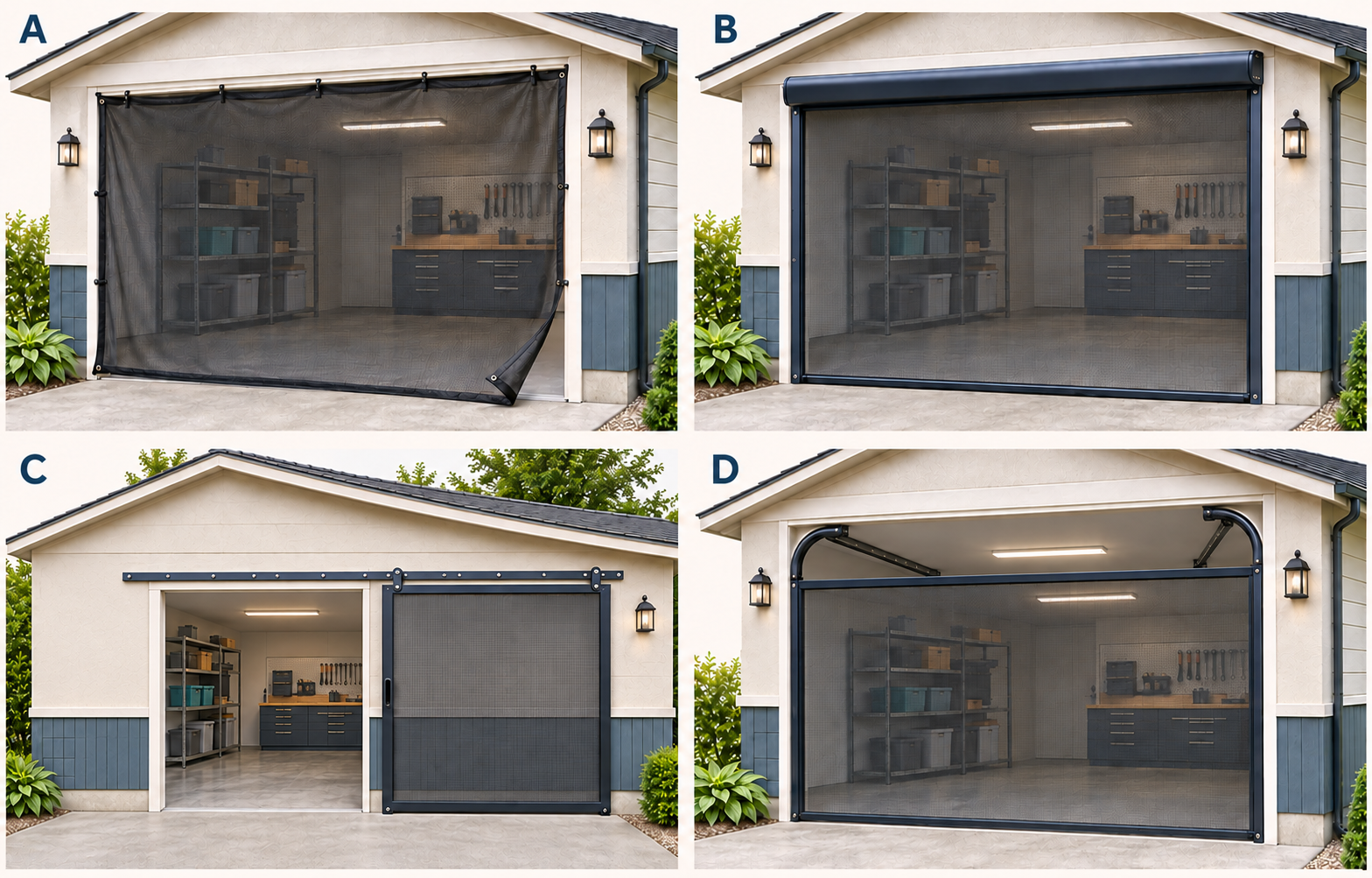
Removable mesh panels: These typically attach around the opening and are taken down when no longer needed. Product details vary, including the attachment surface and pedestrian closure. Ask whether removal is necessary for vehicle passage and whether repeated removal affects the attachment. Plan for a clean, dry storage location rather than leaving loose fabric beside moving door hardware.
Retractable roll-up screens: This label includes both fabric rolled by hand and powered assemblies that retract into a housing. Ask where the stored roll or housing sits, how the edges are guided, and how it is secured in the stored position. Phantom’s motorized screens are custom-made, professionally installed products; that does not establish compatibility with every garage. A site assessment still matters.
Independent sliding or overhead-track screens: A sliding design needs a place for its panels to park, and some use a floor guide or threshold. An overhead-track design needs space for its own frame and travel path. These are different mechanisms, even when both have rigid frames. Lifestyle’s system works alongside the existing garage door rather than replacing it. Its published manual excludes low-headroom door installations. Do not extend that restriction, or assume compatibility, across unrelated products.
Prepare a useful measurement record
Record measurements from stable, accessible positions without touching springs, cables, or brackets. Photos taken square to the opening are more useful than a single wide-angle picture. Give the installer:
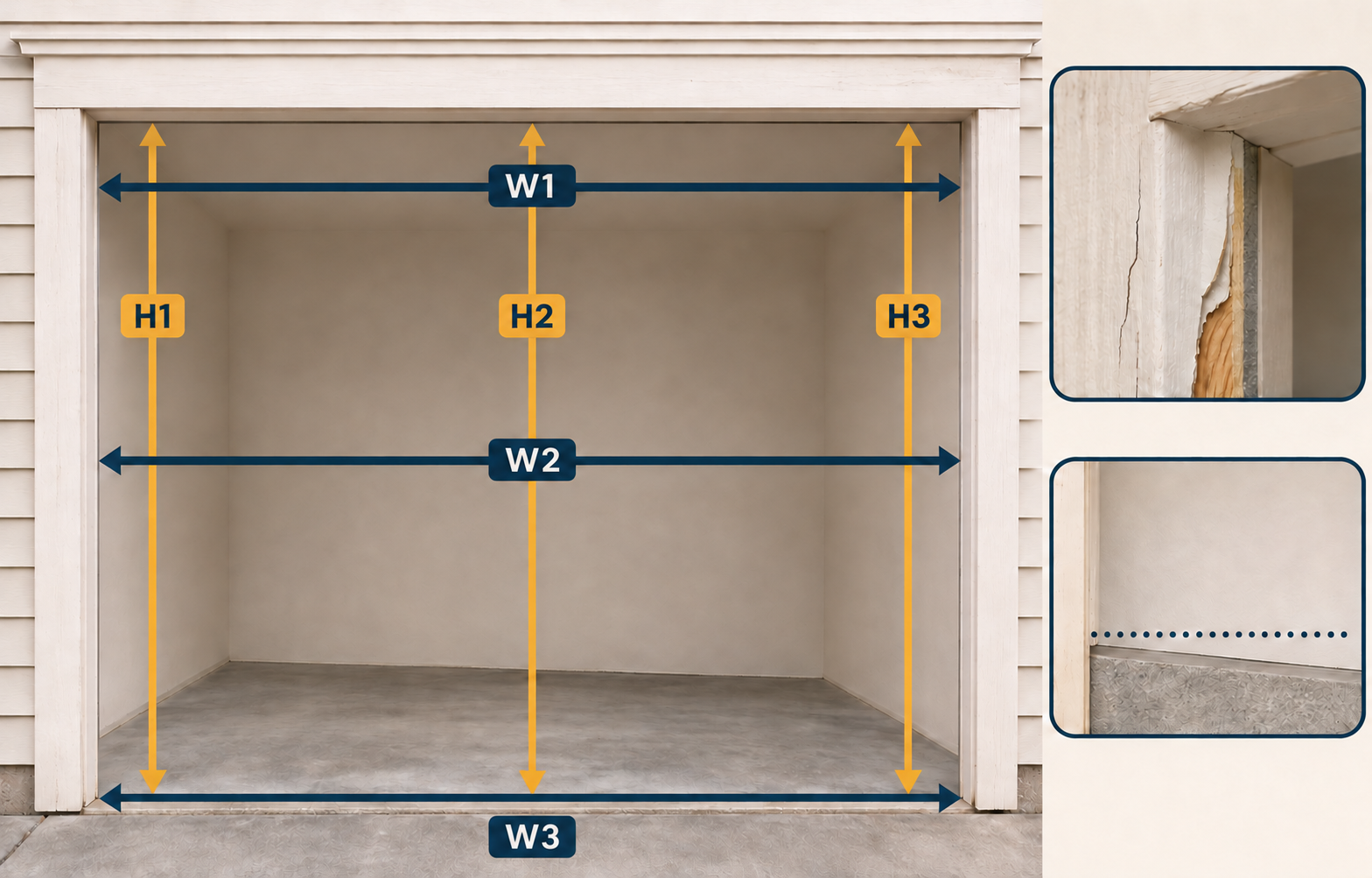
- Opening width at the top, middle, and bottom, and height at several points.
- Available mounting surfaces above and beside the opening, including their material and condition.
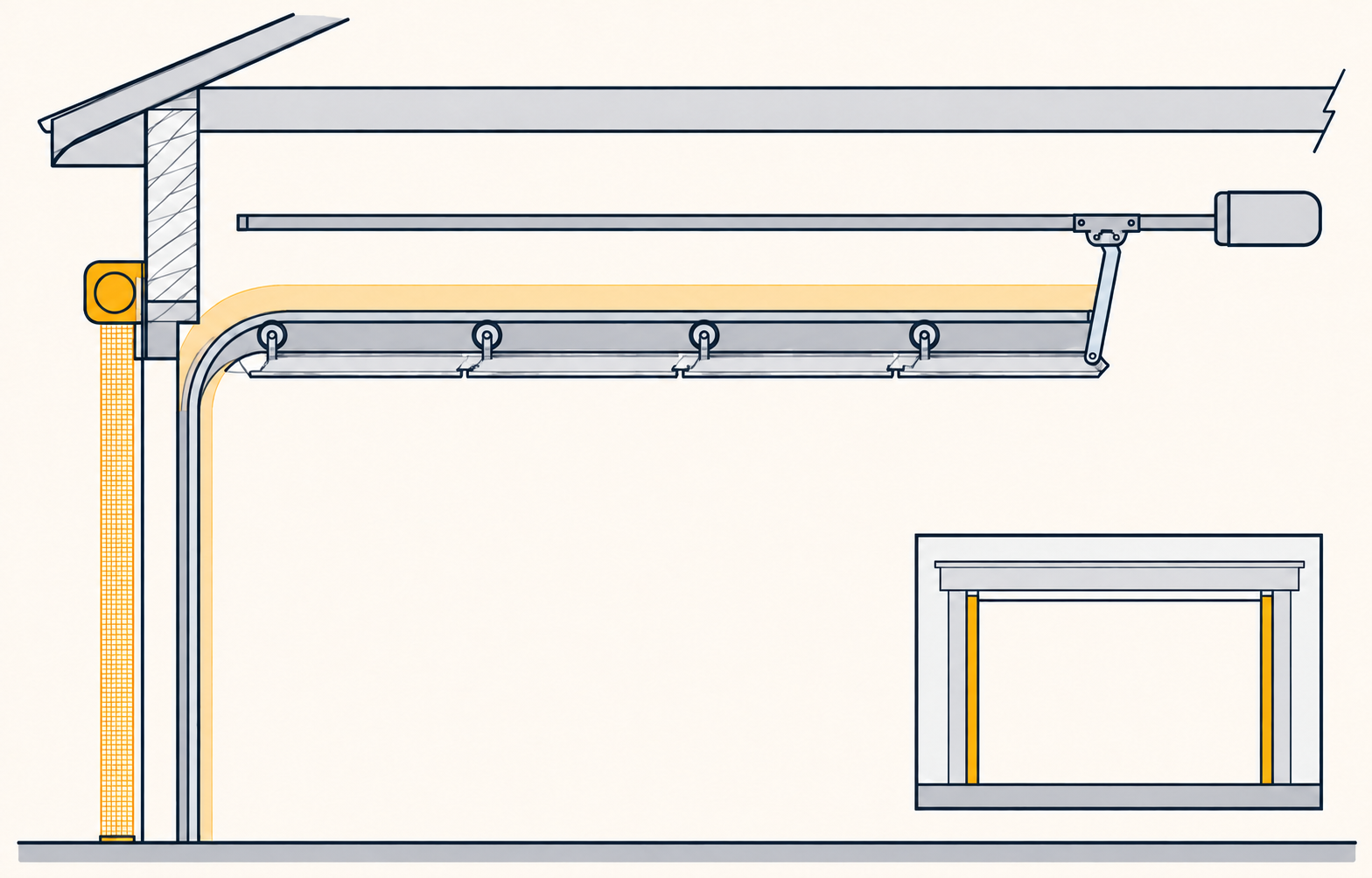
- Interior views showing the tracks, opener rail or wall-mounted operator, and reinforcement struts.
- Locations of lights, shelving, ceiling racks, outlets, side doors, and sensor brackets.
- Any floor slope, raised edges, gaps, or irregularities where the screen would meet the floor.
- Vehicle height and width, including racks, mirrors, and accessories that actually pass through.
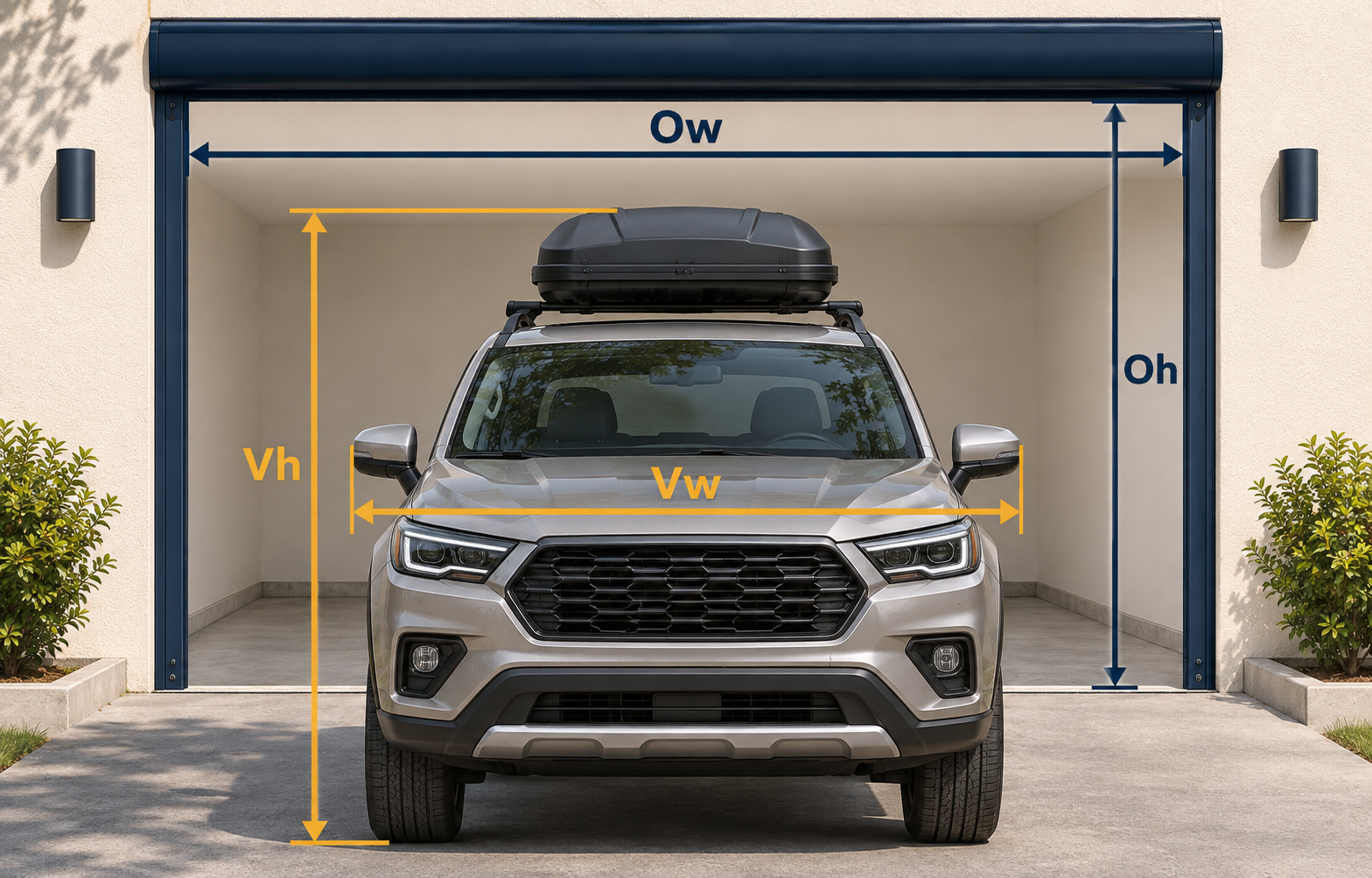
Keep opening dimensions separate from the finished passage dimensions. Ask the installer to state the usable width and height after installation. Do not order solely from a nominal garage-door size.
There is no single clearance allowance for every screen. The selected model, mounting position, door hardware, and installation instructions determine the necessary headroom, side space, and storage depth. Ask for a drawing identifying both fixed components and the full space swept by moving parts. This travel envelope includes the opener arm and projecting braces, not just the flat face of the door.
Protect the door’s safety functions
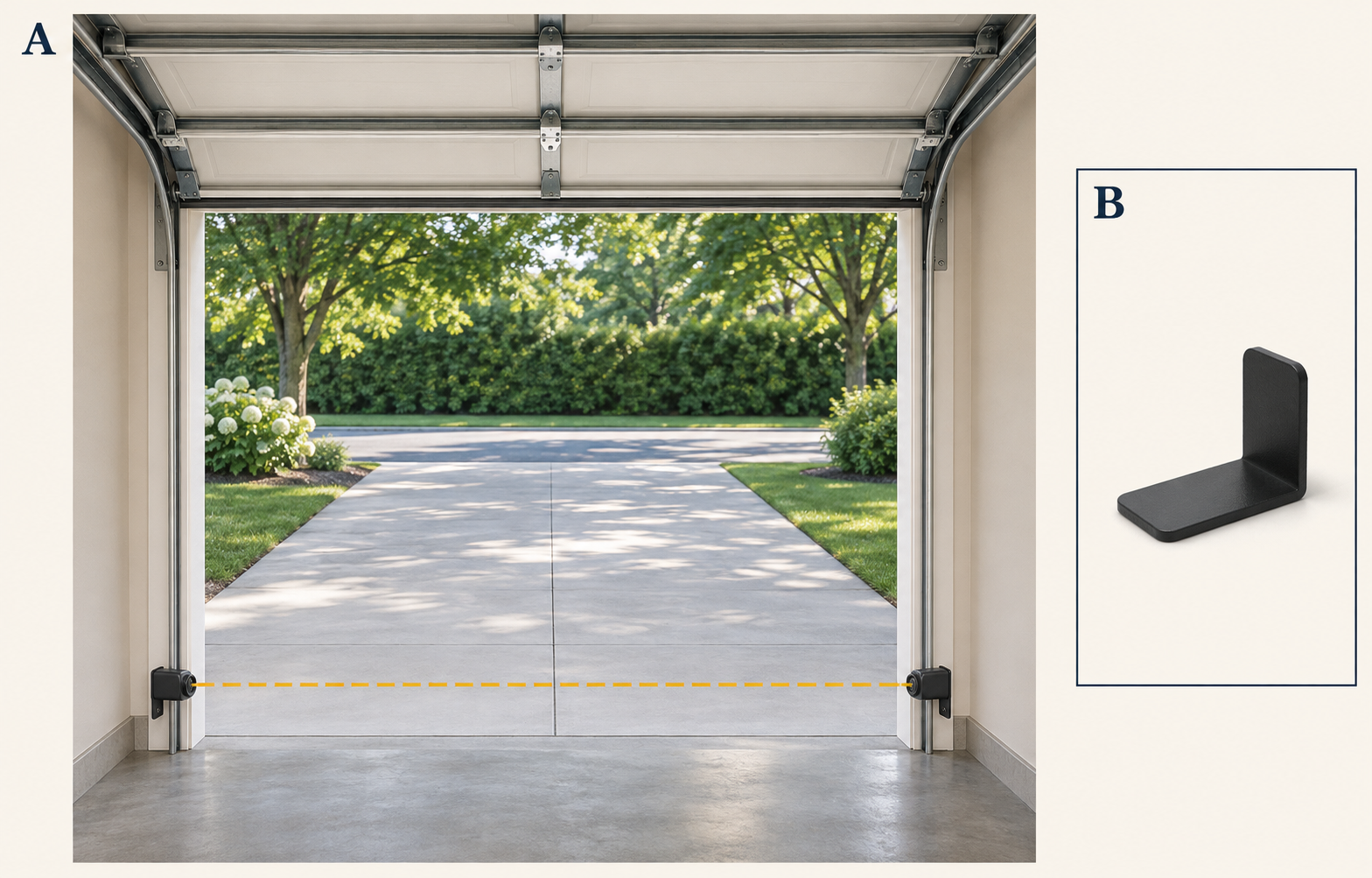
The proposed installation must preserve the garage-door opener’s entrapment protection. Do not move photo-eyes upward, tape them together, bypass them, or increase closing force to accommodate a screen. DASMA says residential garage-door photo-eyes should be no higher than six inches above the floor and recommends professional attention to opener sensitivity adjustments.
Some screen systems deliberately interact with the sensor beam as part of their safety design. That is different from accidentally blocking a sensor with loose mesh. Have the installer explain the selected product’s arrangement and demonstrate the required safety checks. Do not improvise an interlock from a general diagram.
Learn the actual operating sequence
Do not assume a screen and solid door can move simultaneously or operate independently in every position. Ask for a demonstration using your installed system, followed by written instructions that identify the safe stored position, pedestrian access, and power-failure procedure where applicable.
For example, Lifestyle’s published manual prohibits operating the garage door while its screen is vertically closed and warns against removing its photo-eye blocker. Those instructions belong to that system, not every garage screen.
Keep people, pets, furniture, and tools outside both travel paths. Stop using a system that binds, tilts, strikes hardware, or has damaged parts. Have a qualified technician address mechanical interference rather than forcing it through.
Set realistic expectations for mesh
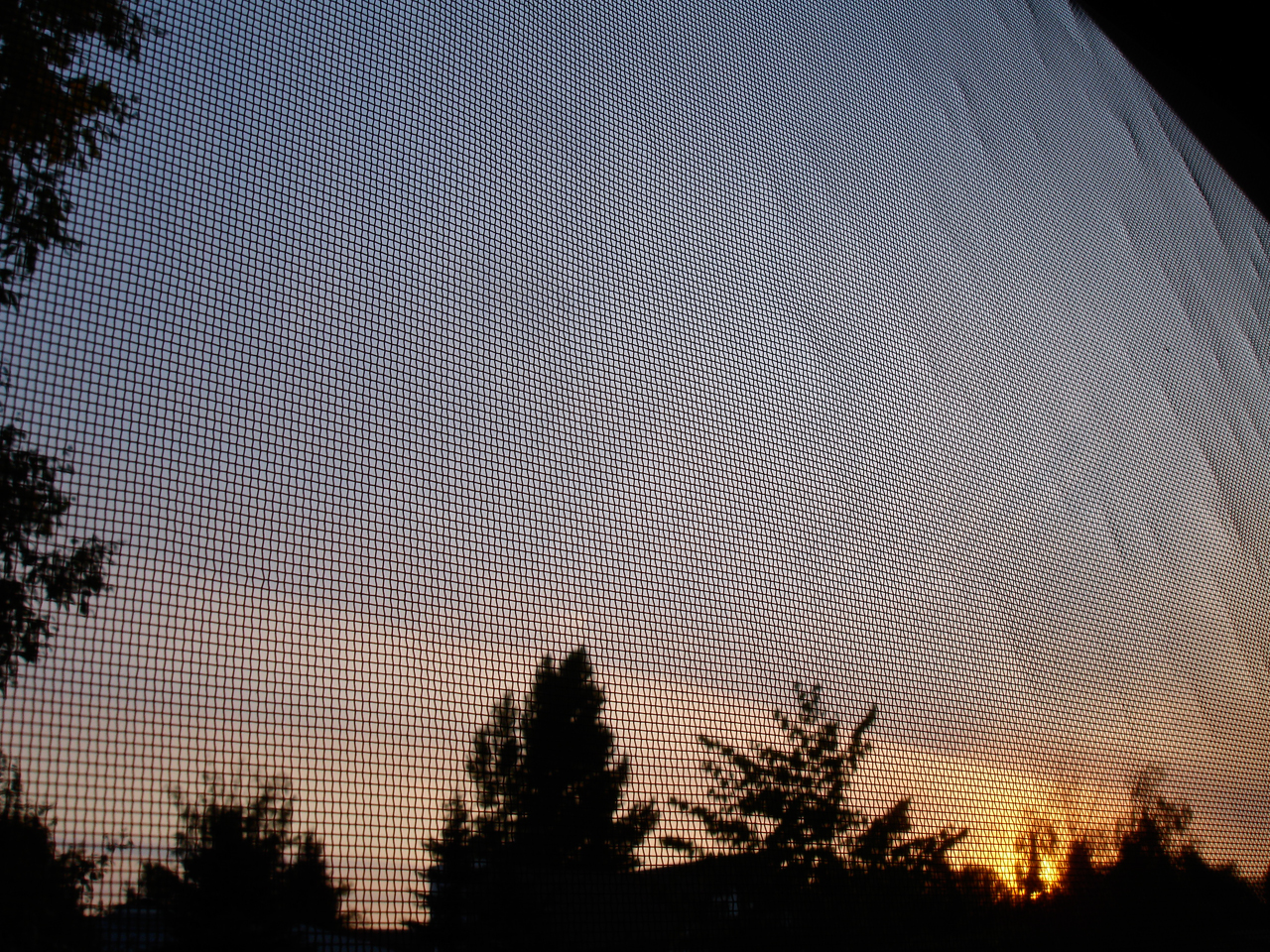
Choose a sample after discussing your priority: insect screening, visibility, or shading. Phantom explains that more open insect mesh offers greater visibility, while denser solar and privacy mesh can be harder to see through. Ask to view the sample under the lighting you expect to use. Do not assume a daytime privacy effect will be the same at night.
Ordinary insect mesh should not be relied upon as a security barrier, fall guard, child barrier, or pet enclosure. A stronger fabric or latch alone does not establish a tested protective rating. If containment or fall protection is essential, require documentation for that exact system and intended use.
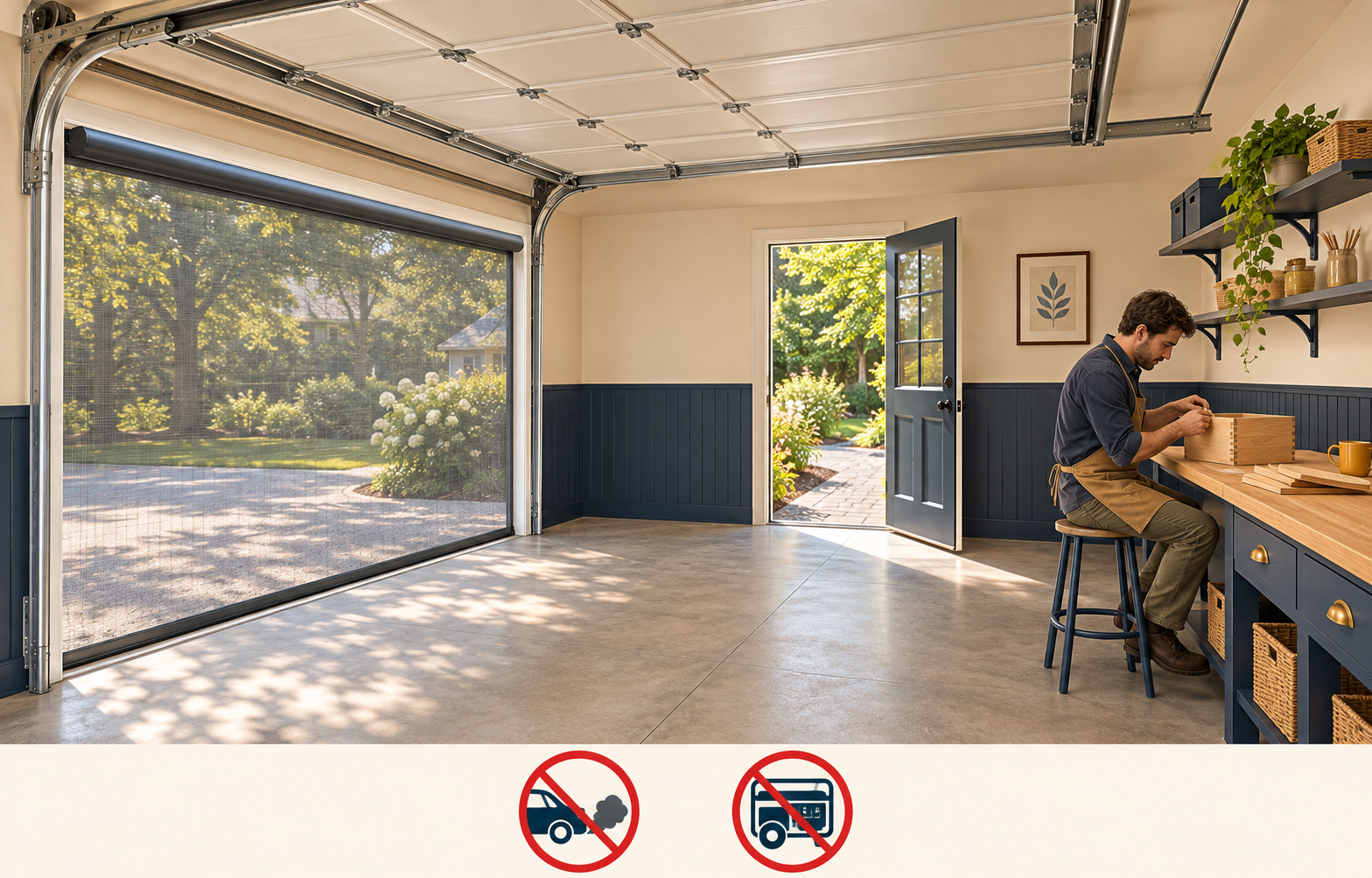
A screen is never a way to make engine exhaust safe. Never idle a vehicle in an attached garage, even with the door open, and never run a generator in a garage. Air passing through mesh does not prove safe carbon-monoxide levels.
Ask for a complete handover
Before accepting the job, get the model name, manual, finished clearances, operating instructions, and maintenance requirements. Ask which wind and weather restrictions apply to your exact screen. Keep any required exit route accessible, and discuss how occupants leave during a power failure before choosing a motorized arrangement.
Ask about replacement mesh, service access, and what parts and labor the warranty covers. Follow the selected manufacturer’s cleaning instructions. Phantom, for example, recommends mild detergent and a soft brush rather than harsh chemicals or pressure washing.
Choose the system whose fit, daily operation, and limitations are clear before installation. The best purchase is one you can use without changing the garage door’s safety protections or guessing which component must move first.
Related Posts
 DIY Guide
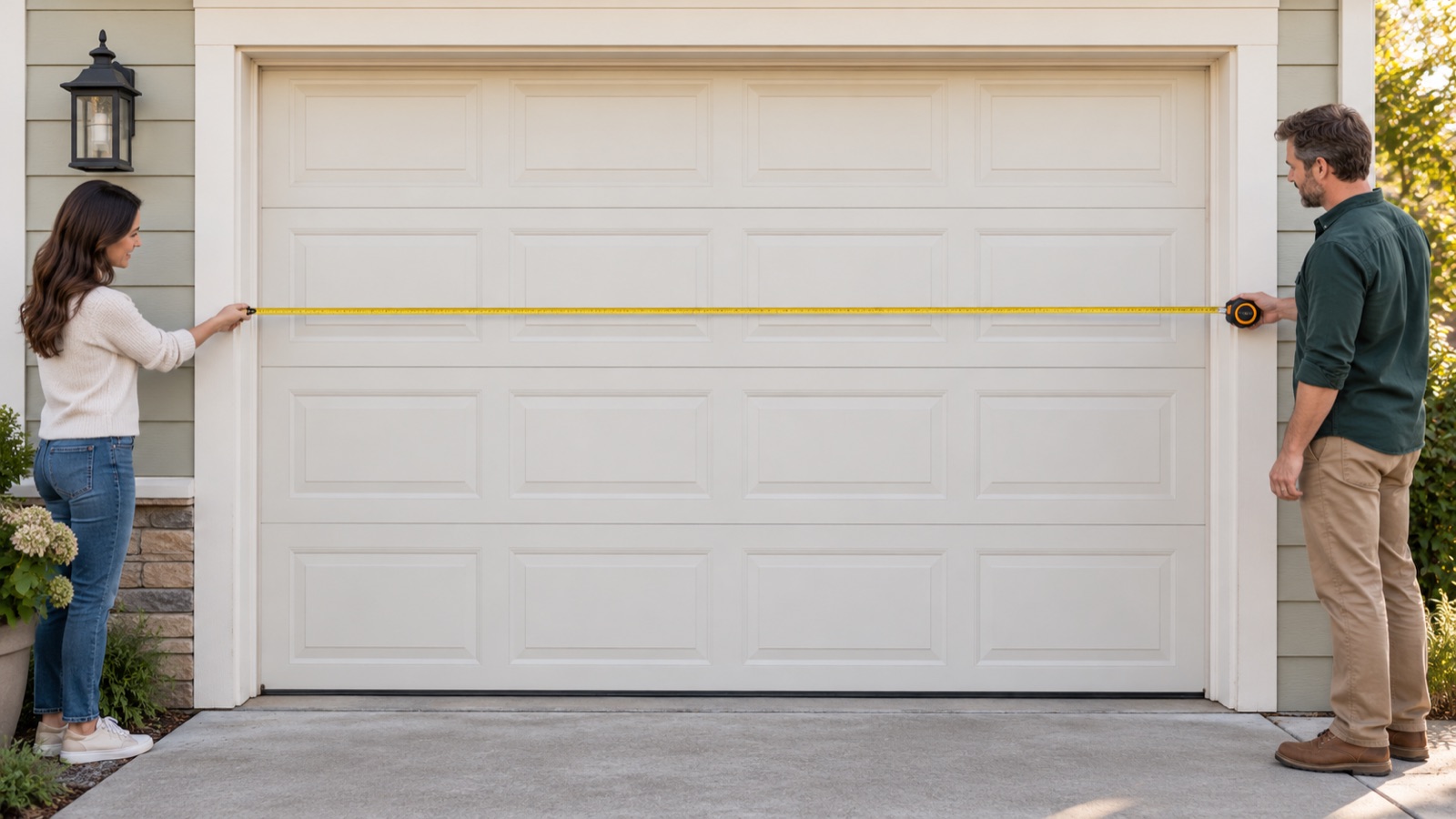
How to Measure a Garage Door Opening and Clearances
Record opening width, height, sideroom, headroom and backroom safely before requesting a garage door quote.
 Problem Solver
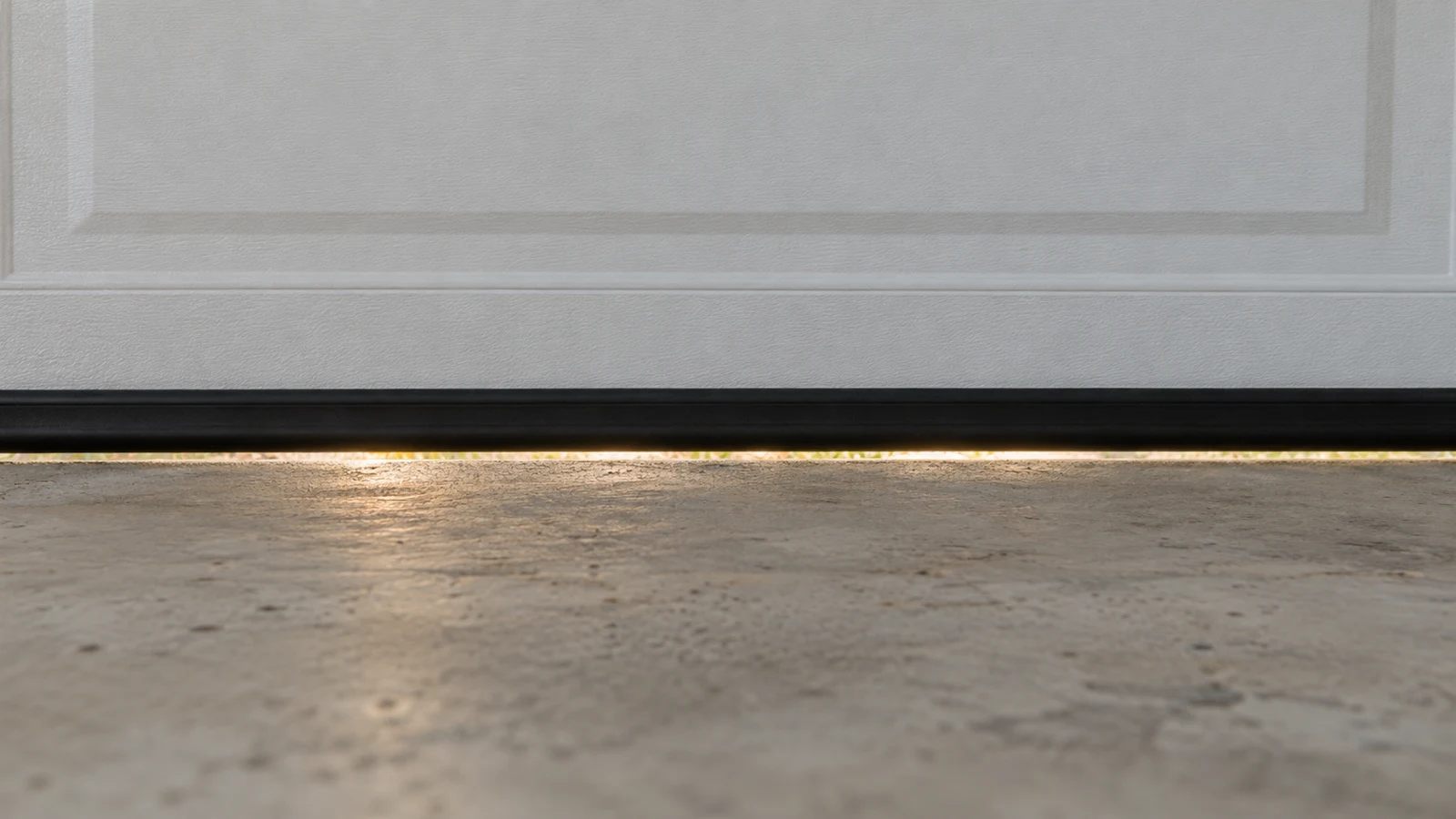
How to Seal Garage Door Gaps: Find the Cause Before Buying a Seal
Locate garage door gaps and distinguish worn weatherstripping from floor, drainage or door-alignment problems.
Sources
Manufacturer instructions and references for this guide. Match the document to your exact product.
- Phantom motorized screenswww.phantomscreens.com
- Lifestyle overviewwww.lifestylescreens.com
- Lifestyle manualwww.lifestylescreens.com
- DASMA opener safetywww.dasma.com
- Phantom FAQwww.phantomscreens.com
- CDC carbon-monoxide guidancewww.cdc.gov
- Phantom maintenancewww.phantomscreens.com
Photo credits
- Window-screen mesh shown as a texture and visibility example, not as an installed garage screen or a specification for a particular system. daryl_mitchell · Wikimedia Commons · CC BY-SA 2.0 Wikimedia Commons CC BY-SA 2.0
