How a Sectional Garage Door Works: Parts and Their Jobs
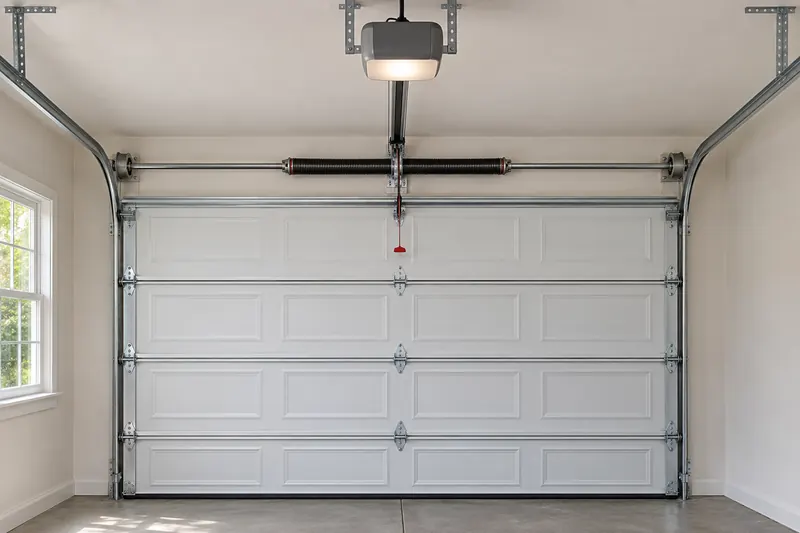
The door, counterbalance and electric opener do different jobs. Panels form the moving barrier, rollers and tracks guide it, springs counterbalance its weight, and the opener controls travel. Safety devices help detect obstructions; they do not make damaged mechanical parts safe.
Knowing a part’s name helps you describe a problem accurately. This guide covers a typical residential sectional overhead door. One-piece, rolling and unusual systems have different arrangements. Look from the floor with the door stopped; identifying components does not require releasing, lifting or dismantling them.
1. Start with the moving door
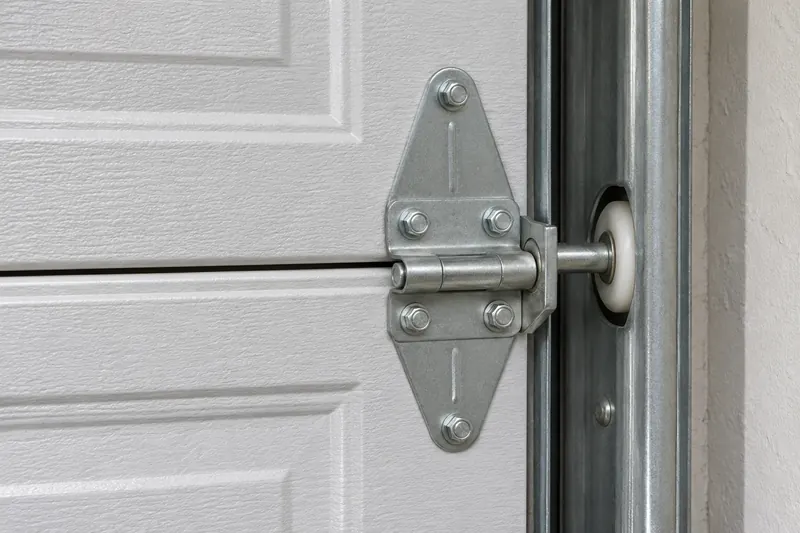
Several horizontal sections are joined by hinges so they can follow the curved track. Rollers at the sides run in tracks that guide the sections between the opening and overhead position. The panels, hinges and rollers belong to the door itself. A cracked panel, bent track or roller outside its track is not a reason to adjust opener force. Keep clear and arrange inspection rather than repeatedly operating a visibly damaged door.
2. Locate the counterbalance without touching it
A torsion arrangement usually has springs on a shaft above the opening; an extension arrangement usually has springs beside the horizontal tracks. Designs vary, so do not identify a replacement from appearance alone. Springs, lifting cables and their attachment points work together. Their stored energy remains a hazard even when the door is closed. Never loosen a spring bracket, cable drum or bottom corner bracket to investigate.
3. Separate the opener from the door hardware
A common ceiling opener uses a rail and trolley connected to the door by an arm. Its motor moves the trolley, while the door’s counterbalance does the balancing work. Other openers mount beside the door and use a different drive arrangement. A stronger motor is not a repair for a heavy, binding or unbalanced door. Record the opener label and door label separately when requesting service.

4. Recognize the two safety checks
Photoeyes near the floor monitor a beam across the opening on many residential systems. Contact-reversal protection responds differently, when a closing door meets the specified test obstruction. These are separate functions: passing one check does not prove the other works. Follow the exact manual for testing, keep people away and stop normal operation if a required check fails. Do not move sensors upward or defeat them to obtain a closing cycle.
5. Turn observations into a useful service note
Write down where the symptom occurs: panel joint, side track, spring area, ceiling motor or wall control. Note whether it happens while starting, moving or stopping, without running extra cycles to reproduce a dangerous fault. A photo from the floor can show location without handling a part. For routine care rather than a repair, use the garage door maintenance checklist and the manufacturer’s schedule.
Knowing the name is not permission to adjust it
Use this map to explain what you can see, not to choose a spring, set cable tension or remove hardware. If the problem involves the counterbalance, the guide to planning professional spring replacement explains the information to collect and the work to leave to a technician. Never stand beneath a door that appears insecure.
Common questions
Does the opener lift the entire door weight by itself?
A correctly matched counterbalance offsets the door’s weight. The opener is not a substitute for a sound, balanced door.
Are tracks and the opener rail the same part?
No. Side tracks guide the door rollers; a ceiling opener’s central rail guides its trolley or drive assembly.
Can I inspect everything with the door closed?
You can record visible parts from a safe position, but a closed door can still contain stored spring energy. Leave detailed mechanical inspection and adjustment to a qualified technician.