How to Maintain a Garage Door: A Practical Homeowner Checklist
Quick answer
Maintain a garage door by inspecting it regularly, keeping the opening clear, cleaning compatible surfaces, lubricating only manufacturer-approved points and completing the opener's prescribed safety tests. Leave springs, cables, track alignment and tensioned brackets to trained service personnel.
We recommend a checklist with two columns: safe to complete now and needs service. Finding a problem and stopping is a successful maintenance outcome, not an unfinished job.
Stop: Do not operate a door with a broken spring, frayed or displaced cable, off-track roller, visibly loose support or pronounced tilt. Keep everyone away from the opening and do not release the opener.
Prerequisites and limits
Keep the door and opener manuals together. They may specify different schedules, products and tests. Make a note of both model numbers, whether the opener has backup power, and which service work was last completed.
DASMA recommends regular owner checks alongside professional servicing and emphasizes that each system's own manual matters. Its safety guidance also identifies cables and bottom brackets as high-tension components.
This checklist is for an ordinary residential sectional system. Commercial rolling doors, fire doors and unusual lift arrangements require their designated inspection program. Do not use a homeowner checklist to certify a door for another application.
Tools and time
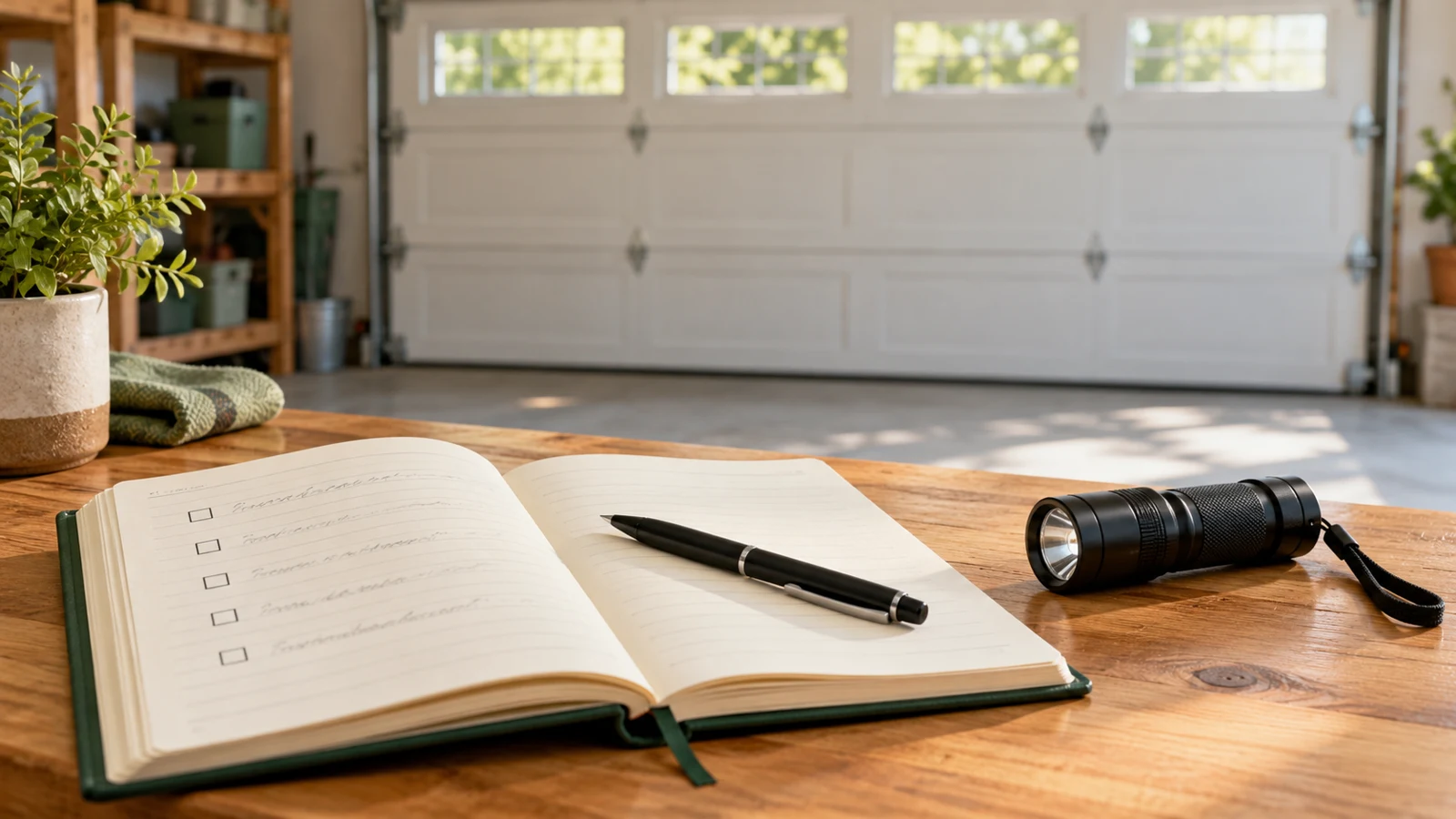
Bring a flashlight, notebook or phone, the manuals and any materials specified for an individual maintenance task. Allocate 20–30 minutes for an uncomplicated inspection, then schedule cleaning or lubrication separately. The estimate excludes repairs. Do not gather tools for spring or cable adjustment.
Step-by-step routine
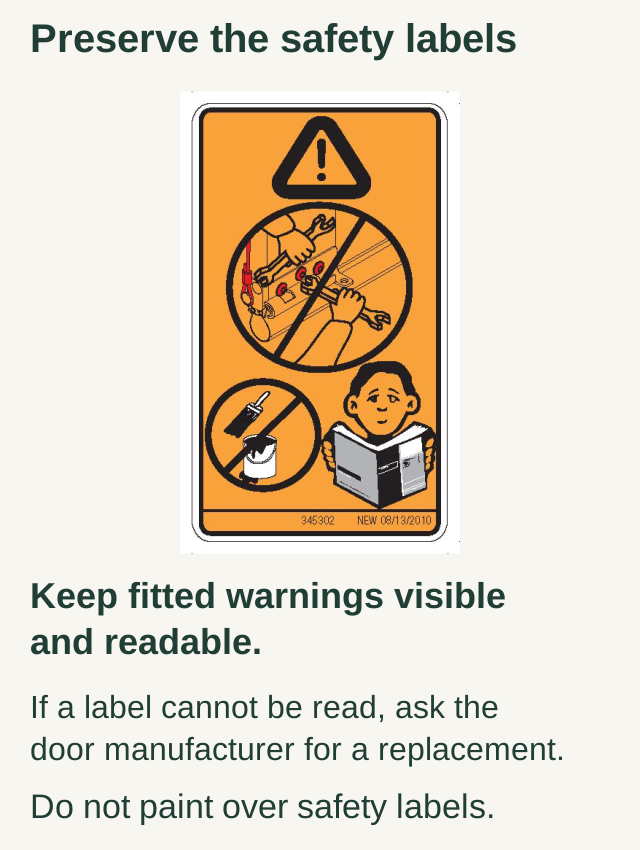
Scroll within the image if needed, or open the full-size view. The key details are also written below.
Keep the safety warnings fitted to your door visible and readable. The example includes warning, do-not-adjust and do-not-paint pictograms. Do not paint over safety labels.
If a label cannot be read, ask the door manufacturer for a replacement. This example is not a universal replacement template or permission to touch loaded hardware.
Closed-door visual inspection
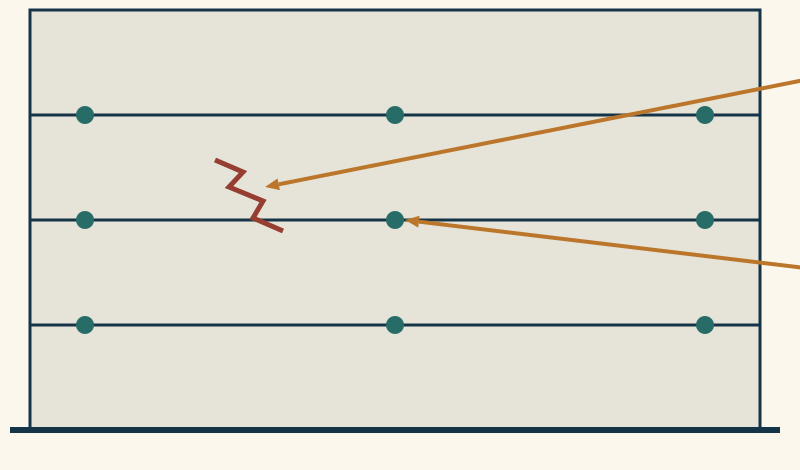
Observe from a safe position. Do not operate a suspect door, touch a damaged component, or move it to expose a fault.
1. Panel surface
Look for cracking, fatigue or damage. Record the location rather than pressing on the area.
2. Hinge locations
Look for a bent or loose hinge without manipulating it. The dots in the map locate joints; they are not physical brackets or mounting instructions.
Choose the safe next step
Damage or uncertain support means stop operation and arrange qualified assessment. If nothing is visibly wrong, continue the model’s full maintenance checklist. This limited observation does not certify the door safe.
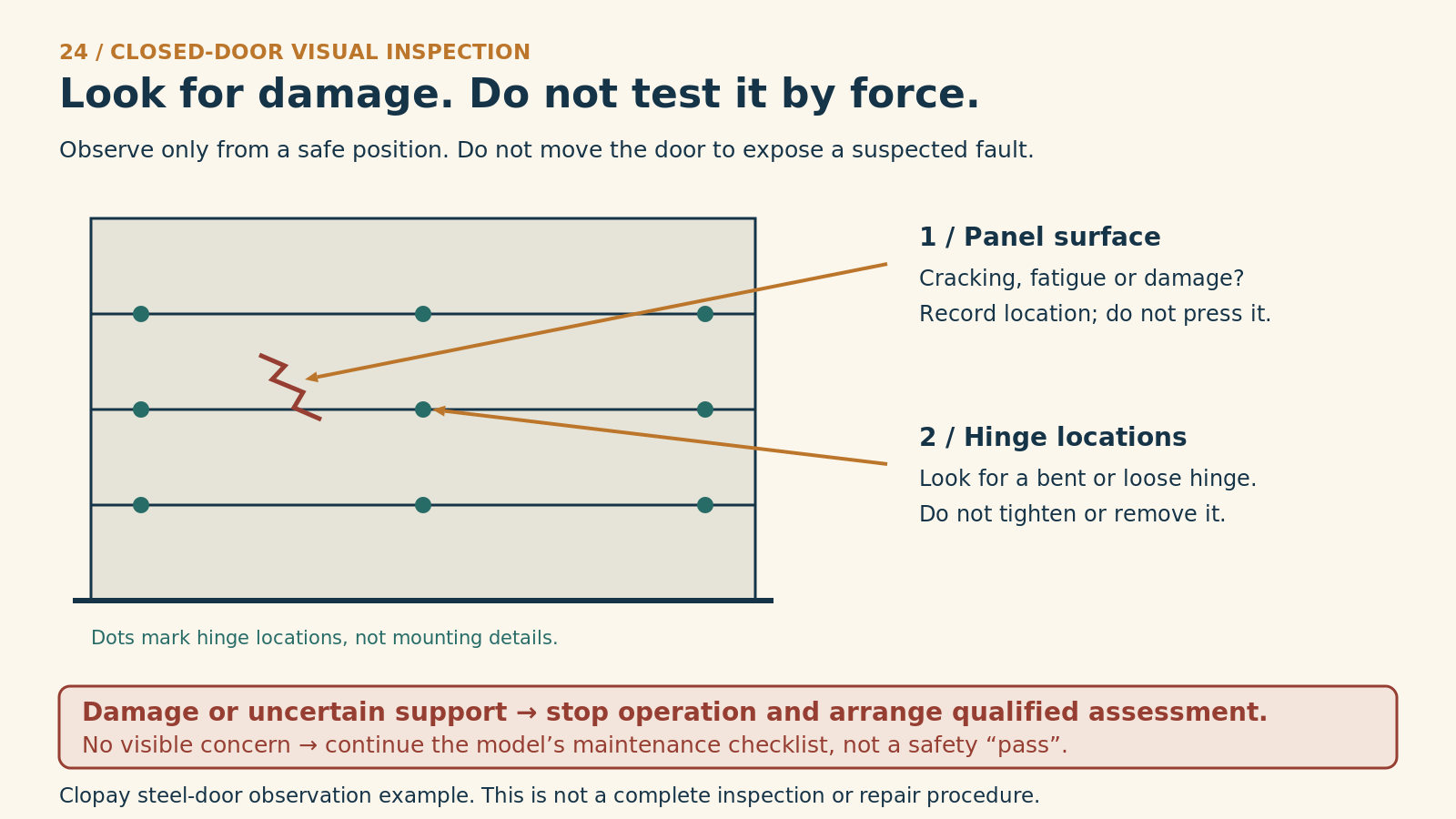
Reference. Clopay installation manual supplies part-location reference only, not homeowner repair steps.
- Review recent behavior before moving anything. Ask whether the door has become noisier, slower, heavier or intermittent. Record the last unusual event, including an impact or power interruption. Expected result: a useful history. A new mechanical symptom changes the visit from maintenance to diagnosis.
- Inspect the closed door from both safe sides. Look for damaged sections, an uneven bottom line, worn weather seals and missing or unreadable labels. Inspect visible cables, tracks and rollers without touching them. Expected result: no obvious change from the previous inspection. Photograph concerns rather than manipulating parts to obtain a better view.
- Clear the operating area. Move stored items away from the door's travel, controls and sensor beam. Look for cords or decorations that could swing into the path. Expected result: a clear opening and unobstructed controls, not merely a narrow route for the car.
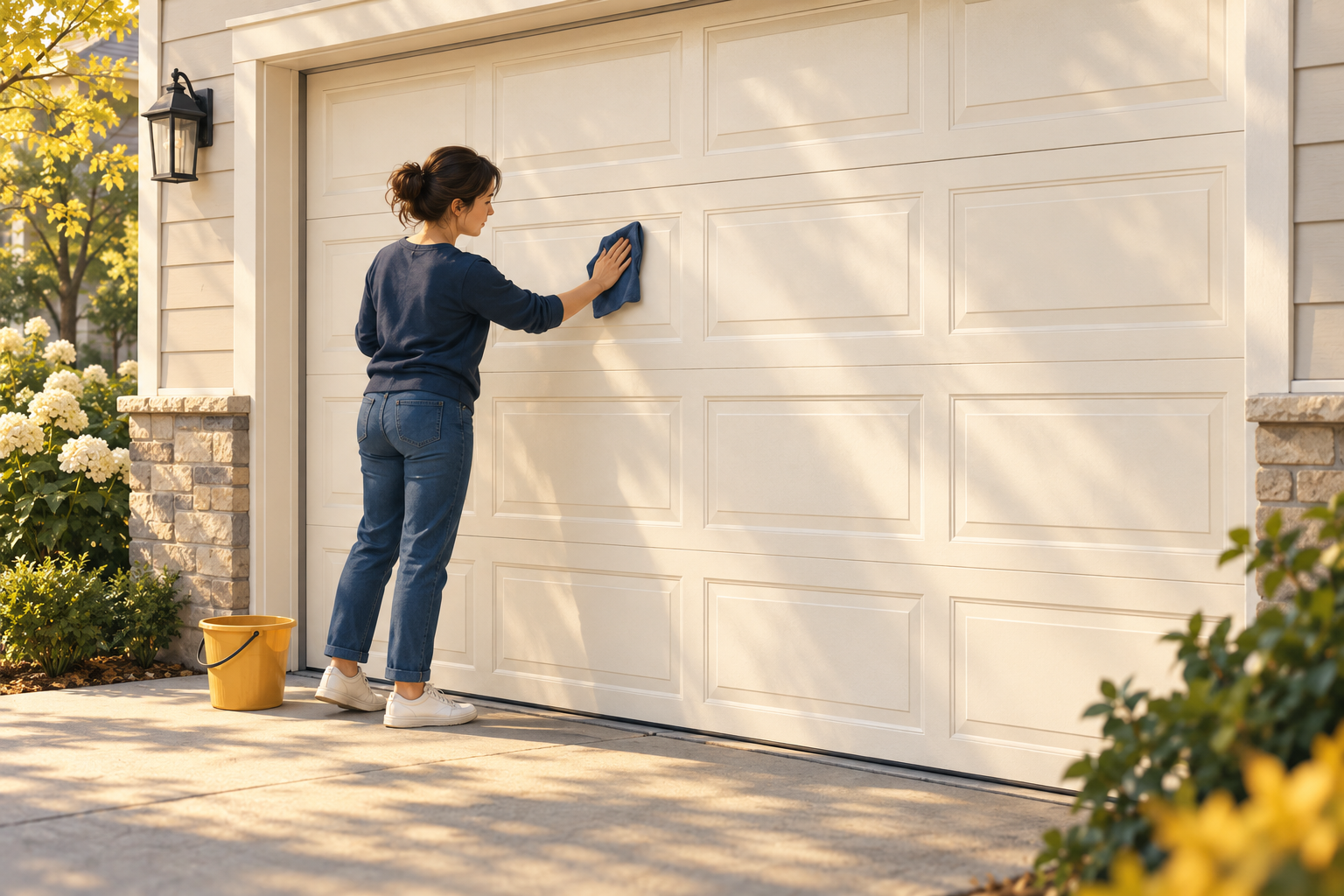
- Choose maintenance work by need and manual. Wash dirty compatible surfaces; clean accessible tracks; apply the specified lubricant only where permitted. Follow each task's isolation instructions before putting hands near parts. Expected result: a documented treatment, not indiscriminate spraying or tightening every visible bolt.
- Observe ordinary travel only if the system appears safe. Stand clear, keep the entire door in view and run a normal cycle. Note where any sound or hesitation occurs. Expected result: smooth travel without a new stop, tilt or contact. Stop further operation if a defect appears.
- Complete prescribed safety tests. Use the opener manual's photoeye and contact-reversal tests, keeping people outside the travel path. These are different tests. Expected result: the response specified by the manufacturer for each one. A failed test takes automatic operation out of service until corrected; do not compensate by increasing force.
- Close the record, not just the door. Enter completed tasks, test outcomes, remaining concerns and the next manual-based due date. If service is needed, send the model, photos and observations rather than a guessed diagnosis.
A useful seasonal review
Use the beginning of colder weather to look for hardened or torn seals and objects stored near the beam. After a salty winter, check the finish for deposits and review the door's cleaning instructions. During dusty conditions, inspect lenses and exposed surfaces more often. These observations supplement the manufacturer's schedule; they do not replace monthly safety checks where required.
We recommend recording the actual trigger: “salt residue on bottom section,” for example, rather than “spring maintenance.” That tells the next person why the task was performed and makes changing conditions easier to spot.
Common mistakes and practical tips
A maintenance checklist should not tell an untrained homeowner to tighten every fastener. Some fasteners retain tensioned components; others control alignment. Leave questionable hardware for a technician to identify.
Do not add insulation, decorative weight or a new heavy handle and assume the existing balance is unchanged. Record modifications and arrange assessment before normal use when weight or movement may be affected.
Practical tip: Keep a separate line for “not inspected.” Honest omissions, such as inaccessible overhead hardware, are more useful than a blanket “all good.”
FAQ
Should we test balance ourselves?
Only when the exact manual permits it, the closed door is intact, and you can safely control it. A door with suspected spring damage is not a balance-test candidate. A technician can perform the assessment instead.
Does a quiet door need maintenance?
Yes. Noise is only one observation, and safety devices still need their prescribed tests.
What should we tell the technician?
Give the model numbers, fault location, recent changes and which tests failed. Do not repeatedly recreate a dangerous fault for a video.
Explore guides · About this guide
Was this guide useful?
Your choice stays in this browser only. It is not sent to us.
Sources & manuals2
Manufacturer instructions and references for this guide. Match the document to your exact product.
- Referenceliterature.clopay.com
- Clopay installation manualliterature.clopay.com