How to Mark a Repeatable Parking Spot in Your Garage
A good parking mark tells you where to stop before the garage door comes anywhere near the vehicle. It doesn’t need to touch the car or hang from the door. Find a position that works first, then mark it on the floor or a nearby wall.
1. Decide what has to fit, including what sticks out
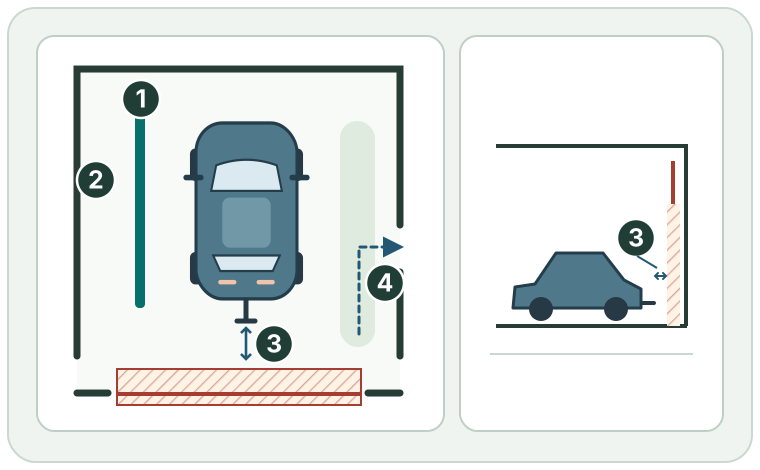
With the garage empty and the door working normally, watch one complete cycle from a clear position off to the side. Note the opening, the path of the moving door and its bottom edge, and anything that projects into the space. Don’t stand under the moving door or use your vehicle to find out where it would hit. If the door binds, hangs unevenly or behaves unpredictably, stop and have it checked.
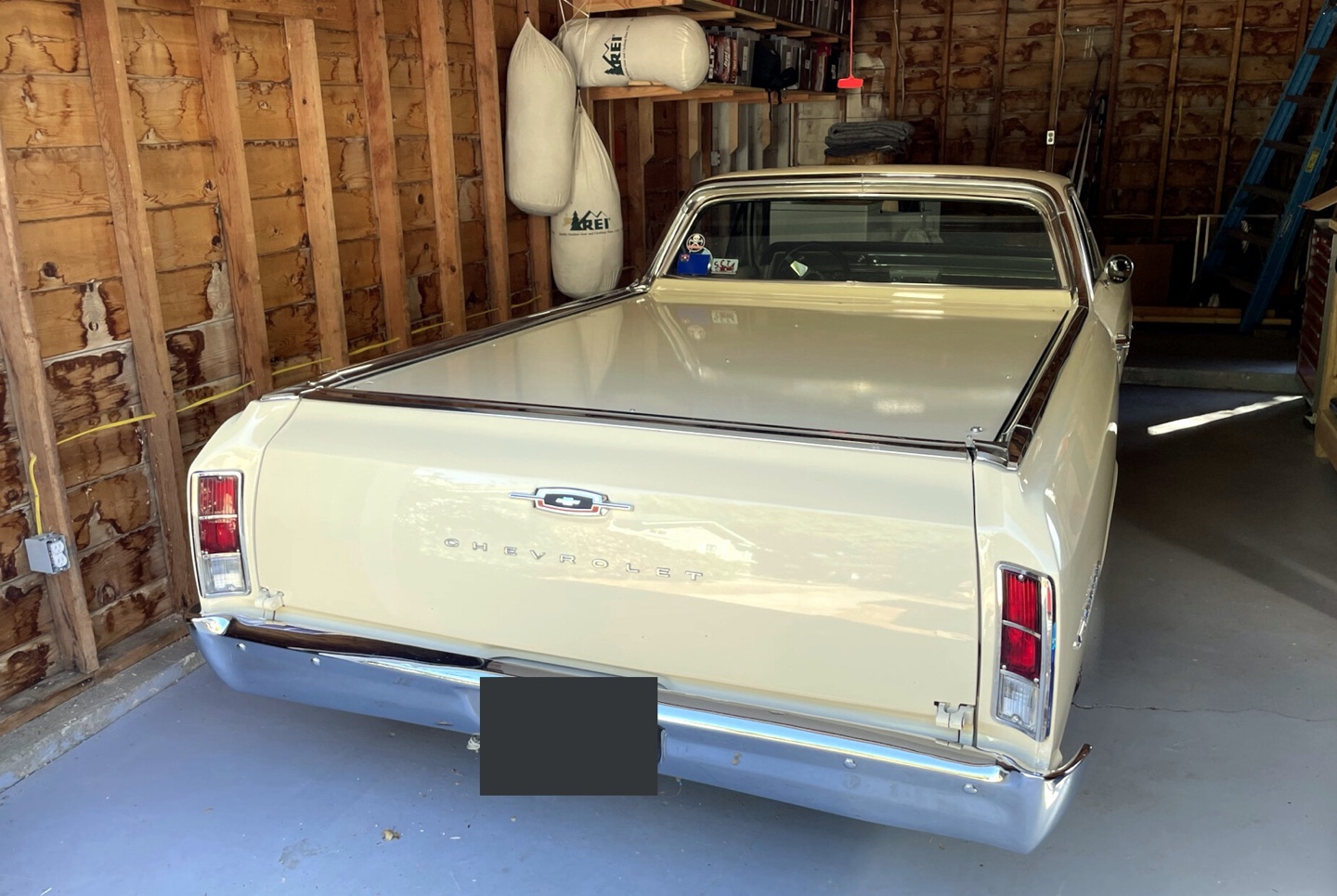
Next look at the vehicle as it is normally parked. A hitch, rear rack, spare tire or long cargo changes where the vehicle ends. Consider the mirrors and any roof rack, too. Inside the garage, check the space needed for the driver’s door, a walk to the house and the liftgate if you use it there. The vehicle fitting between the walls isn’t the same as being able to get out and walk past it.
2. Find a stop point with room on both ends
Open the garage door fully before entering. Pull in slowly, stop and secure the vehicle. Get out and look from the side. Check that the entire vehicle is clear of the path you observed, with room to spare, while leaving usable space at the opposite end. Check that neither the vehicle nor anything it carries blocks the opener’s photo-eye beam. If you can’t confidently see clearance, move the vehicle away before operating the door. The photo eyes cannot tell you whether the upper half of a vehicle clears the door.
Choose a position that still works if you park a little short or a little long. If a small change would put the bumper, hitch or liftgate in danger, a mark isn’t the fix. Clear space, choose a different parking arrangement or leave the vehicle outside until you have one that works.
3. Make a reference you can actually see
Try a flat strip of removable floor-marking tape on clean, dry flooring, where you can see it through a mirror or on an existing camera view. For a stop cue at eye level, try a contrasting tape mark on the side wall lined up with a repeatable reference such as the edge of the driver’s mirror. Use that cue only from the same direction and seating position. A second flat line can help you aim for the same side-to-side position. Don’t put anything on the tracks, door panels, photo eyes, opener rail, springs or release cord.
Treat a floor mark as a reference, not a physical stop. If the floor is unsuitable for tape or it loosens, remove it and use the wall option. Skip loose blocks or anything that could shift, trip someone or get under a tire.
4. Repeat, verify and update
Park again a few times from your normal approach. Each time, secure the vehicle and verify it is clear before closing the door while watching it from a safe place. Check your reference in daylight and at night. Show other drivers how the mark works, and label it if there are different marks for different vehicles.
Repeat the clearance check when you change vehicles, add a rack or hitch, move shelving or use a different parking direction. If the door touches anything, don’t keep cycling it to see whether it will clear the next time.
Common questions
How far should the bumper be from the door? There is no single distance for every garage. Allow for the entire moving path, vehicle projections and repeat parking error. If there is no usable margin, change the layout rather than relying on a precise stop.
Can I use the opener’s photo eyes as the parking mark? No. They detect an obstruction at the beam, not clearance above it or elsewhere along the moving door’s path.
Related Posts
 Practical Guide
How a Sectional Garage Door Works: Parts and Their Jobs
Understand the roles of panels, tracks, springs, the opener and safety sensors. Identify parts from a safe position without dismantling the door.
 Practical Guide
How to Measure a Garage Door Opening and Clearances
Record opening width, height, sideroom, headroom and backroom safely before requesting a garage door quote.
Sources4
- DASMA: Garage Door Opener Safety
- LiftMaster 8550W: installation manual
- Test fitting of my car in my garage · Mitch Barrie (simonov) · CC BY-SA 2.0. Web-sized copy. License plate obscured. Cropped. Adaptation under the same license.