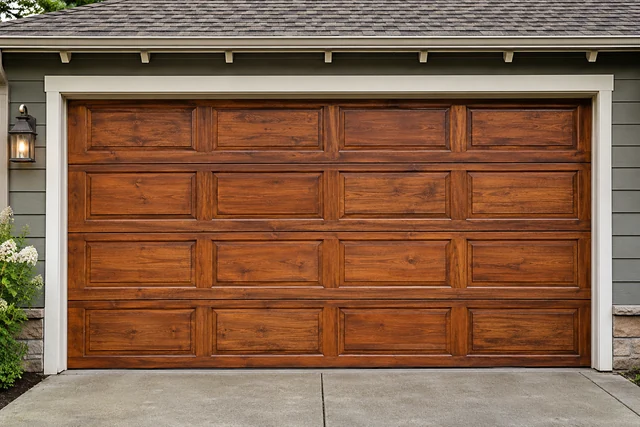
Paint a Garage Door to Look Like Wood: Plan the Finish First
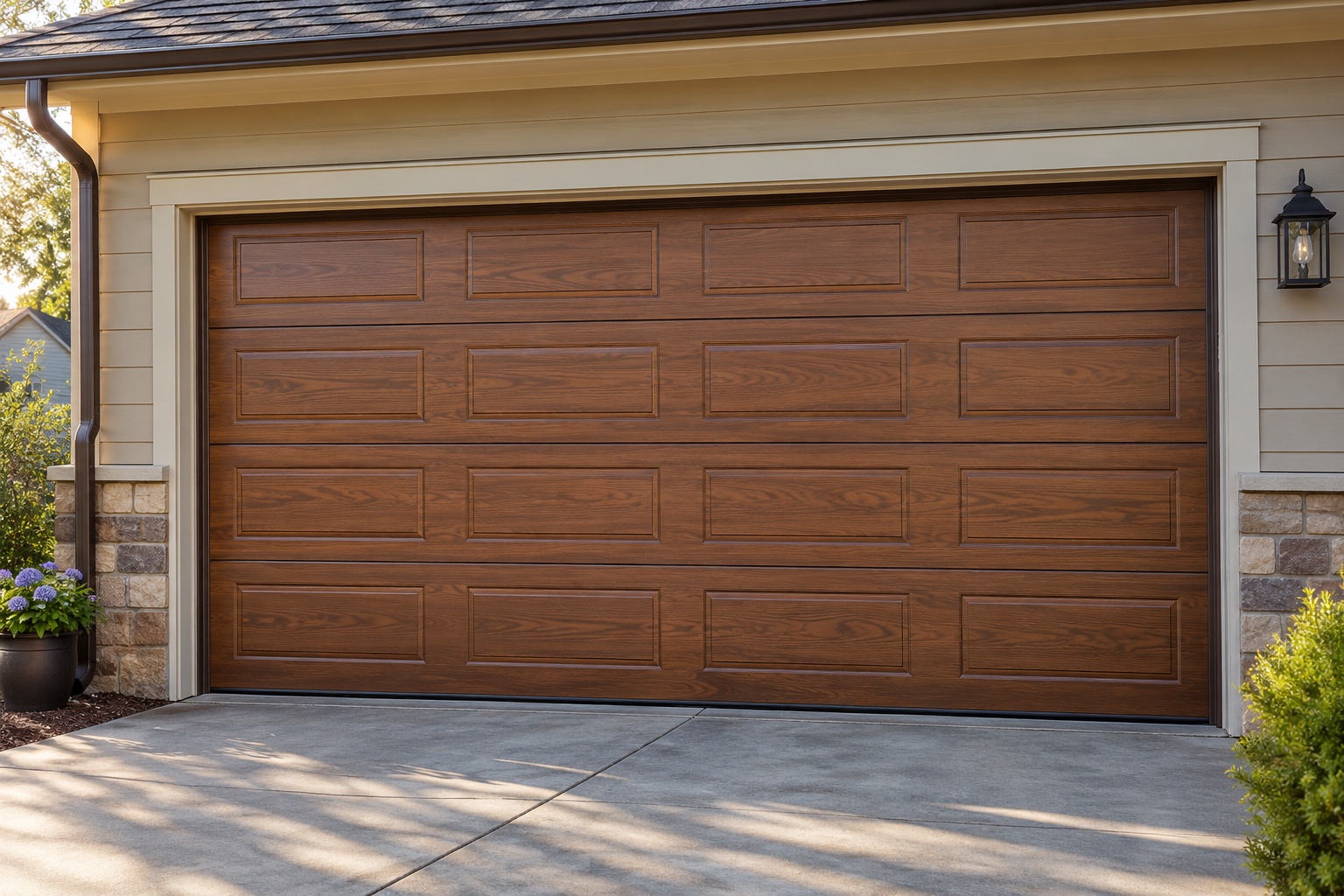
A convincing wood-look finish is more than brown paint. The color underneath, grain direction and contrast must work together across a moving sectional door. First establish that repainting is allowed for the actual surface. A decorative project is not a reason to cover damage or interfere with door operation.
1. Identify what you will coat
Distinguish painted metal, natural wood, composite overlays, vinyl trim and a factory decorative finish. The main panel and window surround may require different treatment. Read the door manufacturer's refinishing requirements and the coating maker's substrate instructions together. If their requirements conflict, do not proceed until the manufacturers resolve the conflict.
2. Choose a complete compatible system
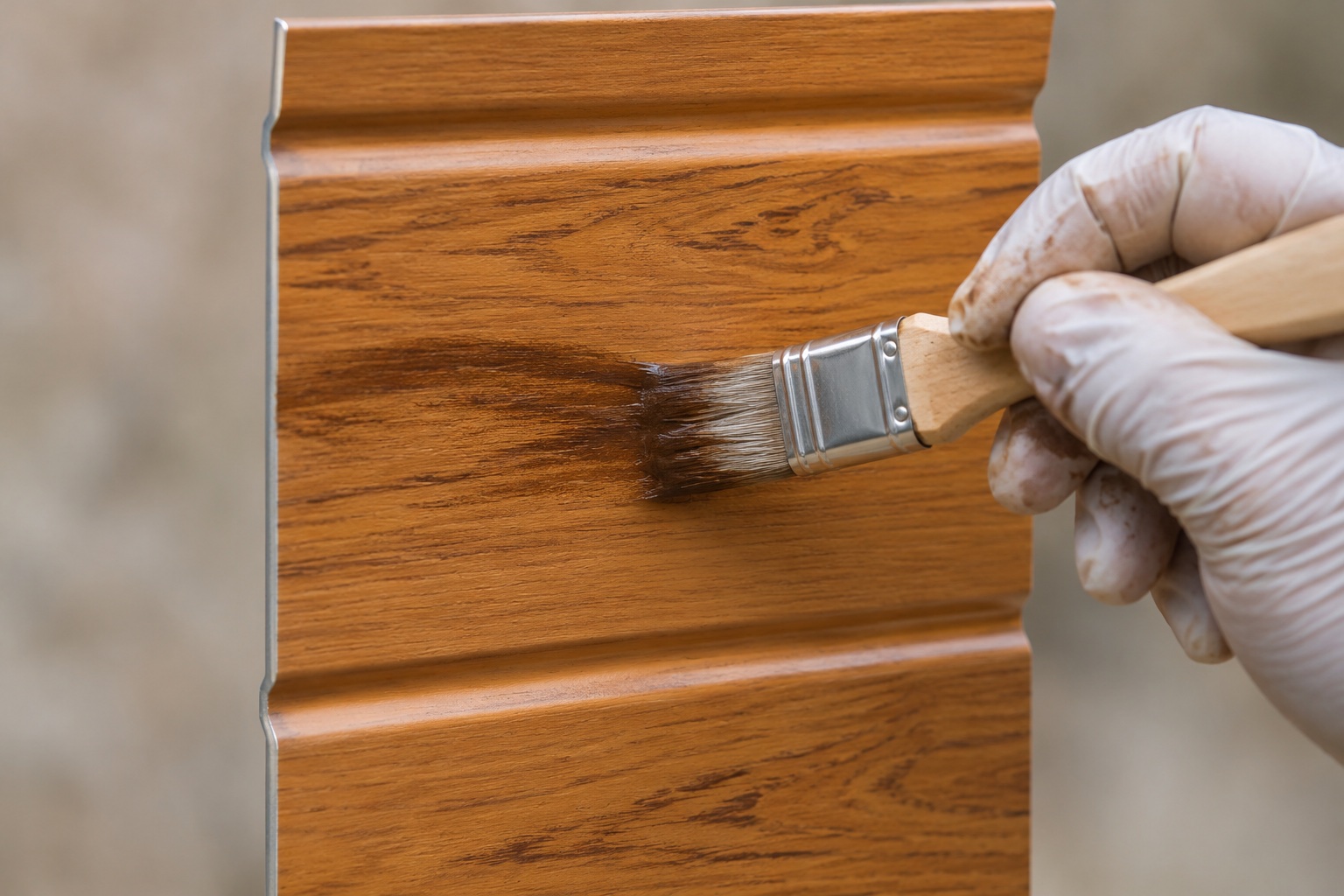
A wood-look system may combine a base layer and grain layer. Do not assume ordinary penetrating wood stain works on painted metal, or that a clear topcoat is always necessary. Ask about adhesion preparation, approved color range, application conditions, drying, curing and maintenance. Clopay warns that some doors have preparation and color restrictions; a coating product's broad surface list does not override those restrictions.
3. Practice the visual effect first
Prepare a separate sample using the proposed layers and a comparable approved surface. Evaluate it in daylight beside the house. Write down the colors and sequence. Compare a restrained grain sample with a higher-contrast version from normal driveway distance. This is a visual trial, not proof that the coating is compatible with the actual door.
4. Map the pattern to the panels
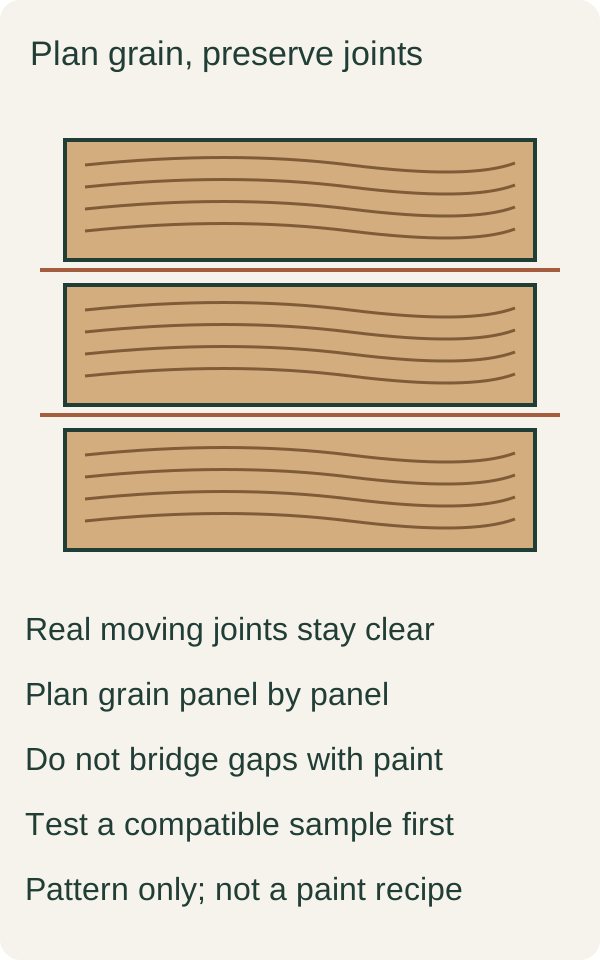
Sketch which areas represent rails, stiles and panels before opening paint. A planned direction change can look more deliberate than dragging identical stripes across everything. Keep the real joints visible and functional. Do not bridge moving gaps with coating, tape, added trim or filler. Keep paint away from tracks, rollers, sensors, labels and weather seals.
5. Prepare and apply only under the chosen instructions
Repair or assess substrate problems first. Use the approved cleaning and preparation process; do not aggressively sand through a factory coating merely to copy a tutorial. Check weather and shade for the whole work period. Follow the selected product's working sequence and cure schedule rather than mixing timings from different kits. Arrange safe access and prevent unexpected operation; do not work with hands near moving joints.
6. Inspect and record the result
After the specified cure, check for unwanted bridging and finish defects before normal use. If movement or seals are affected, stop and seek advice. Keep product names, color details and a sample for future touch-ups. For real wood that needs renewed stain, use the wood restaining guide. For basic repaint preparation, read how to paint a garage door.
Quick questions
Is this the same as a factory woodgrain finish?
No.
Can I use any dark brown?
Not without checking the door's color restrictions.
Should I add decorative wood boards?
That changes weight and construction and is outside this paint-only project.
Related Posts
 DIY Guide
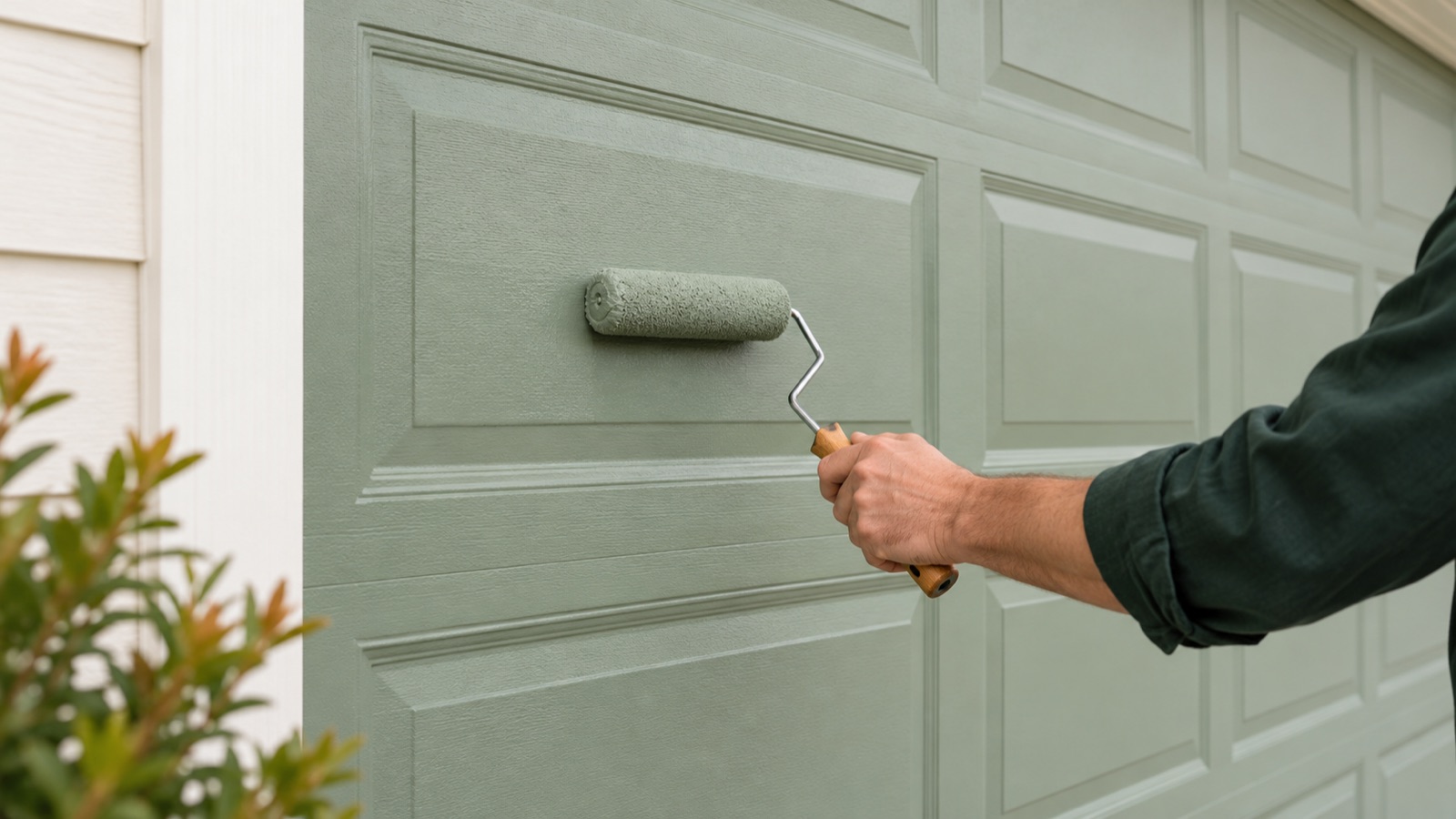
How to Paint a Garage Door: Start With the Material and Finish
Plan a compatible garage door repaint, protect moving joints and labels, and avoid coating choices that can damage the door.
 Practical Guide
How to Restain a Wood Garage Door Safely
Identify the old finish, choose maintenance or restoration, test compatibility and handle oily rags safely before restaining a wood garage door.
Sources
Manufacturer instructions and references for this guide. Match the document to your exact product.
- Clopay: refinishing and color restrictionswww.clopaydoor.com
- Giani: wood-look coating FAQgianigranite.com
- Giani: official instructions indexgianigranite.com