How to Dispose of or Recycle an Old Garage Door and Opener
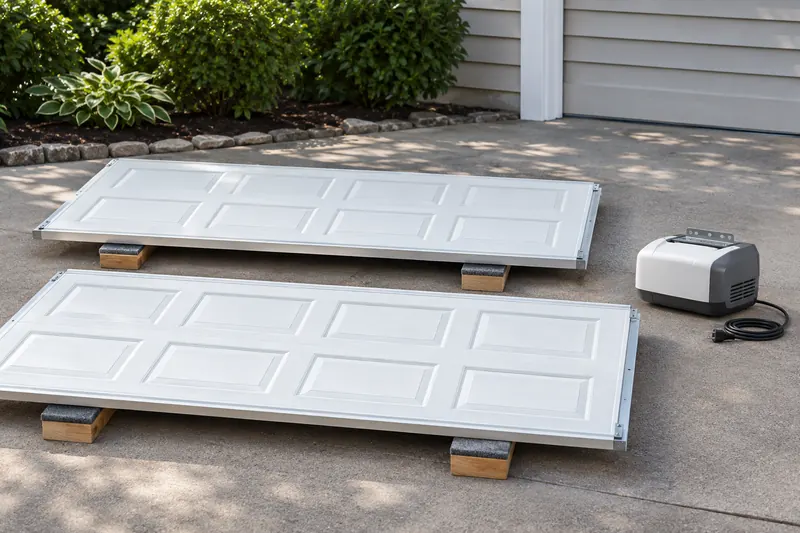
Ask the installer who will remove and haul away the system, then confirm acceptance with the receiving facility. Keep battery disposal separate from ordinary scrap decisions. This is a handoff and collection plan: do not dismantle springs, cables, bottom brackets or an overhead opener to obtain recyclable material.
Arrange the destination before the old equipment comes down. A door panel, an electric opener and a battery may need three different collection routes, even when one installer removes them together.
1. Put removal and haul-away in the quote
Ask whether the quote includes the door, tracks, opener, old controls, packaging and cleanup. Record which items the installer will take and which remain your responsibility. Add this to your comparison of complete installation quotes. Do not assume that 'removal' includes transport or recycling. Obtain the collection destination or disposal arrangement before the installation date, and ask about any separate fee.
2. Describe the panels before asking a recycler
Use existing labels, records or photographs to identify the construction: metal skin, wood, glass, insulation or a vinyl backing. Tell the receiving facility about bonded layers and inserts, not just the visible front. Ask whether it accepts the whole panel, what dimensions it can handle, and whether it requires preparation by a contractor. Metal content alone does not guarantee acceptance. Do not strip insulation, cut panels or separate glazing merely to meet a guessed recycling rule.
3. Give the opener its own disposal route
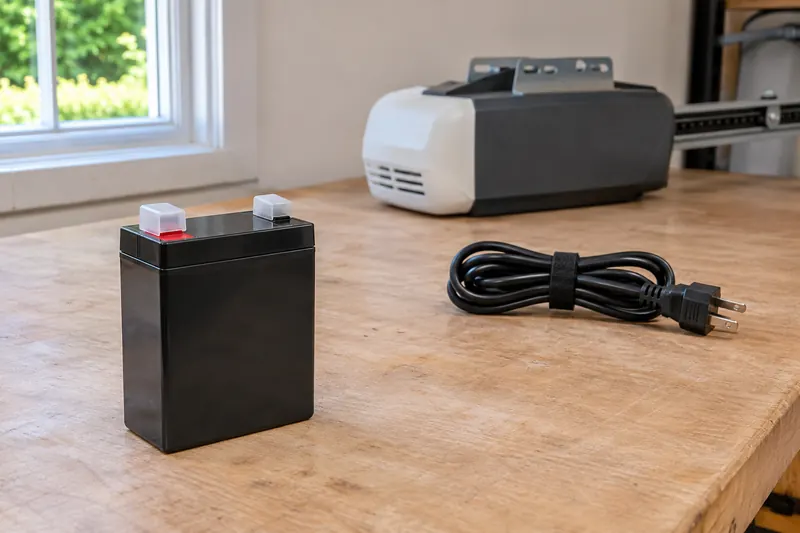
Ask the local electronics or household-waste program specifically about a garage door opener, including its approximate size and whether a battery remains inside. A generic electronics drop-off may not accept every motorized product. For a connected opener, arrange the manufacturer's authorized account-removal and data-clearing process before handoff. Keep a record that it is no longer associated with your household. Donation also requires a willing recipient and equipment suitable for safe reuse; do not pass on a known safety fault as working equipment.

4. Identify batteries without opening a sealed pack
Check the label or documentation for chemistry and handling instructions. Opener backup batteries and remote-control coin cells are different items; the backup battery replacement guide explains that distinction. EPA directs rechargeable batteries and button or coin cells away from household trash and curbside recycling. Use an accepting battery retailer, specialist recycler or household hazardous-waste program. Ask that program how it wants the specific battery packaged. Do not open, crush or puncture a pack.
5. Confirm the appointment and handoff
Before loading anything, confirm the facility's current acceptance, hours, size limits, fees, proof-of-residency rules and whether an appointment is required. Ask separately about damaged, leaking, hot or swollen batteries; do not take one to an ordinary drop-off or mail it without specialist instructions. Arrange professional handling for heavy panels and equipment still overhead. After collection, retain the receipt or contractor's disposal record with the replacement paperwork.
Keep dismantling out of the recycling plan
A closed door can still have tensioned components. Springs, cables and their bottom brackets belong to trained door-system work, not scrap sorting. Tell the installer you want the old system removed safely and the collection loads prepared for the agreed recipients. If the door is damaged or the battery condition is uncertain, explain that before the visit so the contractor can plan appropriate handling.
Common questions
Can every metal garage door go straight to a scrap yard?
No. The facility must accept the actual construction, dimensions and bonded materials. Confirm before transport.
Can an opener go in the normal recycling bin?
Do not assume so. Ask the local program specifically about the opener and any battery; arrange the accepted electronics route.
Should I remove the spring to reduce the load?
No. Spring and cable work requires a trained door-system technician. Recycling is not a reason to dismantle tensioned hardware.
What if the battery is leaking or swollen?
Keep people away and contact the battery manufacturer or local hazardous-waste program for specific handling instructions. Do not treat it as an ordinary drop-off battery.