Repair or Replace a Gate Opener? Compare the Complete Job
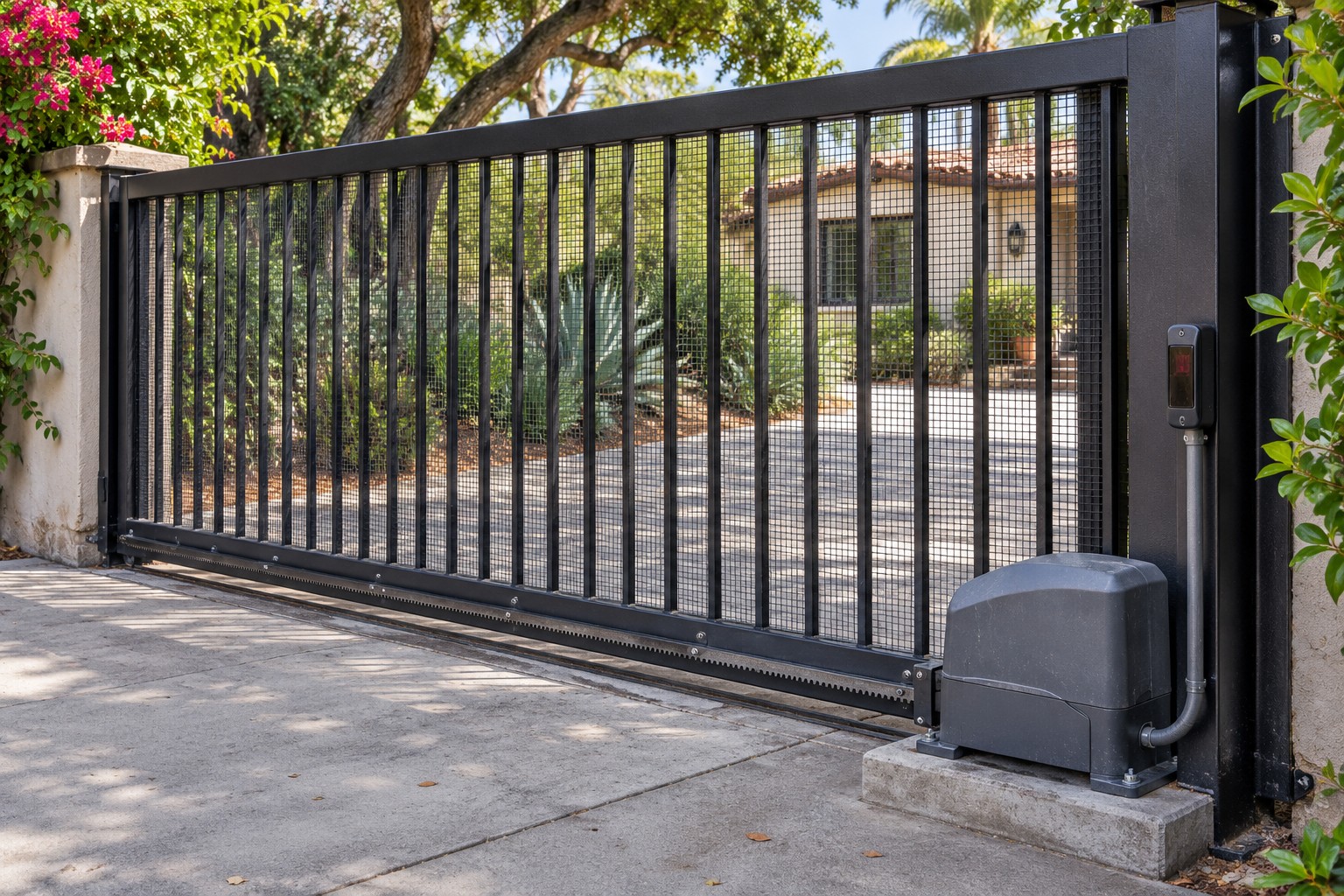
A gate opener that stops working does not automatically need replacement, and a motor that still moves the gate is not automatically worth keeping. The decision should follow a competent assessment of the fault, the gate's condition, the available safety arrangement and the complete cost of restoring dependable access.
This guide helps you compare repair and replacement proposals. It does not diagnose a fault from a symptom or describe internal repairs. For a new failure, start with safe observations when an electric gate is not working. If movement is uncontrolled, equipment is damaged or protection is suspect, stop using it and arrange qualified assistance.
1. Establish what has actually failed
Ask for a written diagnosis that distinguishes the operator from gate hardware, power supply, access equipment and safety devices. “The gate needs a motor” is not a useful conclusion unless the service provider explains what was checked and why the proposed work addresses the cause.
A dragging leaf, damaged support or electrical problem can affect operation without making the drive unit the only issue. Conversely, several worn components can make a small isolated repair an incomplete solution. You do not need to perform internal tests yourself to ask for that distinction.
Request the exact model, approximate service history and the parts implicated by the assessment. Ask which conclusions are confirmed and which remain uncertain until further authorized work. A responsible estimate can acknowledge uncertainty instead of pretending that every intermittent problem is already explained.
Keep the initial assessment separate from permission to replace additional items. Ask how the contractor will handle discoveries, revised costs and approval before the job expands.
2. Resolve safety limitations before comparing price
The system must be capable of safe operation after the work. Ask whether its protective arrangement can be maintained or brought to the required condition with supported components. A repair that restores motion while leaving an unresolved safety limitation is not equivalent to a satisfactory repair.
DASMA's guidance on older gate operators specifically raises concerns about missing protection against entrapment in both directions. Ask a qualified gate professional to assess the actual equipment rather than deciding solely from its age or whether a photoeye is visible.
CPSC's historical gate-safety warning explains the seriousness of entrapment hazards. Its older publication is not a substitute for the current manufacturer's instructions and applicable requirements at your property.
Do not accept increased force, defeated sensors or an unsupported control bypass as a cheaper repair. If a contractor proposes leaving a safety fault unresolved, seek a properly scoped alternative. The choice may be to keep the system out of service while the correct work is arranged.
3. Check parts, documentation and service support
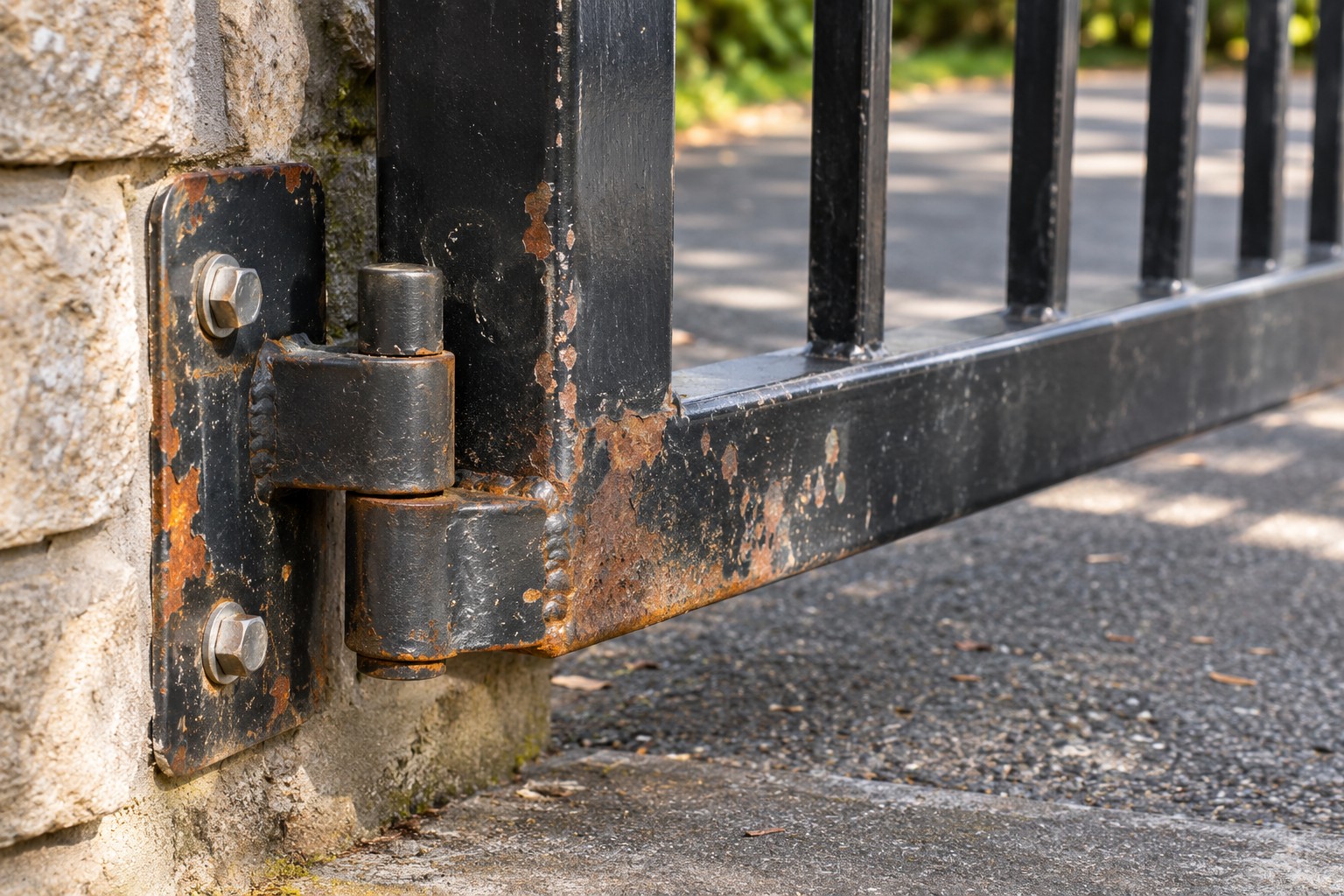
Ask whether the required parts are available for the exact model and revision, whether they are approved replacements and how their suitability is established. A used board with a similar appearance is not automatically equivalent to the specified part.
Clarify the status of the product. Discontinued does not always mean unrepairable, and a familiar brand name does not guarantee that every older component remains supported. Ask for a concrete supply and service plan instead of either assumption.
Request lead times with their uncertainty stated. If access will be disrupted while a part is sourced, discuss an approved temporary arrangement. Do not improvise by disabling protective equipment to keep the entrance operating until delivery.
Also ask what happens after this repair. Will the technician still have access to manuals, diagnostics and compatible accessories? Are there known limitations that would remain? The purpose is not to predict the future exactly, but to avoid paying for a repair whose important constraints were never disclosed.
4. Compare equal scopes, not isolated prices
Request an itemized repair proposal describing the diagnosed fault, replacement parts, labor, any gate-hardware correction and the checks included afterward. Ask what is excluded and what would trigger a revised quote.
Request a replacement proposal covering removal, the new operator, necessary mounting or power work, compatible protection, access-system integration and commissioning. Existing accessories should not be assumed reusable until their compatibility and condition have been assessed.
Compare both proposals over the same practical period. Include expected maintenance, service availability and any recurring service charges relevant to the chosen access arrangement. Do not invent a universal repair-to-replacement percentage or a standard lifespan: neither tells you whether the actual work is sensible.
Keep already-spent money separate from the new decision. Previous repairs may reveal a pattern worth investigating, but their cost alone does not make another repair good or bad. Ask what this expenditure will achieve from today onward.
5. Identify when a focused repair is reasonable
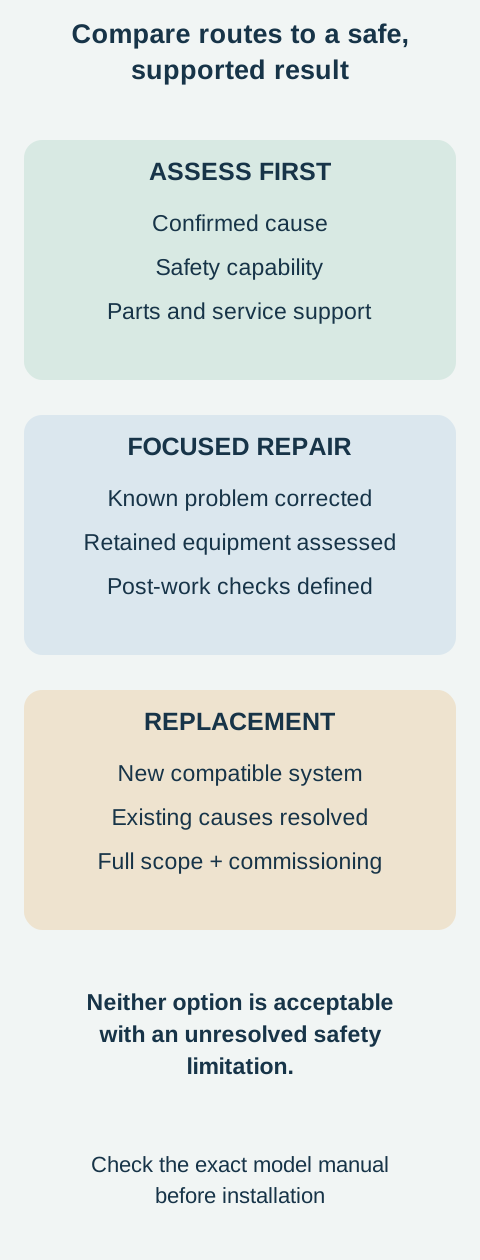
A repair can be a strong option when the problem is clearly identified, approved parts are available and the remaining system is suitable for continued service. Ask the provider to explain the expected result and the condition of the components that are not being replaced.
A limited accessory or power issue may not justify replacing an otherwise appropriate operator. Likewise, an old installation should not be discarded merely because a new model has more connected features. Evaluate the function you actually need.
Set a realistic warranty expectation. Does the repair warranty cover the replaced part and workmanship, or more of the system? Get the actual terms. Do not read a component warranty as a promise that unrelated old equipment cannot fail.
Agree on what will count as completion: correction of the stated fault, the applicable functional and safety checks, documentation and an explanation of any remaining limitations. “It moved once” is not a useful acceptance standard.
6. Identify when replacement deserves priority
Replacement deserves serious consideration when the existing arrangement cannot be supported safely, critical parts cannot be obtained responsibly or the required work leaves too many unresolved limitations. Repeated failures can justify a broader review, but they still need an explanation rather than an automatic sales conclusion.
A changed use pattern can also matter. More traffic, different gate panels or an altered access requirement may mean the old selection no longer fits. Use the operator-selection guide to review capacity, wind and duty instead of choosing a replacement only by matching the old housing.
Replacing the operator does not automatically solve defects in the gate itself. Ask whether supports, movement hardware, protective layout or power provision require separate work. Carrying an unresolved cause into the new installation can undermine the investment.
Have the retired equipment handled properly. The SwingSmart 535 manual treats decommissioning and disposal as a controlled process, including batteries and other materials. Do not dismantle or discard potentially hazardous components as an informal homeowner task.
7. Make the decision and document the handover
Choose the proposal that gives a credible route to safe, supported access for the actual site. If neither quote clearly describes that result, ask for clarification before authorizing work. A second assessment can be useful when the diagnosis or scope is disputed.
Record the agreed work, exclusions, price basis and approval process for changes. Confirm who will coordinate any gate, electrical or access-control trades so that responsibility does not fall between separate contractors.
After completion, ask for the service record, parts or model identification, actual manuals and the commissioning results included in the scope. Receive training in normal operation and the supported response to outages or faults.
For connected systems, confirm that the responsible owner controls the account and that obsolete permissions are removed through the supported process. Keep service contacts available. A successful repair or replacement ends with a usable, understood system, not merely a new invoice.
Frequently asked questions
Is there an age when every gate opener should be replaced?
No universal age answers the question. Safety capability, condition, parts support, use and the complete repair scope matter more than a single birthday.
Does replacing the control board make the system new?
No. It changes one component. Ask what condition the drive, gate hardware, protection and other retained equipment are in.
Should repeated faults always mean replacement?
They justify a broader assessment. The cause may involve the gate or supply rather than only the operator, so replacement without diagnosis can miss the problem.
What should I request with either quote?
A documented diagnosis or design basis, complete scope, exclusions, compatible parts, post-work checks, warranty terms and responsibility for any changes.
Related Posts
 Practical Guide
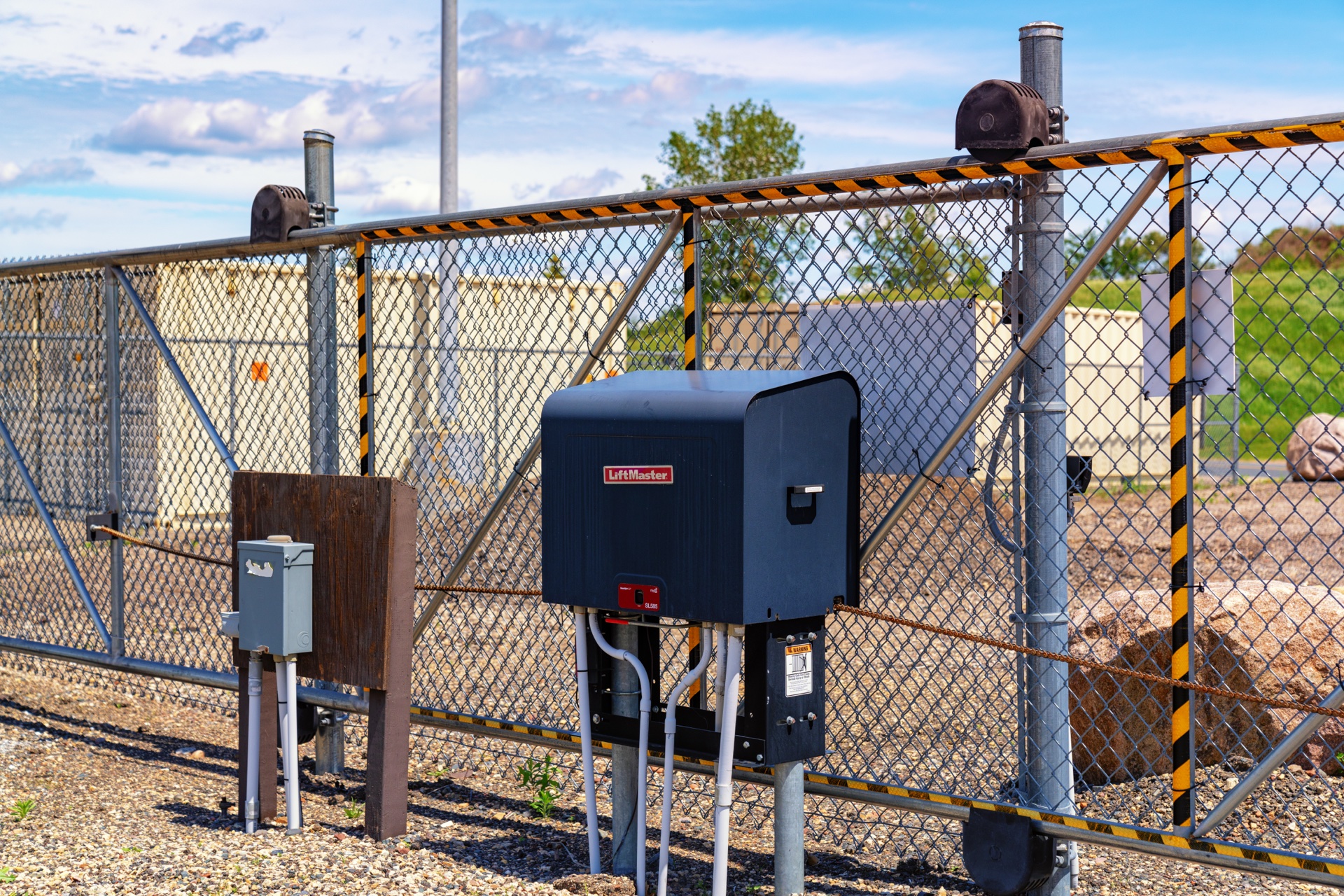
Electric Gate Not Working: Safe Checks Before Service
Separate a control problem from a gate-system fault with safe observations, then give your gate technician the information needed to investigate.
 Practical Guide
How to Choose a Gate Opener: Weight, Length, Wind and Cycles
Compare gate-opener capacity, wind exposure, duty and power requirements, then request a complete model-specific installation proposal.
Sources
Manufacturer instructions and references for this guide. Match the document to your exact product.
- DASMA's guidance on older gate operatorswww.dasma.com
- CPSC's historical gate-safety warningwww.cpsc.gov
- SwingSmart 535 manualsupport.hysecurity.com
- Nice | HySecurity: Six Questions to Ask When Choosing a Gate Operatorhysecurity.com