Keep an EV Charging Cable Clear of Your Garage Door
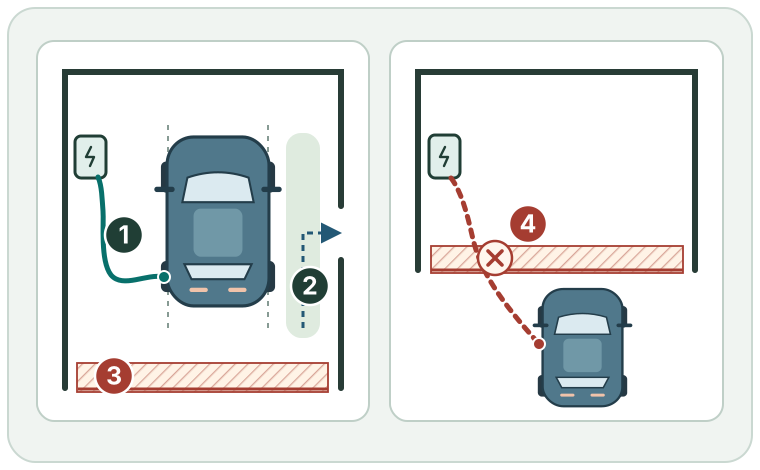
If a charging cable has to run under the garage door to reach the vehicle, the route doesn’t work for a door you need to close. Don’t count on the bottom seal or the safety sensors to protect the cable. Find a way to park and charge that keeps the cord out of the opening and out of traffic.
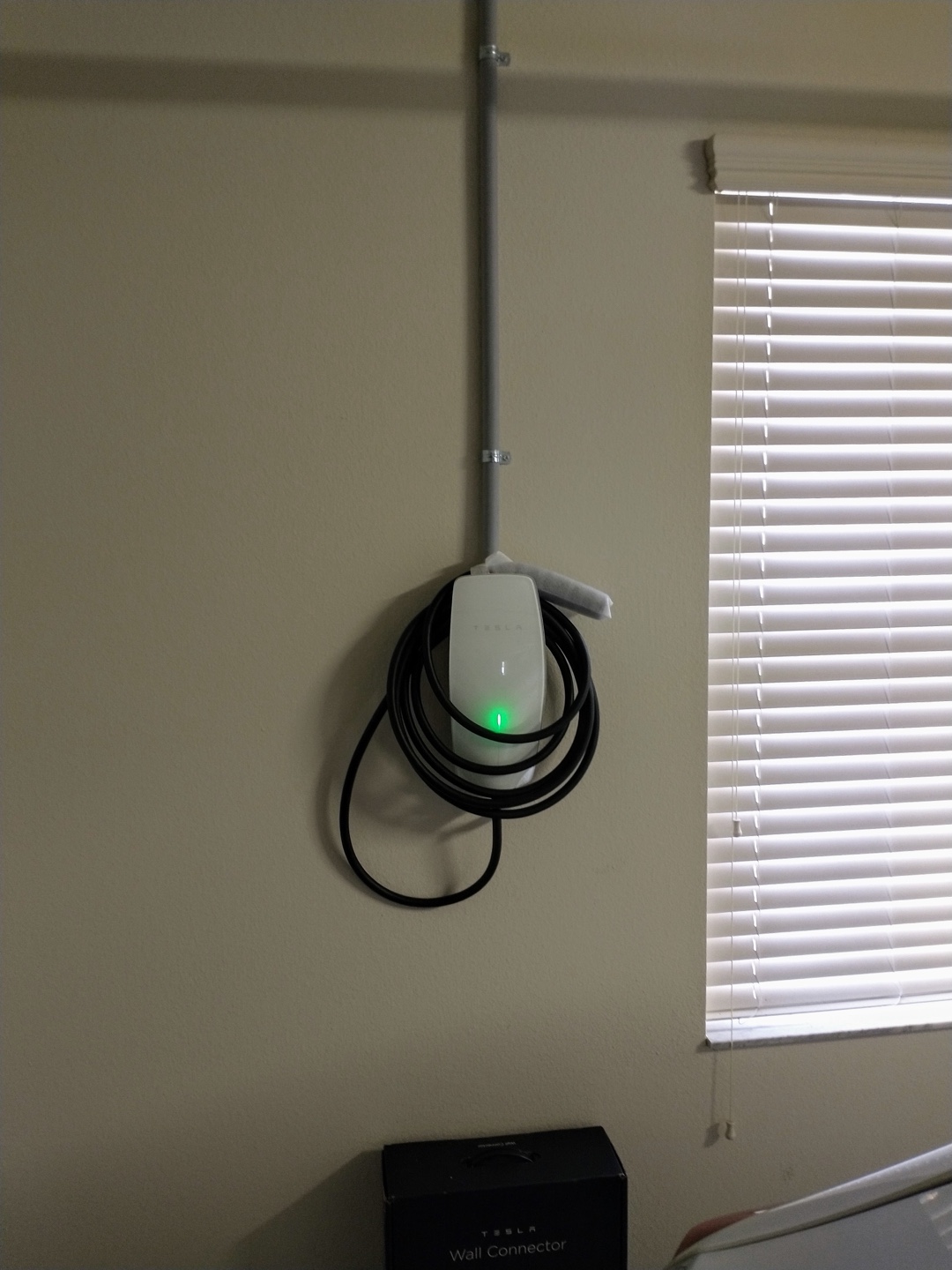
1. Rule out the places a cable can get caught
With the charger disconnected from the vehicle and the cable stowed, look at the bay. Mark the closing edge at the floor, the side tracks and anything that moves nearby. A cable should not go under the closing edge, between the door and jamb, over a track, around the release cord, or where the opener arm or door can catch it. Never clip or tie it to door or opener hardware. Keep it out of the tire path and off walkways, including the route from the car to the house.
A floor mat, cord cover or foam spacer does not make a path under a closing door acceptable. Photo eyes can miss a cable lying beneath their beam. Don’t partially close the door onto a cable, hold the door off the floor with a spacer or bypass any safety device.
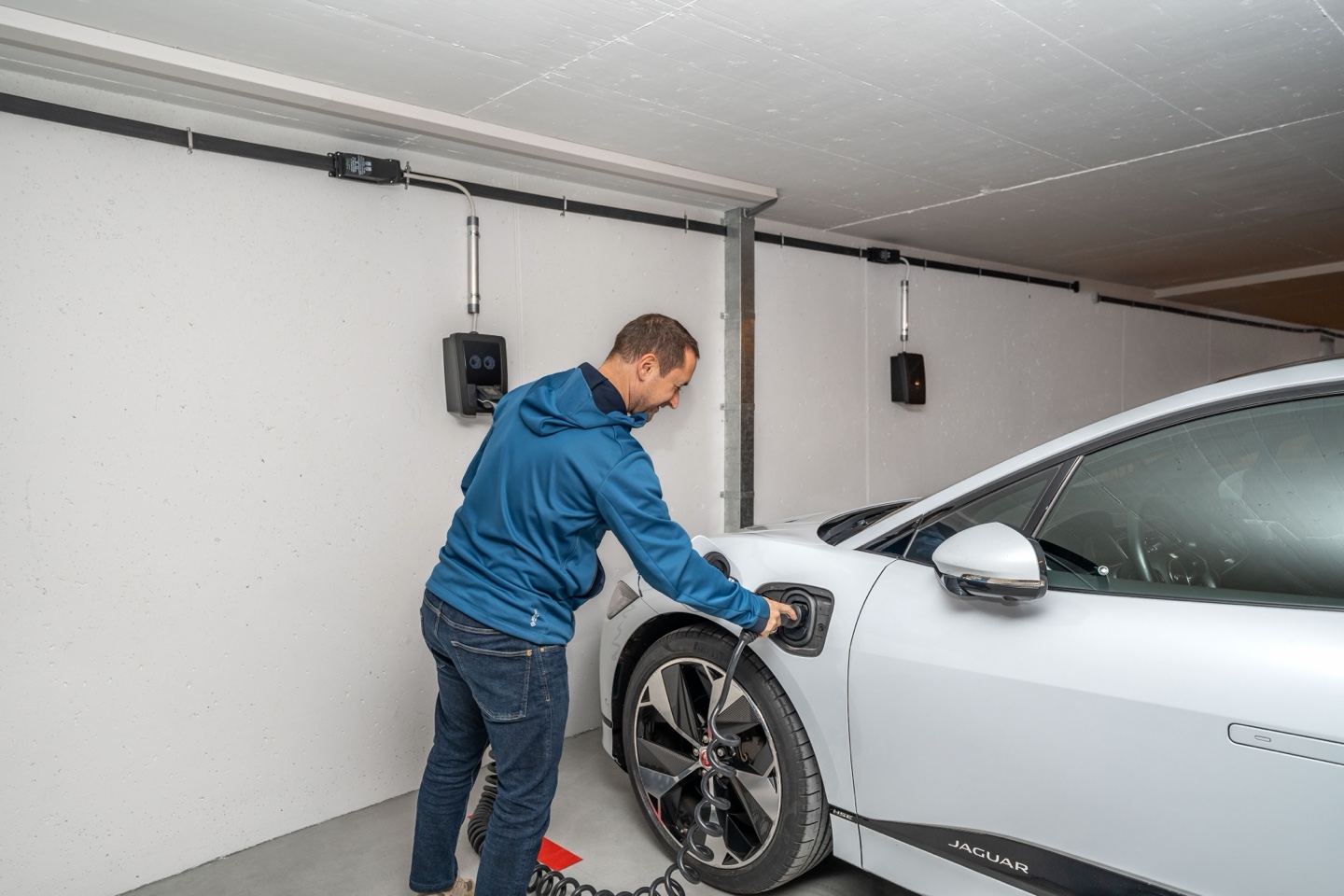
2. Choose a parked position that lets the cable reach without strain
With the car parked and secured, locate the charge port and follow the route along the usable side of the bay. For an indoor charger and indoor vehicle, keeping the cable on the charge-port side often avoids crossing behind a tire or through the main walkway. If facing the other way gives you a better route, check mirror, bumper, liftgate and door clearances before making that your usual position.
Follow the charging equipment and vehicle instructions. A usable route reaches the port without pulling on the handle, sharp bends or surplus loops on the floor. Leave enough room to plug in and unplug without stepping into a door’s path. If an indoor charger cannot reach an outdoor vehicle without a cable crossing the garage opening, don’t route it under the door or plan to leave the door partly closed. Ask a qualified electrician to review an equipment location suitable for the intended charging position and conditions. Don’t drill a cable pass-through, splice the cable or improvise an extension.
3. Keep the route clear during and after charging
Park completely before handling the cable. With the vehicle and cable both clear, and only if the route is safe for the door’s normal operation, use the door normally while watching it from a safe location. Do not move the door if you are unsure whether it will touch the cable. Once you’re done charging, disconnect as the equipment instructions direct and return the handle to its holster or designated holder. Manage slack using the method specified for that equipment. Keep the cable unplugged from the vehicle and stowed before backing out. In a two-car garage, check the second vehicle’s tire route as well.
If a door pinched the cable or a vehicle rolled over it, stop using it. If there is damage or you can’t determine its condition safely, keep others away and follow the maker’s instructions for making the equipment safe and getting it inspected or replaced. If there is smoke, sparking or exposed wiring, stay clear rather than handling the cable. Don’t tape it up and keep charging.
Common questions
Can I run a flat section of cable under the door seal just once? No. A closed seal doesn’t show that the cable escaped damage, and the sensors are not cable protection.
What if the charger only reaches across the main walkway? Try a different parked position if it also clears the vehicle and door. If there is still no protected route that reaches without strain, have a qualified electrician assess a different equipment location rather than improvising a cable.
Related Posts
 Practical Guide
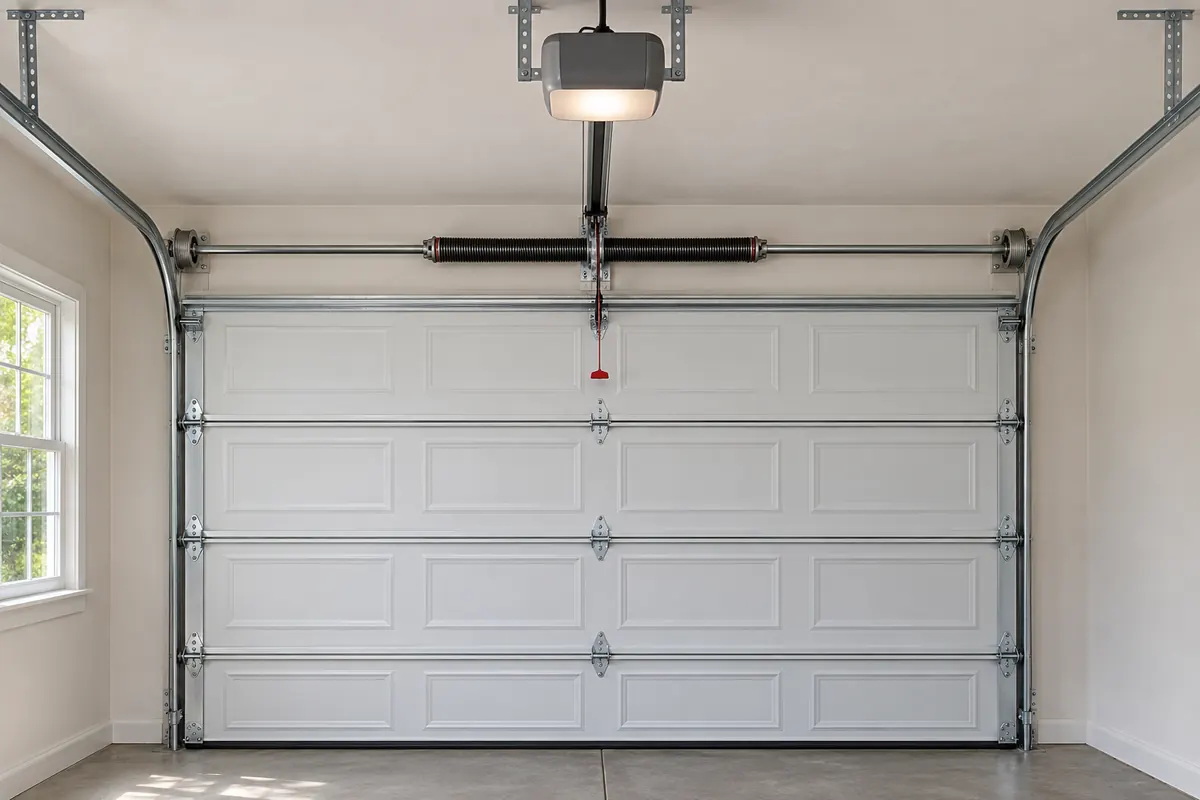
How a Sectional Garage Door Works: Parts and Their Jobs
Understand the roles of panels, tracks, springs, the opener and safety sensors. Identify parts from a safe position without dismantling the door.
 Practical Guide
How to Measure a Garage Door Opening and Clearances
Record opening width, height, sideroom, headroom and backroom safely before requesting a garage door quote.
Sources9
- Tesla Universal Wall Connector: placement
- Tesla Gen 3: cable storage
- Tesla Universal: damage warning
- US Department of Energy: charging at home
- DASMA: opener safety
- Tesla Wall Connector · Whoisjohngalt · CC BY-SA 4.0. Web-sized copy. Adaptation under the same license.
- Man Charging Electric Vehicle in Indoor Garage (34800930) · smart-me AG · Pexels License. Web-sized copy.