Can Sunlight Affect Garage Door Sensors? Recognize the Pattern Safely
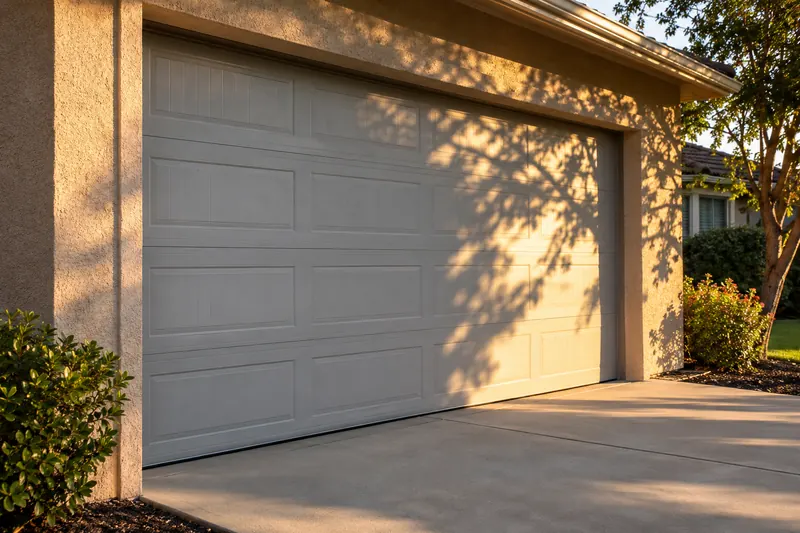
Yes, direct sunlight can interfere with some garage-door photoeyes, especially at the receiving sensor. A door that opens normally but refuses to close at a similar sunny time is a useful clue, not a diagnosis. Check the model, indicators and ordinary obstructions before choosing a manufacturer-approved remedy.
An intermittent fault is frustrating because the door may work later without any repair. The goal is to record what changes when the fault appears, not force the door to close. Do not stand beneath an open door, cover a sensor or use an override as a daily workaround. If the door is damaged or the safety system fails, stop normal automatic use and arrange service.
1. Confirm which sensors you are looking at
The low photoeyes on opposite sides of the opening monitor the path across the doorway. They are different from a battery-powered door-position sensor used by some smart controllers. Find the opener and photoeye model in the manual before interpreting a light. Chamberlain’s sunlight guidance describes a particular sender-and-receiver arrangement; its indicator colors and blink count are not a universal chart for every brand or generation.
2. Record the time and conditions without extra cycles
When the problem occurs during ordinary use, note the time, whether sunlight reaches a lens, which indicator changes and the exact displayed code. Record whether opening worked and whether the problem also occurs after sunset or on cloudy days. A photo from outside the moving door’s path can help show the sun angle. Do not repeatedly cycle the door to collect evidence, and do not stand in the beam while watching the indicators. Keep people, pets and vehicles clear.
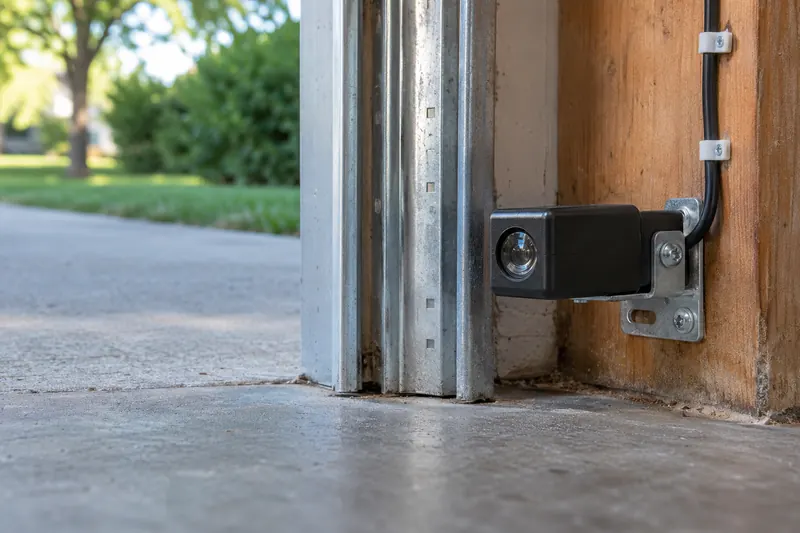
3. Rule out visible obstruction and an unstable mount
With the door stopped, look for leaves, stored items, dirt on the lens or obvious movement of the sensor bracket. Follow the product manual for permitted cleaning; do not loosen track hardware or touch damaged wiring. An alignment problem can coexist with glare, and a light that changes as the door vibrates may need a different investigation. If the evidence points to aim or mounting rather than sunlight alone, use the model-aware guide to aligning garage-door sensors without bypassing them.
4. Choose protection that preserves the safety beam
Check the opener manufacturer’s remedy for the exact sensor. LiftMaster lists a sunblocker kit, 041B0873, but explicitly directs owners to verify model compatibility before ordering. That is an example, not a recommendation for every photoeye. An approved shield must leave the required sensing path and normal door movement unobstructed. Do not improvise with tape over the lens, a cup, a dangling cardboard cover or a change in sensor height. Appearance alone does not establish that an accessory is compatible.

5. Leave uncertain relocation and wiring to a technician
Some manufacturer guidance describes moving the sender and receiver to opposite sides. That changes the installation and may change which time of day causes exposure; it is not a generic fix to copy between products. Give a qualified technician the exact model and your observations if shielding, mounting or wiring is uncertain. Do not cut or extend wires from a general article. A sensor that remains unreliable in shade, has damaged wiring or fails a required test needs attention beyond a sunlight explanation.
6. Verify the remedy before returning to normal use
After an approved correction, follow the exact manual’s photoeye and contact-reversal tests. They check different functions; a steady indicator alone does not prove both work. The guide to testing garage-door sensors and recognizing a failed test explains that distinction. Keep your time-and-condition notes and check whether the original sunny-period problem returns during normal use. If it does, or a required test fails, stop relying on automatic closing and arrange further inspection.
What to send with a service request
Provide the opener model, sensor identification if available, the fault time, indicator or code, and a safely taken photo of the exposure. Separate observations from your conclusion: “receiver indicator flickers at 4 p.m. with sun at the opening” is more useful than “the sensors are bad.” If you cannot secure the opening safely, contact a qualified door service provider; do not improvise a mechanical or electrical bypass.
Common questions
Does a problem at sunset prove that sunlight is the cause?
No. Timing is a clue. Obstructions, alignment, wiring and other faults still need to be considered using the correct manual.
Can I cover one sensor to stop the glare?
Do not block its lens or defeat the sensing path. Use only a compatible manufacturer-approved remedy and perform the required tests afterward.
Will every sensor need the same sun shield?
No. Check the exact sensor and opener compatibility. A shield intended for one product is not automatically suitable for another.