Can a Manual Garage Door Be Motorized?
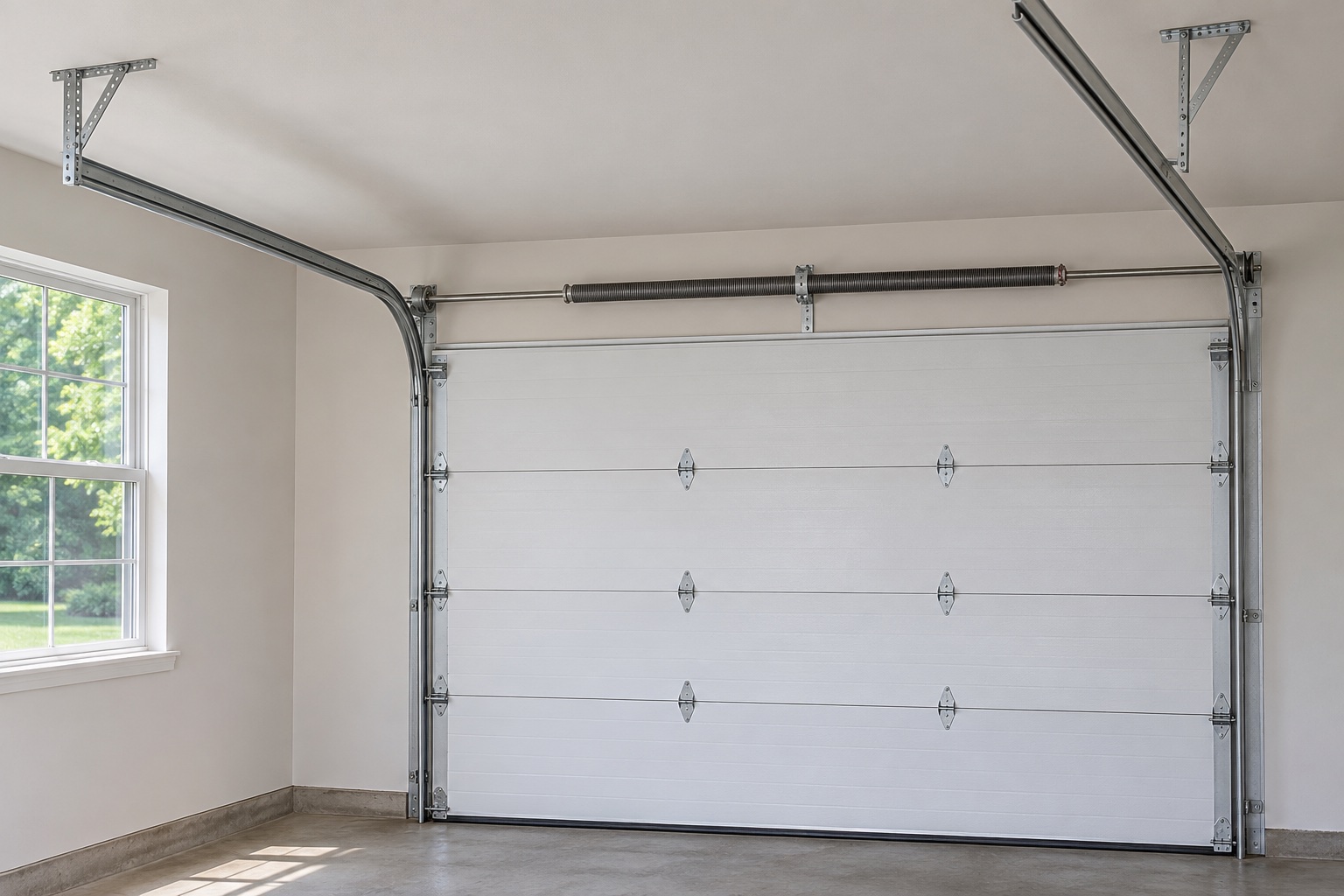
Often, yes: a suitable existing door can receive an opener without replacing the entire door. But a door that you can lift by hand is not automatically ready for a motor. Its condition, construction, attachment provisions and operating space must work with the proposed opener. Start with a feasibility assessment, not a motor purchase.
1. Define what “manual” means in your garage
Tell the installer whether the door has never had an opener, or whether an old opener was removed. Those starting points can look similar but leave different questions. Existing holes or a bracket do not establish that the door is reinforced correctly, and an old ceiling outlet does not establish electrical readiness.
From the floor, record the door label if readable, its approximate size, its material and whether it is sectional, one-piece or a rolling curtain. Photograph the full inside face and the overhead arrangement without moving a suspect door. Keep any original paperwork. If no model can be identified, put that uncertainty on the assessment list instead of choosing parts by appearance.
2. Ask whether the existing door can stay
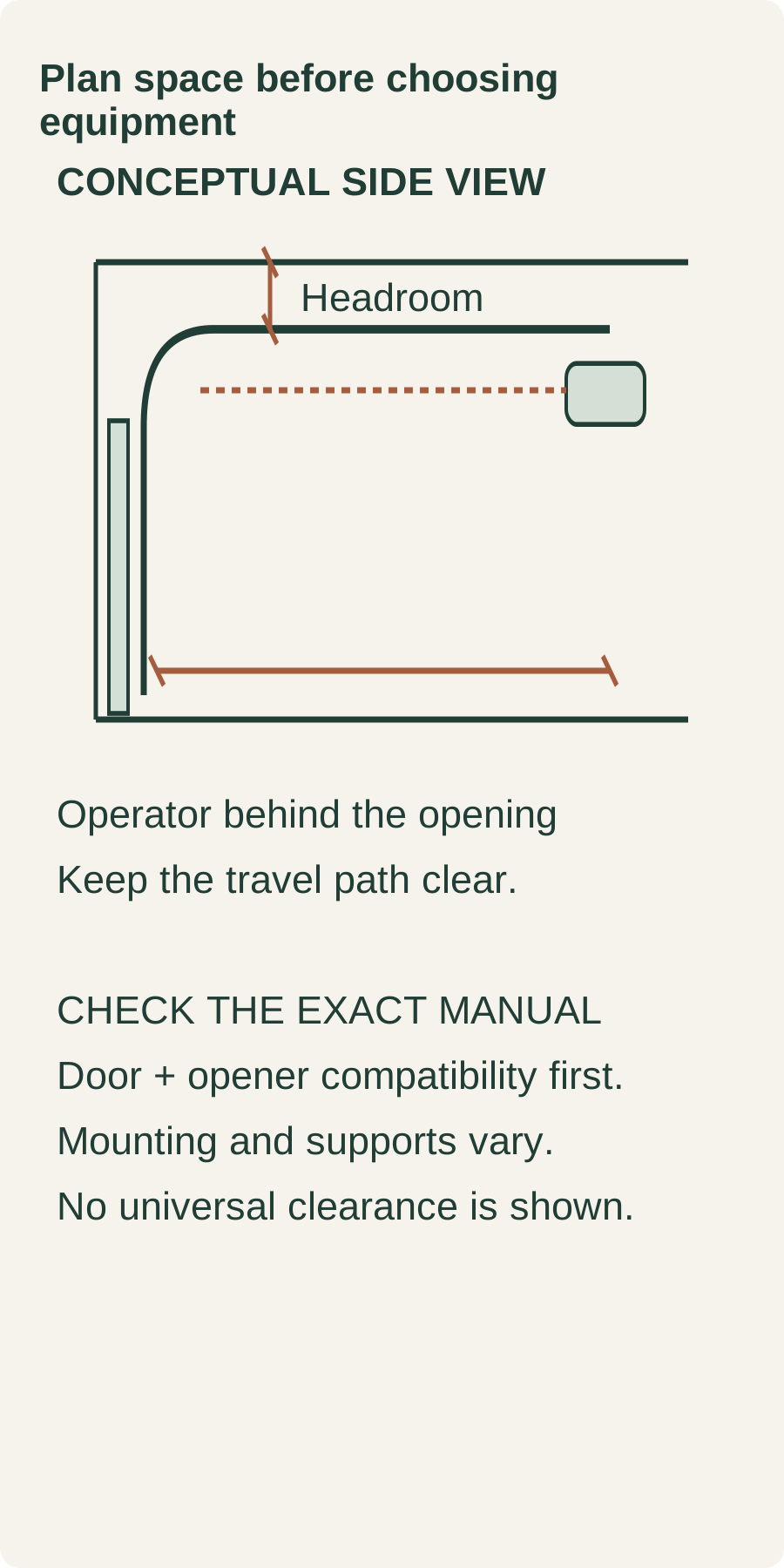
Request a clear decision about the door itself before choosing an opener. Ask the professional to assess its condition and counterbalance, identify repairs and explain whether the manufacturer supports the proposed attachment. “It opens” is not the same as a documented conversion plan.
Divide the answer into three outcomes:
- Suitable after ordinary preparation: the door can remain with a specified opener and its required fittings.
- Suitable after repairs or approved changes: the quote separates that work from the motor installation.
- Suitability not established: identification, damage, incompatible construction or a space conflict must be resolved before ordering.
A refusal to approve one opener does not automatically mean a new door is necessary. Ask what failed the assessment and whether another documented arrangement is available. Conversely, do not accept a more powerful motor as the answer to a door that is difficult or unsafe to move.
3. Identify what first-time automation adds
A ceiling-mounted trolley opener introduces a connection to the door. Clopay states that reinforcement depends on the door model and size. A small attachment bracket alone is not evidence that the complete specified reinforcement is present. Have the door manufacturer’s instructions and the selected operator’s instructions checked together.
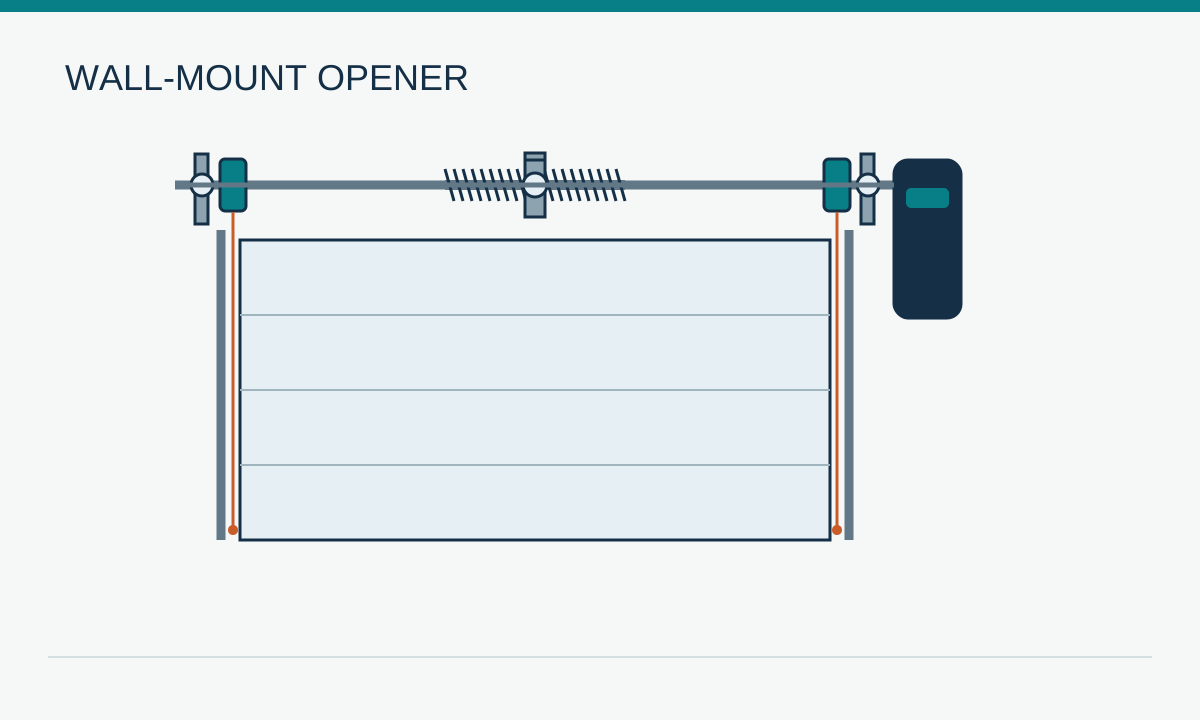
Do not assume a wall-mounted opener avoids all compatibility work. It uses a different drive arrangement and must match the door’s shaft, drums and lift system. For that branch of the decision, use the separate wall-mount opener compatibility guide rather than applying trolley-opener assumptions.
Ask the installer to list the proposed motor, its rail or drive arrangement, required door attachment provisions, safety equipment and controls. The purpose is to see the complete conversion, not to assemble a shopping list of unrelated parts.
4. Reserve space and suitable power
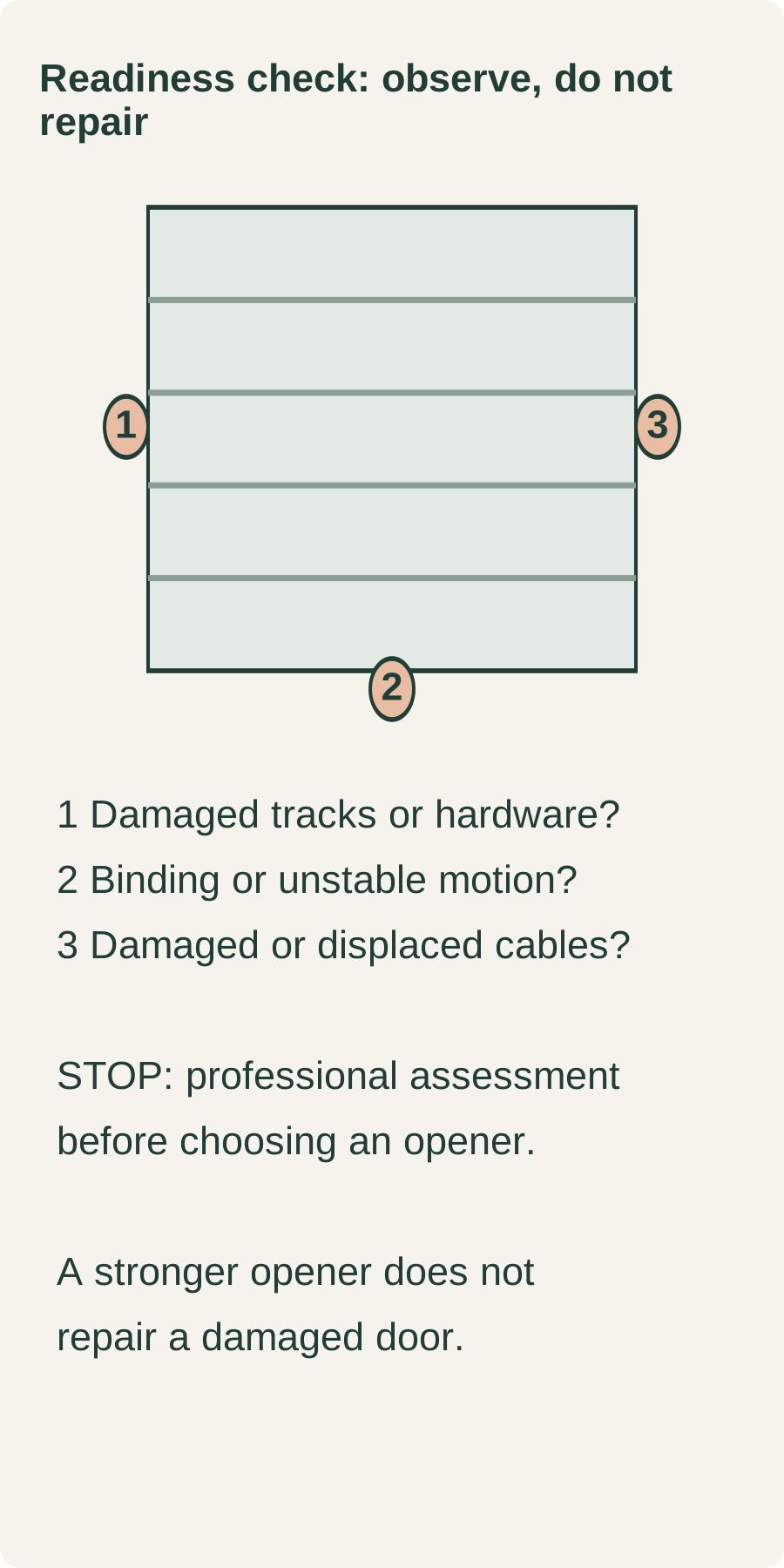
Show everything that must remain in the garage: ceiling racks, lights, pipes and the vehicle’s roof equipment. Have the installer check the full travel path, not merely a stationary view of the closed door. Record whether anything must move and who is responsible.
Genie’s hanging-kit instructions require support in framing rather than ceiling covering alone and prohibit an extension-cord connection. For your project, have the chosen opener’s mounting and supply requirements verified. If electrical work is needed, arrange a qualified electrician. The electrical requirements guide covers that separate assessment in more detail.
5. Include the manual hardware in the changeover
The manual door’s pull rope and lock deserve an explicit line in the conversion scope. Clopay’s steel-door instructions call for removing the pull rope and addressing the lock when fitting an automatic operator. Have the installer follow the instructions for your door and opener; do not run a motor against an engaged manual lock.
Ask how you will enter and operate the garage during a power failure. Tell the installer if there is no separate pedestrian entrance. Have emergency release and any proposed backup arrangement explained for the chosen equipment. This is also the time to say who needs a wall control, remote or keypad. App features can be considered afterward; they do not resolve a mechanical fit problem.
6. Compare conversion with replacement on the same basis
Request a conversion quote that separates door repairs, reinforcement, the opener package, electrical work and commissioning. If replacement is also suggested, ask which existing limitation it resolves. Compare complete usable systems, not a motor-only price against a fully installed new door.
Once feasibility is established, move to the opener installation planning guide for scheduling, household access and handover. Keep this first decision simple: can the identified existing door be automated safely, what must change, and who has verified it?
Frequently asked questions
Does motorizing a manual door mean replacing the springs?
Not automatically. The professional must assess the existing counterbalance and the chosen opener’s compatibility. Do not order a spring conversion merely because the door is currently manual, and do not attempt tension adjustments yourself.
Can any manual door use a standard ceiling opener?
No. Confirm the exact door type and manufacturer-approved application. A sectional-door installation example does not approve a one-piece or rolling door.
Is an old bracket proof the door is opener-ready?
No. It could be incomplete, damaged or intended for different equipment. Ask for the required reinforcement and connection to be identified.
Should I buy the opener before the assessment?
Wait until the exact door, required arrangement and site constraints are confirmed. That avoids selecting equipment around an assumption that later proves wrong.
Related Posts
 Practical Guide
Plan a Garage Door Opener Installation or Replacement
Prepare for an opener installation with a door assessment, compatible equipment, site survey, clear scope and a safety-focused professional handover.
 Practical Guide
Wall-Mount and Jackshaft Openers: How They Work and When They Fit
Learn how wall-mount openers drive a torsion shaft and compare model-specific door, clearance, outlet, lock and sensor requirements before buying.
Sources
Manufacturer instructions and references for this guide. Match the document to your exact product.
- Clopay: garage-door FAQ, opener reinforcementwww.clopaydoor.com
- Clopay steel residential door instructions, C32-R03-0614: safety and automatic-opener attachmentcdn.clopay.com
- Clopay: garage-door safety checklistwww.clopaydoor.com
- Genie 41738R hanging-kit instructions: framing and electrical supplystore.geniecompany.com