Electrical Requirements for a Garage Door Opener
Most U.S. residential garage door openers use a standard 120 V AC household supply, usually 60 Hz, through a properly grounded outlet within reach of the factory cord. Match the exact opener’s input label and installation manual. Have an electrician confirm circuit capacity, grounding, required GFCI protection, outlet location and local permit requirements. Do not plan to use an extension cord.
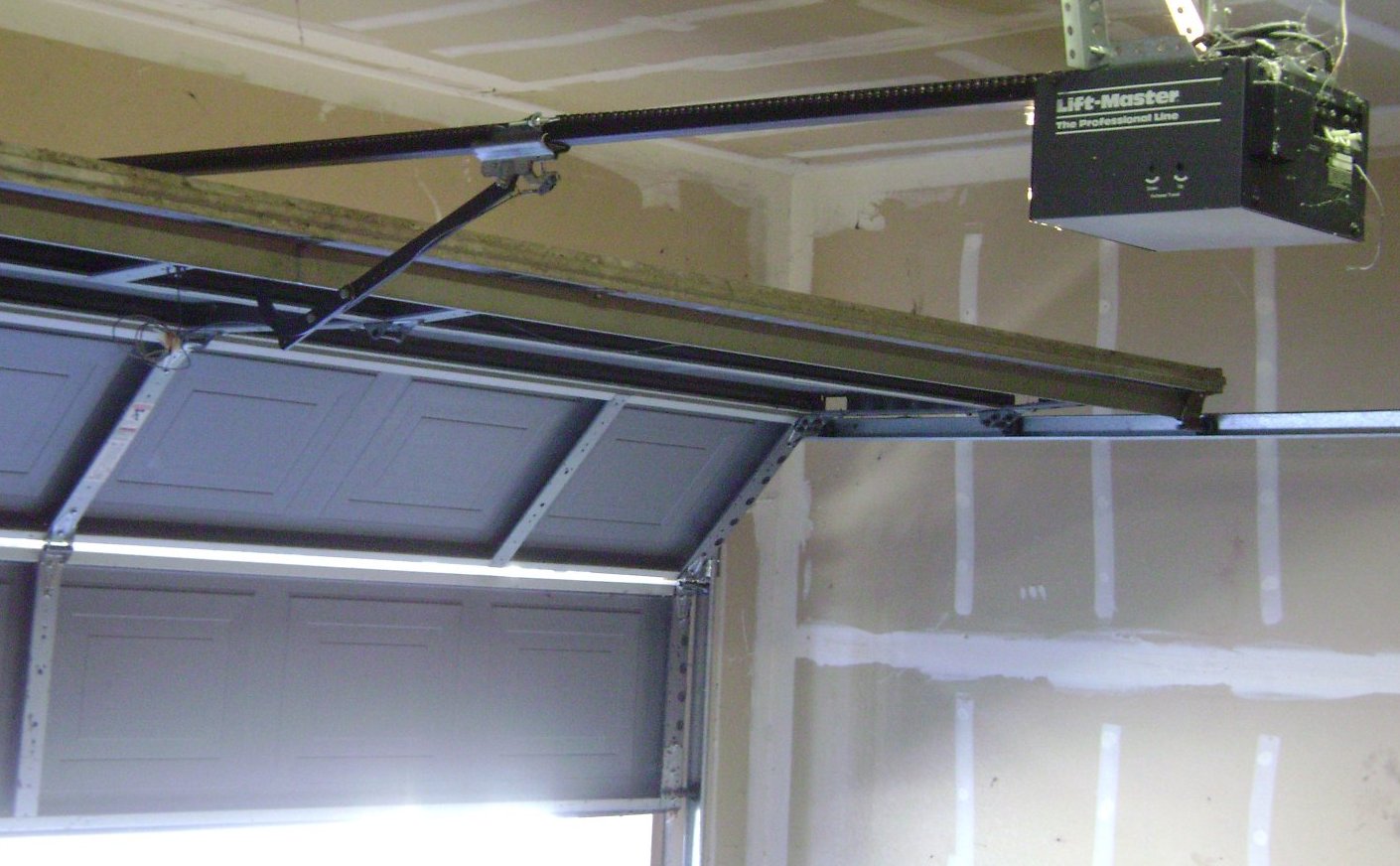
This is an electrical-readiness checklist for choosing or replacing an opener, not instructions for wiring a receptacle. It helps you decide what can be recorded safely and what must be included in an electrician’s scope before installation day. Commercial operators, imported equipment and unusual installations may have different power requirements.
Before you start: keep the inspection non-invasive
Use the manual, purchase paperwork and labels visible from a safe location. Keep covers closed. Do not remove an outlet plate, open the service panel, insert meter probes, disconnect fixed wiring or investigate a damaged cord. If a label or ceiling outlet cannot be reached safely, let the installer record it. Keep people clear of the door and do not operate a door with damaged springs, loose cables or abnormal movement.
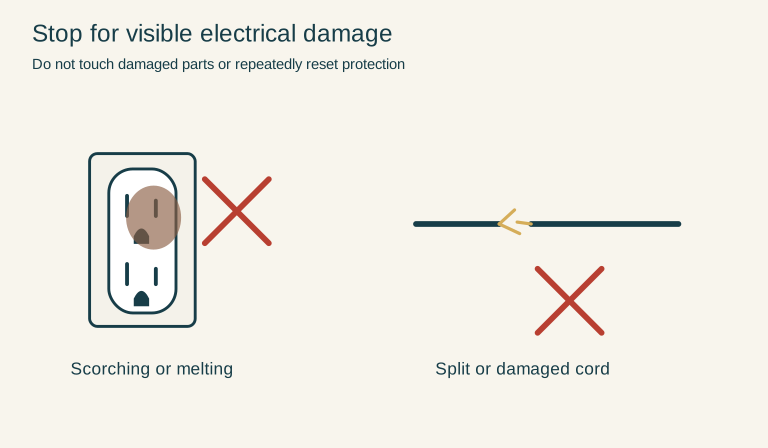
Stop for smoke, sparking, melting, a burning smell, water around electrical equipment or damaged insulation. Do not touch suspect equipment or keep resetting a tripping protective device. Have the hazard assessed; an active fire or immediate danger calls for emergency help.
1. Identify the model and its input power
 Open full diagram
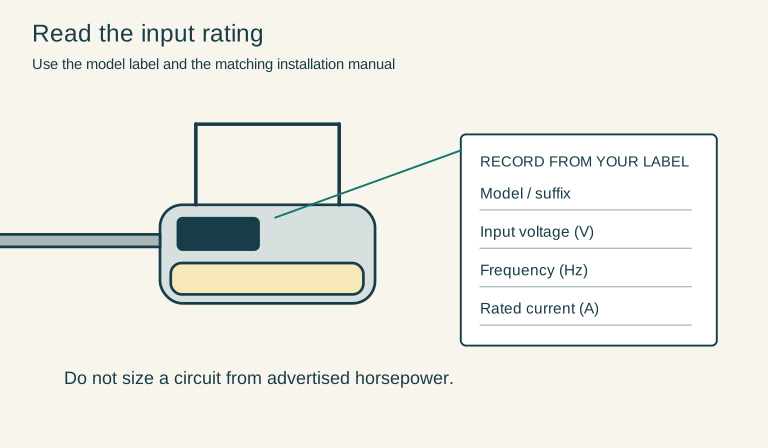
Record the complete model number, suffix and the electrical input information on the opener’s nameplate. Look for volts, frequency in hertz and rated current in amperes. Find the matching installation manual on the manufacturer’s support site. A model family’s marketing page is not a substitute for the manual that covers your unit.
Chamberlain Group describes its U.S. and Canadian residential openers as using 120 V AC, 60 Hz line power. Genie’s current support guidance likewise calls for a standard 120 V outlet. Some manuals use 110 V or 115 V terminology for the nominal household supply. That wording is not a reason to use a 240 V appliance outlet, modify a plug or select a different supply yourself.
A “DC motor” label describes the motor technology, not permission to power the opener from a household battery. The unit can still require AC input. Likewise, advertised horsepower or horsepower-comparable ratings do not tell you which breaker or wire to install. Give the electrician the actual nameplate and manual rather than estimating a circuit from marketing numbers.
2. Confirm a grounded connection, not just a matching shape
 Open full diagram
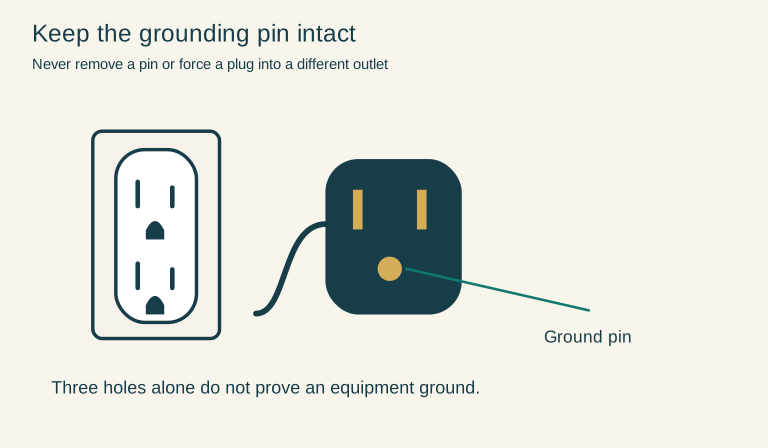
The factory grounding plug must connect to a suitable grounded receptacle. Never cut off its grounding pin, use a two-prong adapter or alter the plug to make it fit. A receptacle with three openings is not proof that the equipment-grounding path is present or correct. An older outlet, an unknown wiring history or a “No Equipment Ground” label needs an electrician’s assessment.
GFCI protection and equipment grounding serve different purposes. Do not assume adding GFCI protection creates the ground the opener requires. Do not bypass a GFCI or use an adapter as a workaround. If the existing outlet is unsuitable, arrange the correct electrical work before the opener is put into use.
3. Plan the outlet around the installed opener
 Open full diagram
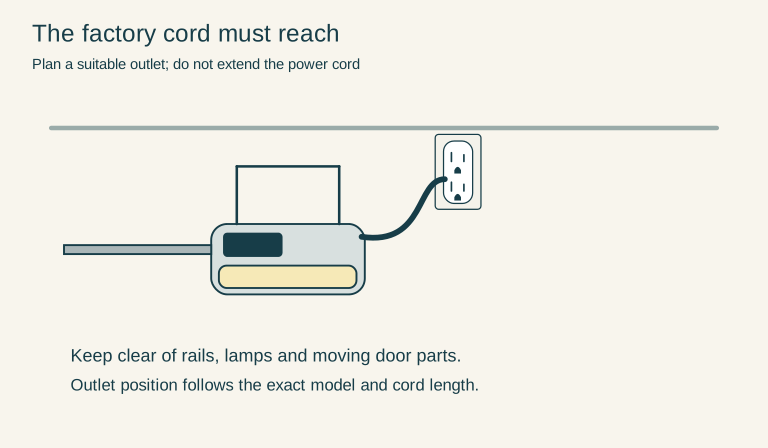
Identify where the selected powerhead will actually sit, not just where the old one sits. A ceiling-mounted rail opener and a wall-mounted opener may need receptacles in different locations. The factory cord must reach naturally without an extension, a stretched connection or contact with the door, rail, moving hardware or hot lamps.
For a concrete model-family example, Genie’s five-piece-rail installation instructions, revision 42279.02950-WEB dated October 2026, ask whether an outlet is within approximately 3 feet of the planned opener position. They direct the owner to a licensed electrician if not and prohibit extension cords. That distance is not a universal rule for every brand or configuration. Use your model’s cord, dimensions and instructions.
Ask whether the receptacle is switched. The opener needs a reliable supply; turning off a garage light should not accidentally remove its power. Do not repurpose a light socket or string a cord to a distant outlet. If a new outlet is needed, get that work included in the written scope rather than discovering the gap after the opener is mounted.
4. Separate circuit capacity from “dedicated circuit” advice
A dedicated circuit serves the specified equipment alone. A circuit reserved for garage receptacles is not necessarily a circuit reserved for one opener. There is no sound universal instruction that every residential opener must have its own dedicated circuit, or that every opener can share any existing circuit.
Manufacturer advice still matters. Genie’s electrical-requirements support page recommends dedicated circuits and lists additional model-specific restrictions. Bring that guidance to the electrician; “not universally required” does not mean you can ignore a recommendation or a requirement for your opener.
The exact manual, the locally adopted electrical code, other loads and the wiring determine the answer. A garage may also supply power tools, a freezer or other equipment. Have an electrician assess the existing circuit and the proposed load together, including starting behavior and any accessories. Never increase the breaker size to stop nuisance trips: the breaker must remain appropriate for the wiring and installation.
For example, Minnesota’s 2023 NEC residential inspection checklist identifies a required 20-amp circuit for garage receptacles. That local checklist is not a universal opener breaker specification, nor proof that each opener needs its own 20-amp circuit. Ask the local authority or electrician which requirements apply to your property, especially for additions, older wiring or a detached garage.
5. Locate the required GFCI protection
 Open full diagram
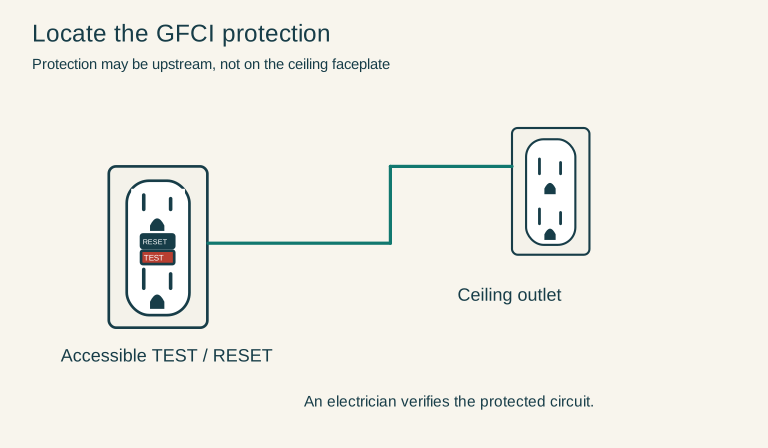
Modern U.S. electrical rules generally require GFCI protection for garage receptacles, including the opener location. Do not assume a ceiling outlet is exempt because it is difficult to reach. The applicable code edition, amendments and scope of the work must be checked locally.
The protection may be at an upstream GFCI receptacle or at a GFCI breaker, so the ceiling outlet may have no TEST or RESET buttons. Conversely, the absence of visible buttons does not prove protection exists. Ask the electrician to verify what protects the outlet and identify the readily accessible test/reset location.
Follow the protective device manufacturer’s test instructions and schedule. ESFI recommends monthly GFCI testing. Coordinate testing so a power interruption does not create an access problem; keep the door area clear. Repeated trips require diagnosis, not removal of protection. If you are unsure which device serves the opener or how to test safely, have the electrician demonstrate it.
6. Keep backup power and permanent wiring in the scope
 Open full diagram
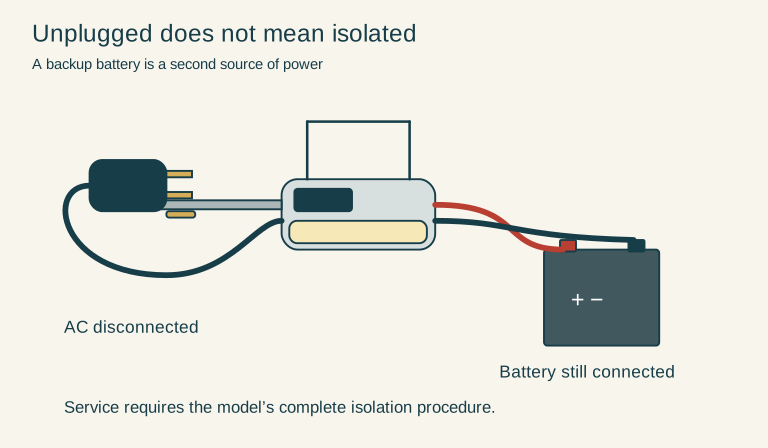
An opener with battery backup may still operate after its AC plug is removed. Unplugging alone is not a complete service-isolation procedure. Follow the exact model’s precautions for both supplies; internal electrical work belongs to a qualified professional. This checklist does not instruct you to open the battery compartment or cut any connection.
A backup battery is temporary outage support, not a substitute for a proper household supply. Do not connect a random external battery or inverter. If local rules require a permanent wiring connection, have a qualified electrician use the manufacturer’s permitted method. Do not cut off the factory plug as an improvised conversion.
What to give the electrician and opener installer
- The exact opener model, input-label information and installation manual.
- The proposed mounting location and the visible location of existing outlets.
- Known circuit labels, other equipment normally used in the garage and any history of trips or power loss. Do not open the panel to investigate.
- A request to verify grounding, capacity, GFCI protection, suitable outlet location and whether a dedicated circuit is needed.
- A written allocation of new electrical work, permits, inspections and final opener setup between the two trades.
 Open full diagram
The job is not complete merely because the motor lights up. Electrical work must be accepted as required locally, and the opener installer must finish the manufacturer’s setup and safety tests before routine operation. Keep the manual, invoice and electrical-work record for future service.
Frequently asked questions
Does every garage door opener need a dedicated circuit?
No universal rule covers every residential opener. The exact manual, local code and circuit assessment determine whether an individual circuit is needed. Do not confuse a garage receptacle circuit with one dedicated to the opener.
Can I use an extension cord until an outlet is installed?
Do not plan temporary or permanent operation on an extension cord. The Genie installation instructions prohibit extension cords. Have the proper outlet installed within the factory cord’s reach.
Does a ceiling outlet need GFCI protection?
Modern U.S. garage receptacle requirements generally include the ceiling outlet. Protection may be upstream or in a breaker. Have an electrician verify the applicable local rules and accessible test/reset location.
Is unplugging enough before electrical service?
Not when a backup battery remains connected. The exact model’s complete power-isolation procedure must address both AC and backup power before service.
Related Posts
 Planning Guide
Garage Door Opener Installation Cost: Compare Complete Quotes
Build a complete opener installation quote covering compatibility, rail, mounting, electrical readiness, accessories, and safety testing.
 DIY Guide
Garage Door Opener Backup Batteries: Replacement and Compatibility
Match the correct garage door opener backup battery, isolate both power supplies, and plan safe charging, testing and recycling without improvised wiring.
 Practical Guide
Garage Door Wall Button Not Working When the Remote Still Works
Identify a wall-control-only failure using safe observations, model-specific indicators and settings. Know what to record before arranging service.
Sources
Manufacturer instructions and references for this guide. Match the document to your exact product.
- Genie: current five-piece-rail installation instructionswww.geniecompany.com
- Chamberlain Group: electrical specificationssupport.chamberlaingroup.com
- Genie: residential electrical requirementsupport.geniecompany.com
- Minnesota DLI: 2023 NEC residential inspection checklistdli.mn.gov
- ESFI: ground-fault circuit interrupterswww.esfi.org
Photo credits
- An installed ceiling-mounted opener. Have an electrician verify the supply, grounding and outlet location for your exact model. Photo: Oleg Alexandrov · Public domain. Oleg Alexandrov Public domain
