Can a Garage Door Be Vinyl Wrapped? Check the Door, Film and Moving Joints First
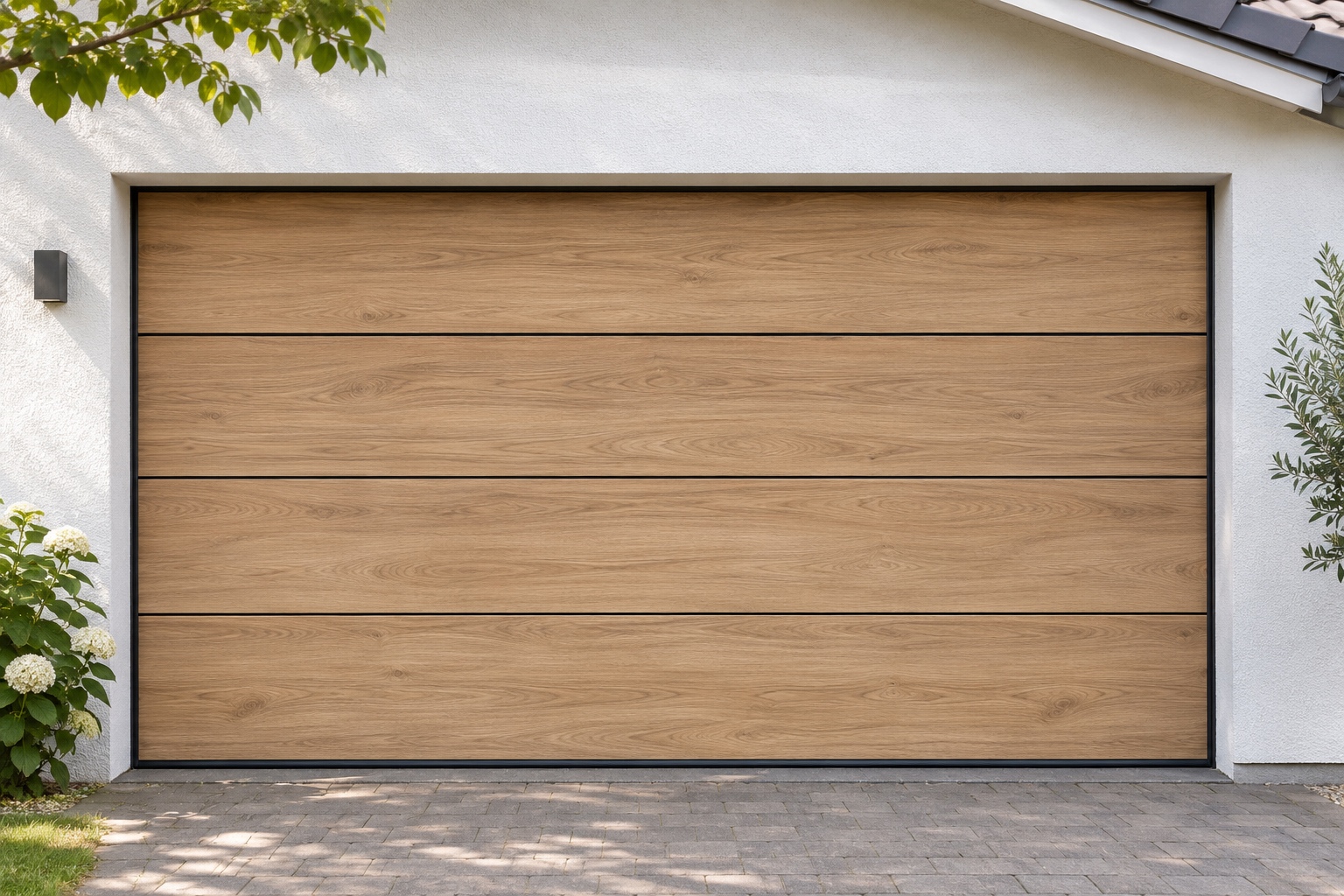
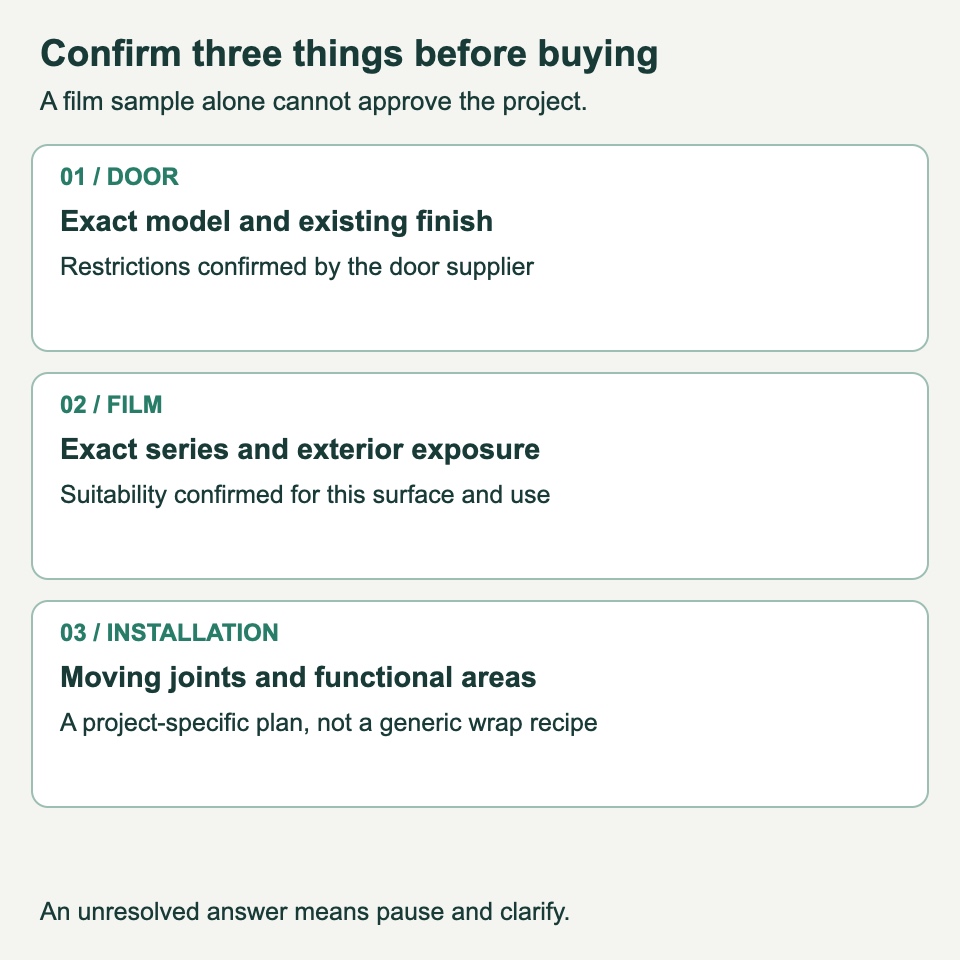
A garage door may be a candidate for decorative adhesive film, but “vinyl sticks to metal” is not enough to approve the job. The exact door finish, film series, panel shape, moving joints and outdoor exposure must all be suitable. Get a compatible proposal from the film supplier and door manufacturer before buying a kit. A good-looking sample does not settle those questions.
This article focuses on decorative-film compatibility. Keep coating application in the painting guide and finish selection in the garage-door color guide. A wrap is an alternative finish proposal, not another version of those instructions.
This is a planning guide for an existing residential sectional door, not a wrapping or cutting tutorial. A wrap changes appearance; it does not repair a damaged door or correct poor operation. Keep cosmetic work separate from spring, cable, bracket or track work. Do not dismantle the door to reach an edge, and do not use an unstable door to assess a design.
1. Verify the exact product and door combination
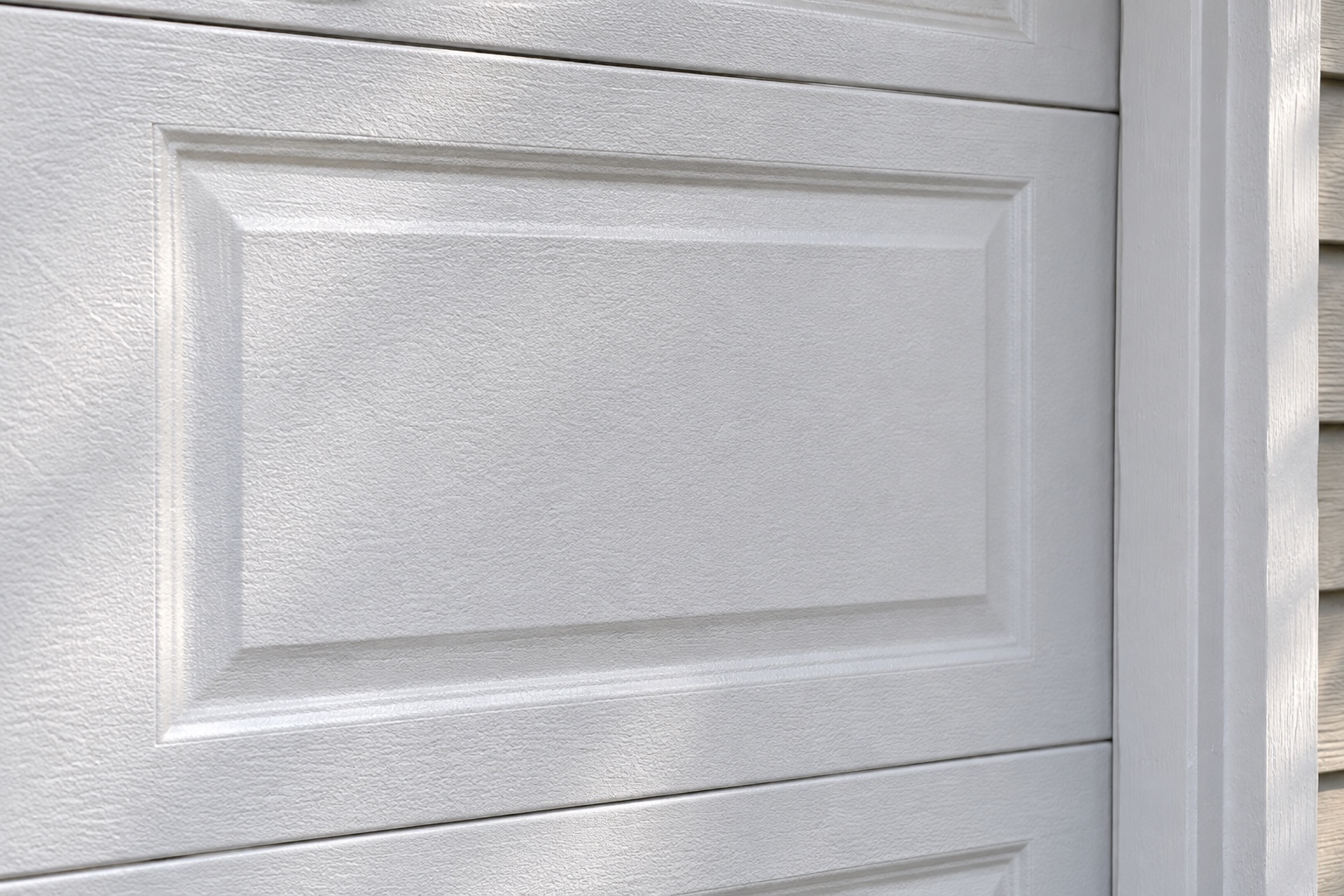
Start with the door manufacturer, model, construction and existing finish. A factory-painted steel face, a textured overlay and a previously repainted surface are not interchangeable substrates. If the model is unknown, use the installation invoice or a safely accessible label. Ask the original supplier for help rather than guessing from a wood-grain appearance.
Next, obtain the film's complete product designation and current technical bulletin. “Automotive vinyl,” “architectural film” and “outdoor grade” are descriptions, not proof of compatibility with a moving sectional door. Ask whether the recommendation covers the specific painted surface and profile, local exposure and intended use. A vehicle-wrap example cannot provide that approval.
For perspective, 3M's DI-NOC EXR bulletin describes exterior applications on suitable smooth, nonporous surfaces, including painted metal. It excludes complex curved surfaces and deep channels. That shows why product selection matters, but it does not establish blanket approval for every garage door. 3M EXR product bulletin.
Request written answers from both sides of the proposal. The film specialist addresses adhesion and exterior performance; the door supplier addresses the door assembly and finish restrictions. If either answer is missing, the project remains an unconfirmed option rather than a ready-to-install upgrade.
2. Assess the surface before choosing a pattern
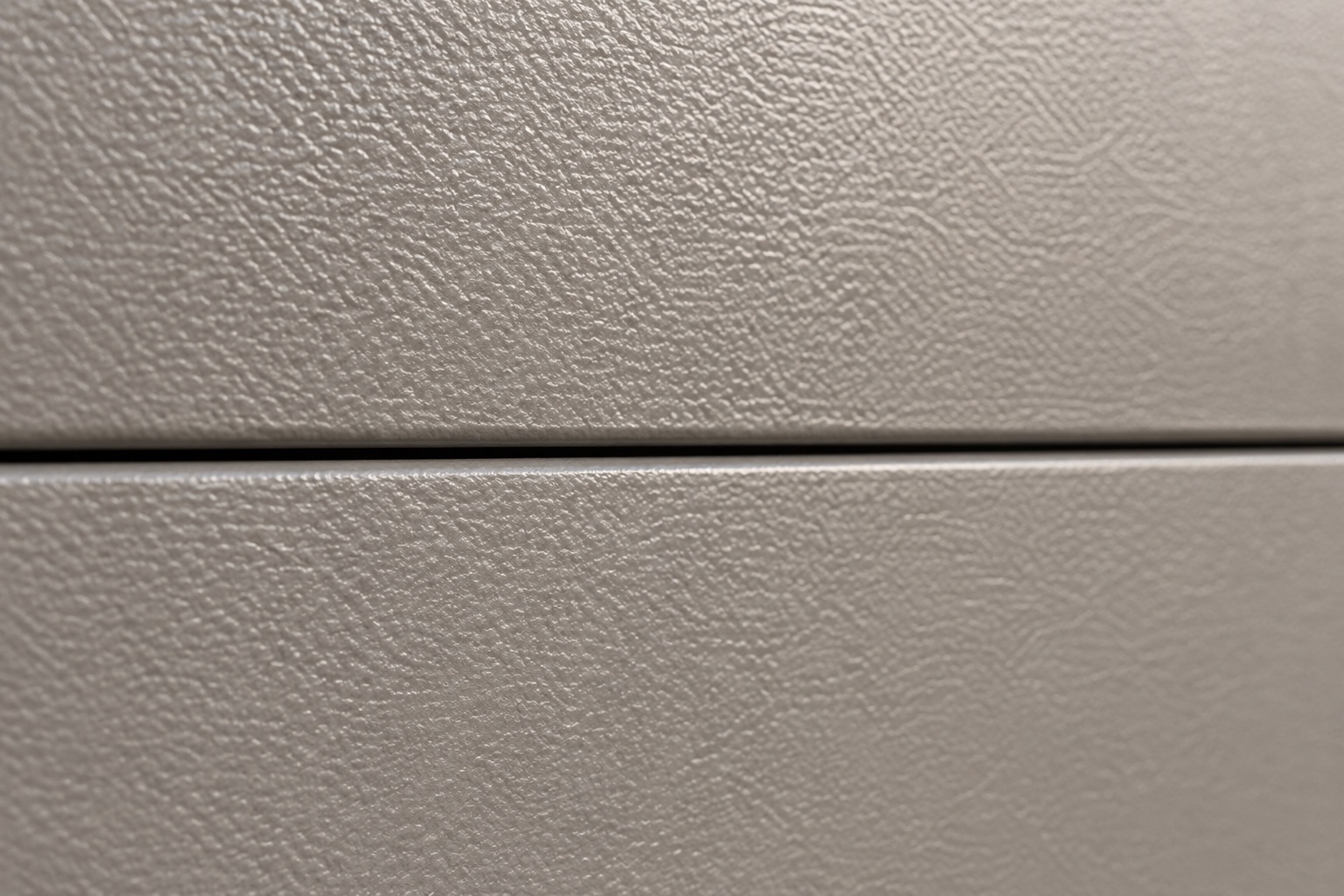
Ask the installer to distinguish contamination from failing paint, corrosion, dents and surface texture. A clean-looking finish can still be unsuitable for an adhesive system. 3M's substrate guidance emphasizes surface preparation and notes that contamination can interfere with adhesion. It also cautions that cleaners can affect the substrate, so a generic solvent recipe is not appropriate for every factory finish. 3M substrate selection and preparation.
Have any proposed adhesion assessment agreed with the door supplier first. Ask where it will be done, what it will establish and whether the test or its removal could alter the finish. A small successful sample is useful evidence, not a guarantee that every section has identical paint condition. 3M's general guidance specifically notes that substrate soundness can vary across a job. 3M general installation guidance.
Do not buy a wrap to hide active rust or peeling paint. Request a separate diagnosis and preparation scope, then decide whether wrapping still makes sense. If the proposed preparation permanently changes the surface, include that consequence in the decision. A finish that must first be substantially rebuilt may change the cost comparison with an approved repaint.
3. Make moving joints and functional areas a design requirement
A sectional door is not one fixed signboard. Ask the installer to show how the proposed treatment respects each moving section and leaves functional areas clear. Do not accept a design that depends on bridging the moving joints with an uninterrupted sheet. The treatment of film edges must be resolved for the exact door rather than improvised after material is applied.
Keep two different ideas separate: a seam between sheets of decorative film and a joint between moving door sections. A film manufacturer's architectural overlap detail is not permission to bridge a garage-door joint. The reviewed EXR guide contains film-seam instructions, but it does not give a universal sectional-door joint detail. That missing detail needs project-specific confirmation, not an invented cutting rule. 3M DI-NOC installation guide.
Include perimeter seals, windows, locks, handles, warning labels and any sensors in the discussion. Ask what remains uncovered and who checks that normal operation is unaffected. Any necessary removal of door hardware belongs in a separate qualified-service scope; it is not a casual preparation step for the wrapping contractor or homeowner.
DASMA also warns that door components are designed as an assembly and that added material can affect operation. Do not assume a covering is acceptable solely because it feels lightweight. Obtain the door maker's advice for the proposed addition rather than adjusting the counterbalance yourself. DASMA TDS 176.
4. Evaluate sunlight and heat, not just the color sample
Record which direction the door faces, when direct sun reaches it and whether the garage is heated or cooled. Give that information to both suppliers. A film's permitted installation conditions and its expected outdoor performance are separate questions; neither should be inferred from the temperature on the day the quote is written.
Darker finishes deserve a specific conversation on insulated bonded-core doors. DASMA describes how temperature differences between the two faces can cause thermal bowing, with darker sun-facing doors having greater tendency in the conditions it discusses. This is not a calculation for every material, and a film's heat resistance does not certify the door underneath. DASMA TDS 185.
Ask for the expected performance and warranty applicable to your region and exposure, not the largest number in an advertisement. The EXR bulletin ties performance to factors including climate, exposure, surface condition and maintenance. A published service-life figure is not automatically a promise for a moving garage-door installation. 3M EXR product bulletin.
5. Compare the complete cost, including removal
Request a quote that separates assessment, approved preparation, material, installation and any door-service work. Then ask what happens if one section is damaged later: can its finish be matched, what material record will be retained, and what is excluded from the price? These are purchasing questions, not assumptions that a particular film can always be repaired invisibly.
Compare the proposal with keeping the current finish, an approved repaint and, where the door itself needs substantial work, replacement. Film and paint are different systems. This guide does not repeat paint application or faux wood-graining techniques; the question here is whether an adhesive covering is appropriate at all.
Discuss removal before approving installation. Do not assume “removable” means the original coating will remain untouched. The DI-NOC guide warns that clean removal without substantial damage can be unlikely after its adhesion-enhancing application methods. That is a product-specific warning, not a statement that all vinyl products behave identically. 3M removal guidance.
Ask who would remove the covering, what damage or residue is excluded, and whether refinishing afterward is an acceptable outcome for you. Do not experiment with heat, blades or solvents on the door to find out. If preserving the original factory finish is essential, make that a written requirement, not an unspoken expectation.
6. Separate the warranties and agree on the handover
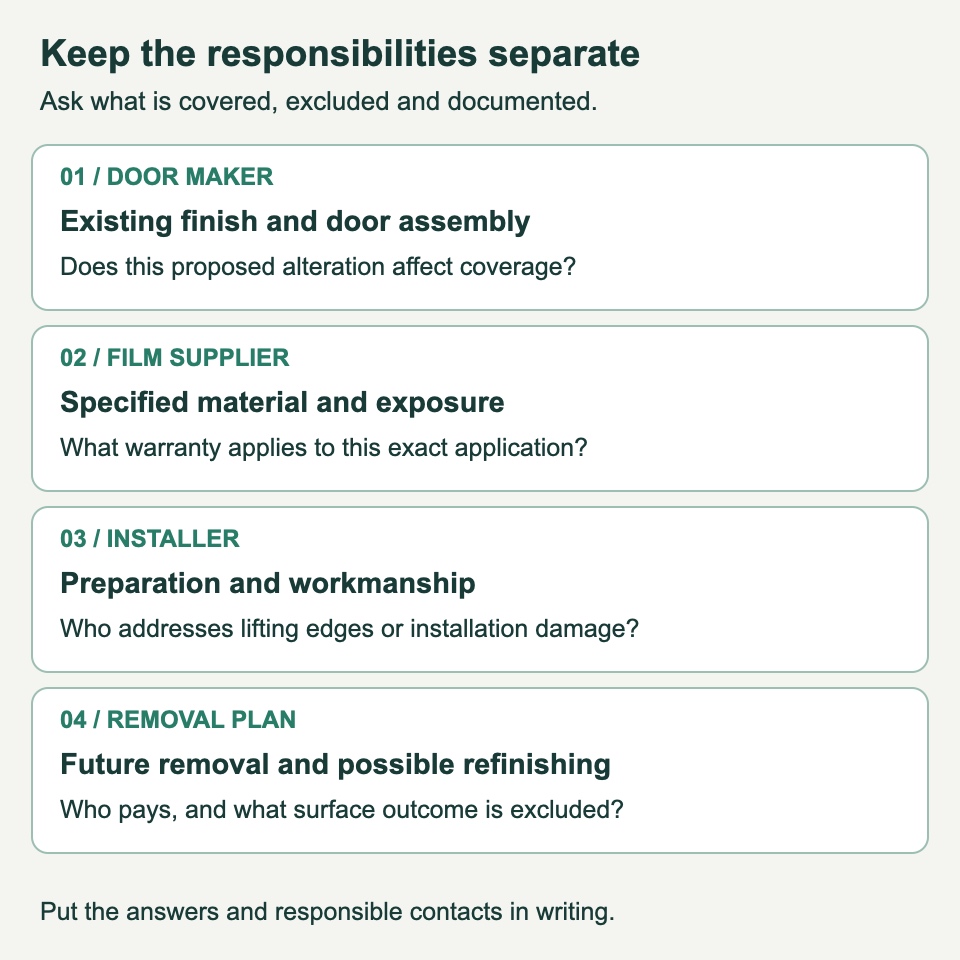
There can be three different responsibilities: the door manufacturer's coverage, the film supplier's coverage and the installer's workmanship agreement. Read them separately. A warranty for material defects does not automatically cover paint lifted during removal, labor or a door that no longer operates correctly.
For example, Clopay's insulated-steel warranty lists alterations and nonapproved products among its exclusions and says unauthorized changes may affect coverage. This applies to the models and terms in that document, not every brand. Ask your door manufacturer for a determination on the exact proposal before proceeding. Clopay insulated-steel warranty.
Your written scope should identify the door, existing finish, film code, agreed preparation, joint treatment, excluded areas, color, care instructions and responsible contacts. Keep photographs of the original surface condition. Ask when the door may return to use and how operation and safety features will be checked without asking you to manipulate loaded parts.
At handover, review appearance and the documented functional checks as separate items. A neat finish is not proof of safe operation. If edges lift, seals rub or movement changes, stop treating the issue as cosmetic and contact the appropriate installer or door technician. Keep the product and warranty records together for later service.
7. Frequently asked questions
Can I use leftover car-wrap vinyl?
Not without confirmation for this door and exposure. A film suitable for a vehicle is not automatically suitable for the garage door's coating, texture, profile and movement. Obtain the exact product documentation and an approved proposal first.
Will wrapping hide dents, rust or peeling paint?
It should not be used as a substitute for diagnosing those problems. Ask what must be repaired and whether the resulting surface remains suitable. A decorative covering does not establish that corrosion or a failing coating has been resolved.
Can the film run across all the panels as one sheet?
Do not bridge moving section joints. Have a qualified installer resolve the design with the door and film suppliers. A film-sheet overlap detail for a stationary building surface is not a sectional-door installation detail.
Is wrapping always cheaper or easier to undo than painting?
No universal comparison is reliable. Compare preparation, installation, future repairs, removal and possible refinishing for the exact products. Choose only after you understand the compatibility decision and the written exclusions, not just the initial material price.
Related Posts
 DIY Guide
How to Paint a Garage Door: Start With the Material and Finish
Plan a compatible garage door repaint, protect moving joints and labels, and avoid coating choices that can damage the door.
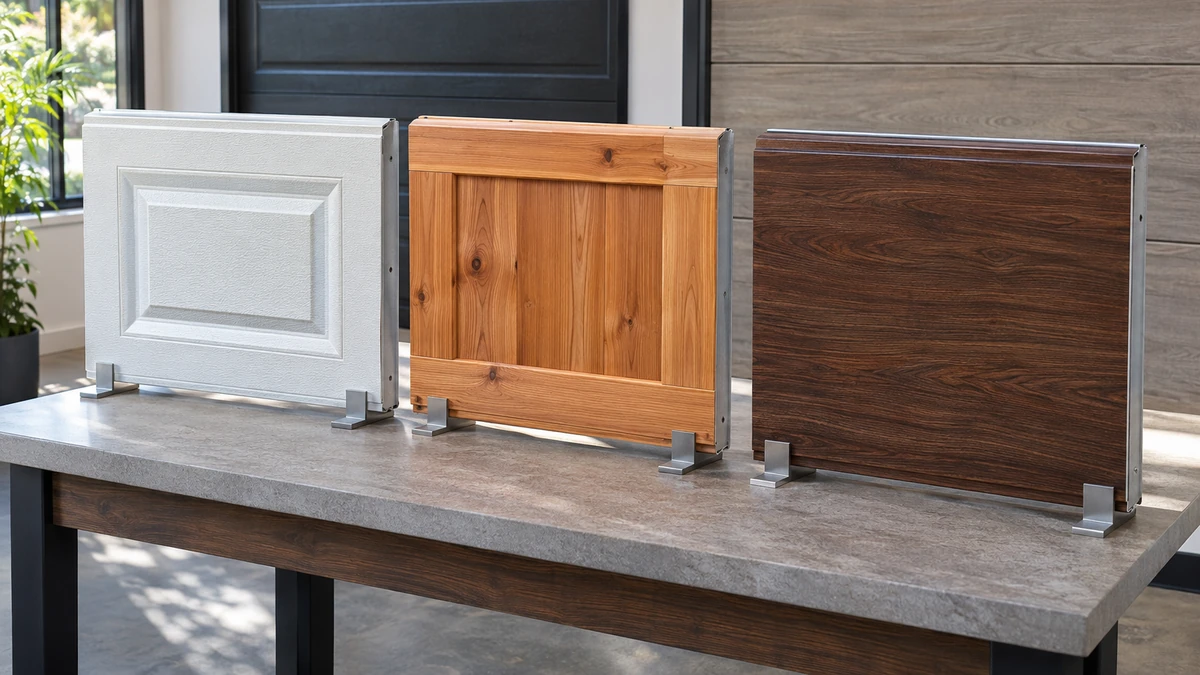
Choosing a Garage Door: Construction Types and Tradeoffs
Compare steel, wood, glass and composite garage doors, panel layers, thermal ratings, wind requirements and upkeep before choosing a complete system.
Sources
Manufacturer instructions and references for this guide. Match the document to your exact product.
- 3M EXR product bulletinmultimedia.3m.com
- 3M substrate selection and preparationmultimedia.3m.com
- 3M general installation guidancemultimedia.3m.com
- 3M DI-NOC installation guide · 3M removal guidancemultimedia.3m.com
- DASMA TDS 176www.dasma.com
- DASMA TDS 185www.dasma.com
- Clopay insulated-steel warrantyliterature.clopay.com