Choosing Factory Windows for a New Garage Door
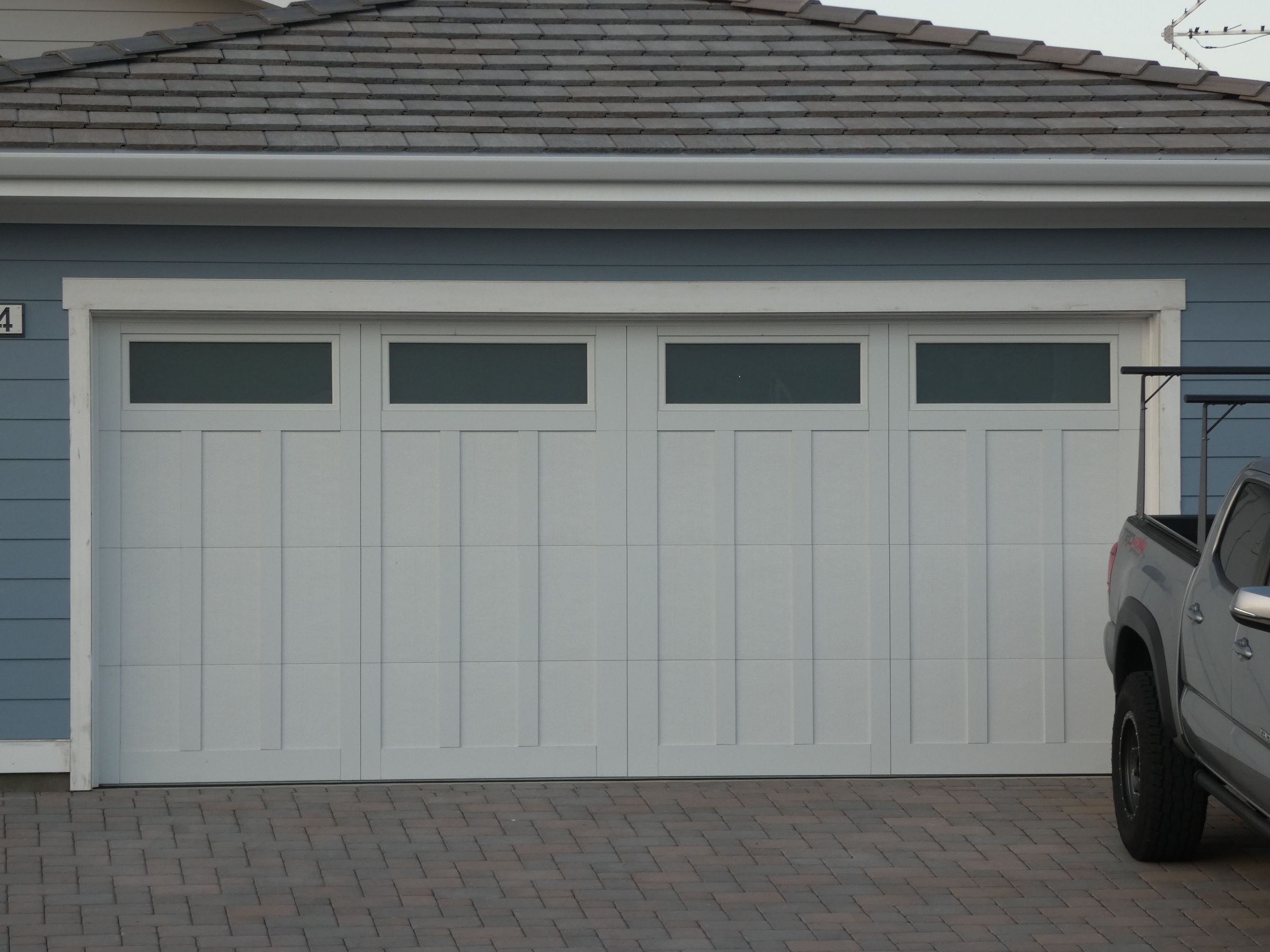
Photo: Stilfehler · CC BY-SA 4.0
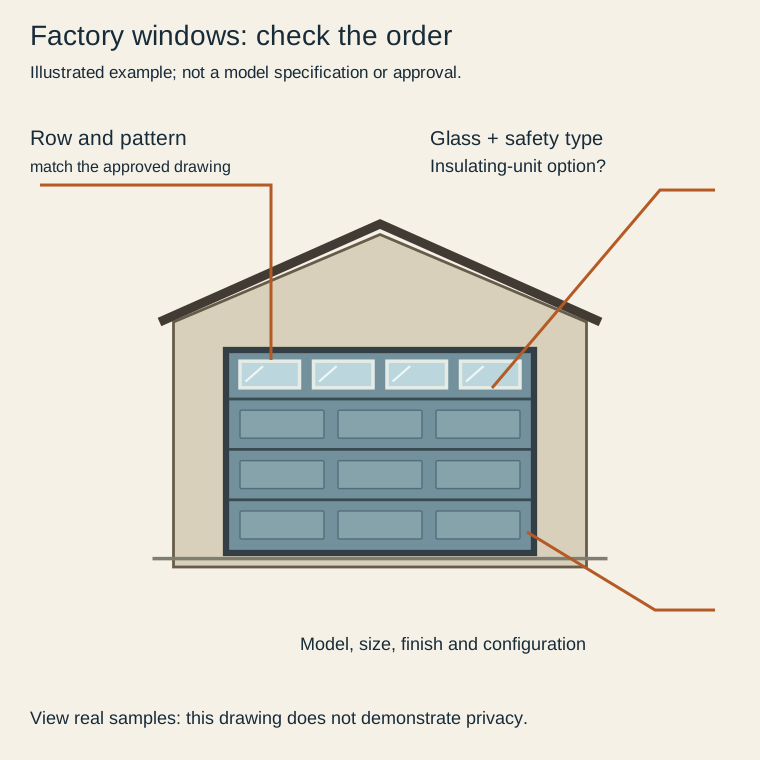
Windows are part of a new door's specification, not just a picture on a brochure. Decide what you want to see through them, what daylight you need and which approved combinations the selected door offers. This guide is for ordering a new door, not cutting windows into an existing one or replacing broken glass.
1. Describe the job the windows should do
Write down your priorities before choosing a pattern: daylight for finding stored items, a view of the driveway, privacy from a sidewalk, or matching the house. Rank them. A window selected mainly for an exterior appearance may not give the interior experience you expected. Check sightlines from the actual pedestrian approach, without entering a neighbor's property.
2. Compare samples, not only product names
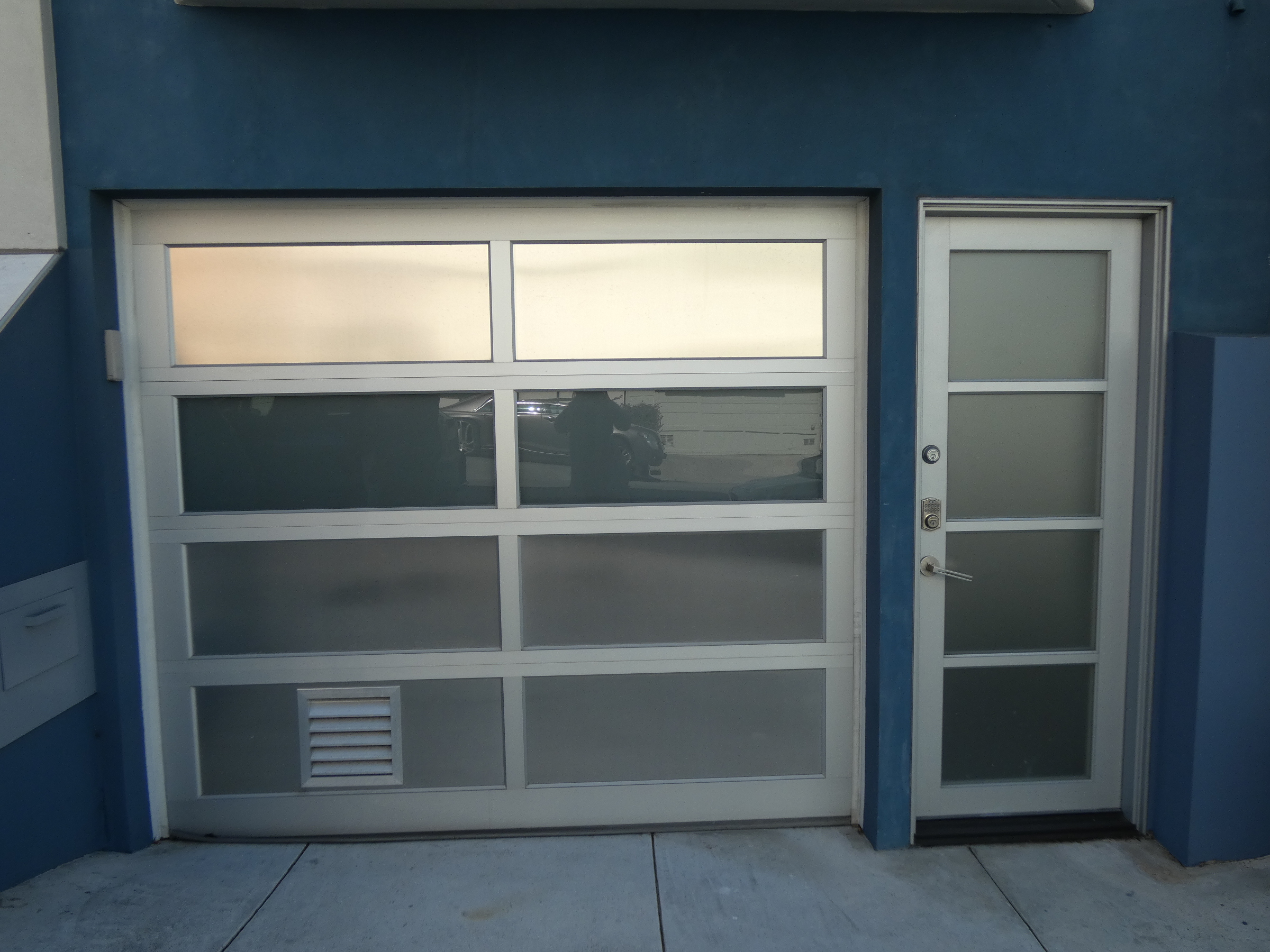
Ask the dealer for the exact clear, obscure, satin or tinted sample offered for your door. Hold samples against the same background and compare them under the same lighting. If privacy matters after dark, ask to evaluate the sample with the brighter side behind it. Record whether you can distinguish shapes rather than accepting “privacy” as a complete specification. Do not promise that a sample hides everything in every lighting condition.
Overhead Door's aluminum-door range lists several glazing materials and finishes, including model-specific options. Its product page recommends viewing a sample because printed appearances can differ. The list is not proof that every option can be combined with every model, size or window pattern.
3. Keep appearance, construction and safety separate
Ask three questions: What will the pane look like? Is it a single pane or an insulating unit? What safety-glazing type is specified? A tint is not a substitute for a safety specification, and the word “insulated” does not identify all those choices. For example, Overhead Door states that decorative-trim windows in its Impression Steel range use tempered glass. That statement applies to that range, not every garage-door window.
Have the supplier identify applicable glazing requirements for the proposed location and door configuration. Do not infer compliance from the photograph or from one feature's name.
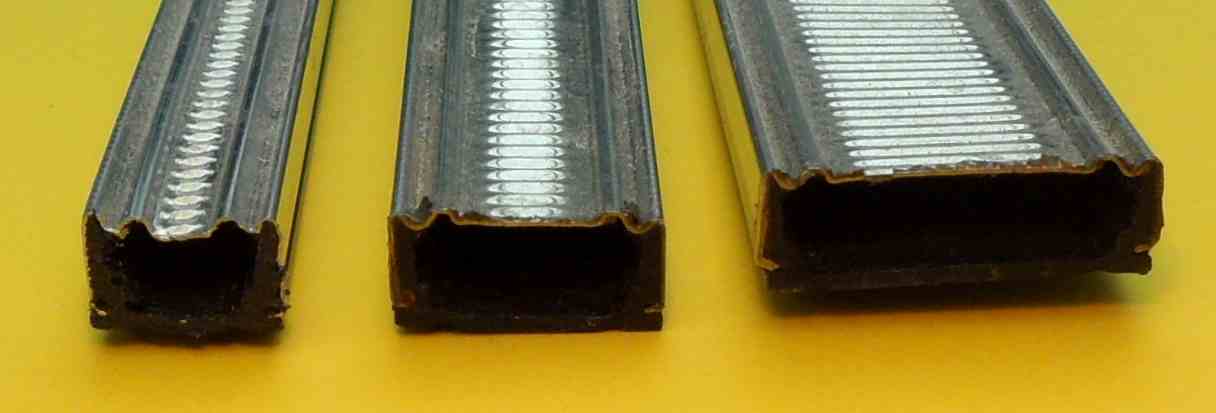
Photo: Sarang · Public domain
4. Approve the whole layout before ordering
Request an elevation showing the selected window row, number of glazed sections, decorative inserts and orientation. Compare the drawing with the quote. Ask whether your exact configuration changes the available thermal or wind-performance documentation. Do not copy ratings from a visually similar solid door. Keep the glazing specification attached to the door model and size rather than on a separate unconnected sample slip.
5. Make the quote unambiguous
A useful order record includes the door series, size, finish, glazing material, safety-glazing description, insulating-unit option, pattern and position. Ask the dealer to mark unavailable combinations before taking a deposit. Keep the approved drawing and sample reference so a different-looking delivery can be checked before installation.
6. Check delivery without dismantling anything
Compare the paperwork and accessible labels with the order. Let the installer inspect the panes and frames; do not handle damaged glass or open a package that requires special handling. If something differs, pause the disputed installation step and ask for a written resolution. A promise to change the glass later is not the same as delivering the specified door.
Frequently asked questions
Does frosted glass guarantee nighttime privacy?
No universal guarantee follows from the name. Evaluate the actual sample and sightline under relevant lighting.
Does a window upgrade preserve the solid-door rating?
Do not assume it. Request documentation for the ordered configuration.
Is this a guide to adding windows to an existing door?
No. That requires a separate compatibility and weight assessment.
Related Posts
 Practical Guide
Can Windows Be Added to an Existing Garage Door?
Learn when garage door windows may be possible, how section replacement differs from conversion, and what to verify about balance and wind ratings.
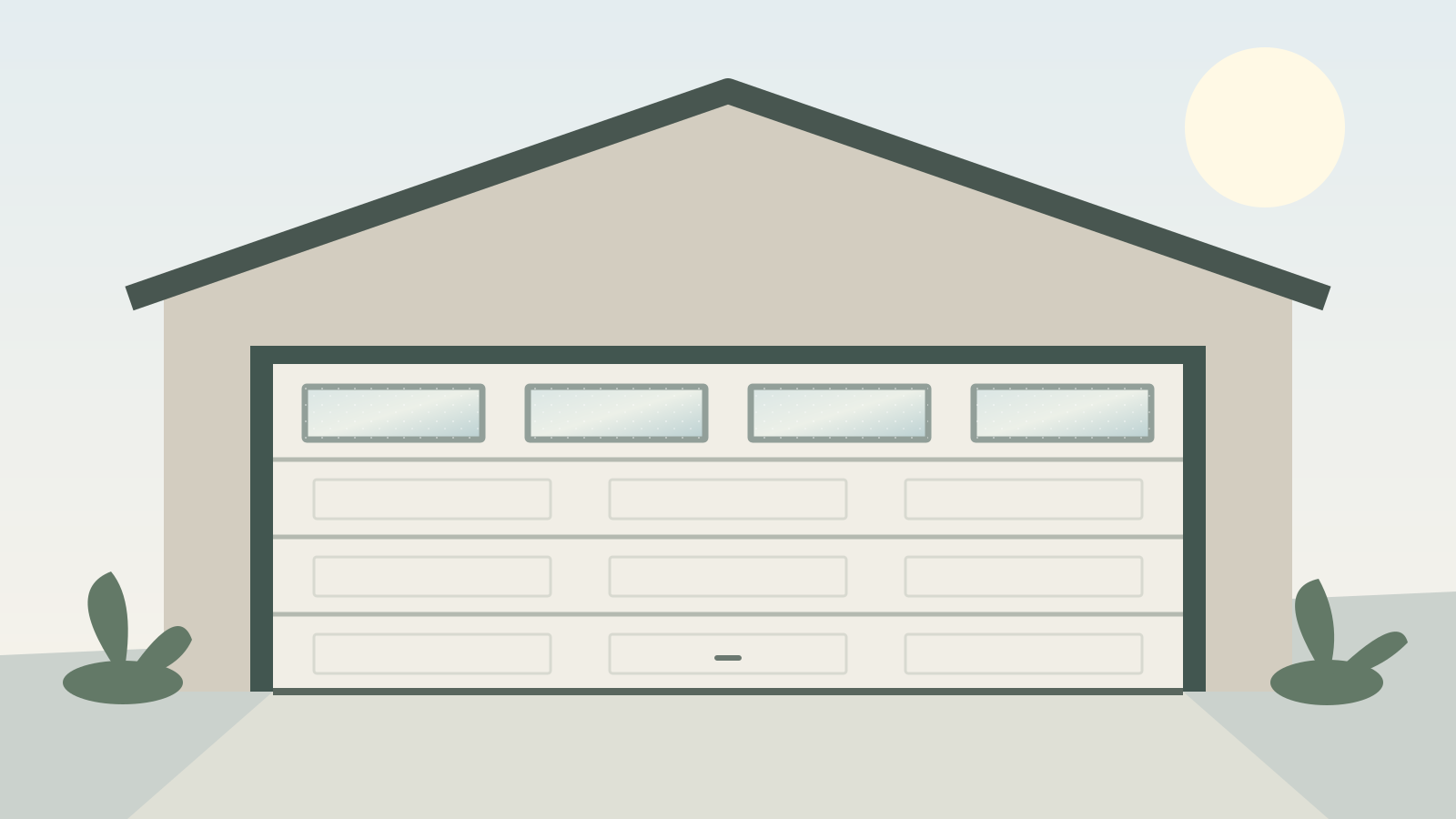 DIY Guide
How to Cover Garage Door Windows for Privacy
Compare garage-door window privacy options, check film and glazing compatibility, and plan a safe installation without replacing glass or adding heavy blinds.
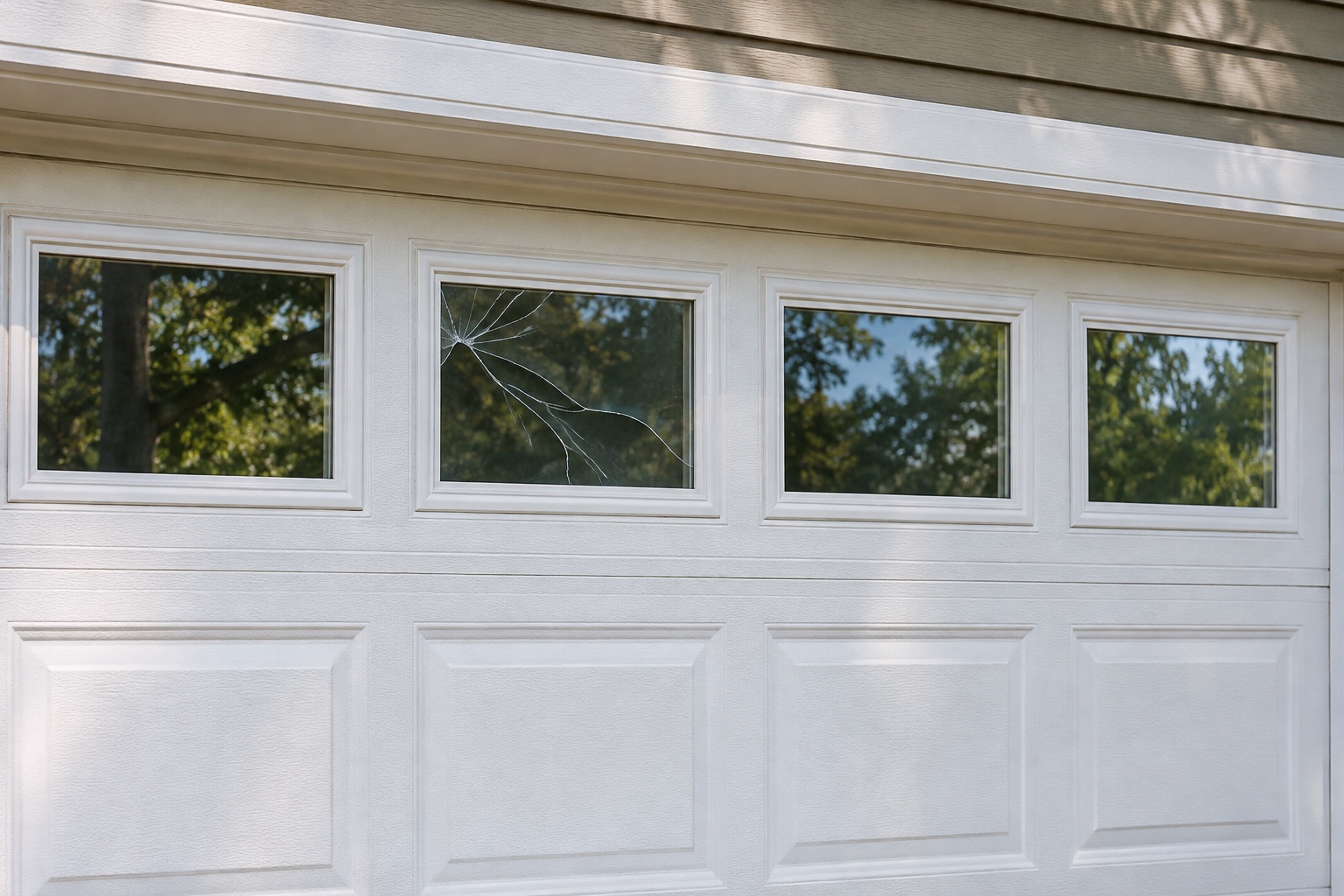 Practical Guide
Broken Garage Door Window or Insert: Planning the Right Replacement
Identify damaged garage door glazing, grilles and frames, collect safe reference photos, and plan a compatible professional replacement.

