Garage Door Bows in the Sun: Documenting a Possible Thermal Effect
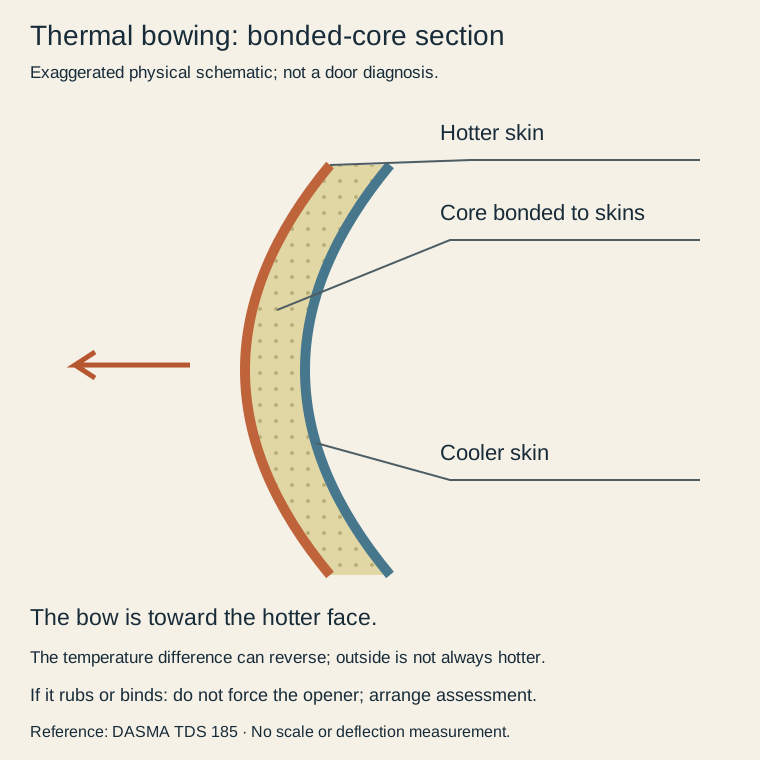
A door that looks different on a sunny afternoon deserves an observation record, not an improvised repair. Thermal bowing is one possible explanation for a changing shape, but it does not establish that every bent, rubbing or unreliable door is safe.
1. Check the construction before using the term
DASMA TDS 185 addresses insulated bonded-core sections, commonly steel skins with a foam core. Different temperatures on the two faces can produce a bow toward the hotter face. Sun exposure, color, size and construction affect the response. This is not a diagnosis for every door material or every kind of distortion.
Find the door model in your records. Do not remove a section cover or loosen hardware to inspect the core. If you cannot identify the construction, include that uncertainty in the service request.
2. Stop if operation is abnormal
Do not run repeated open-and-close cycles to prove a theory. A door that binds, scrapes significantly, moves unevenly or shows damaged cables or displaced hardware needs service assessment. Keep people away from its travel area. Do not release a raised or suspect door for a manual test, put fingers between sections, or increase opener force to overcome resistance.
3. Record a repeatable view from a safe place
With the door already fully closed and no operation planned, take a wide photograph from a safe standing position. Note the time, which face receives sunlight and whether the garage is heated or cooled. If another photograph is safe later, use the same position and framing. Avoid camera angles that make a straight edge appear curved.
Record observations, not a verdict: “visible gap at the top at 3 p.m.” is more useful than “defective insulation.” Do not measure a moving gap or place a straightedge in the door's path. A weather-app temperature is background information, not a measurement of the door skins.
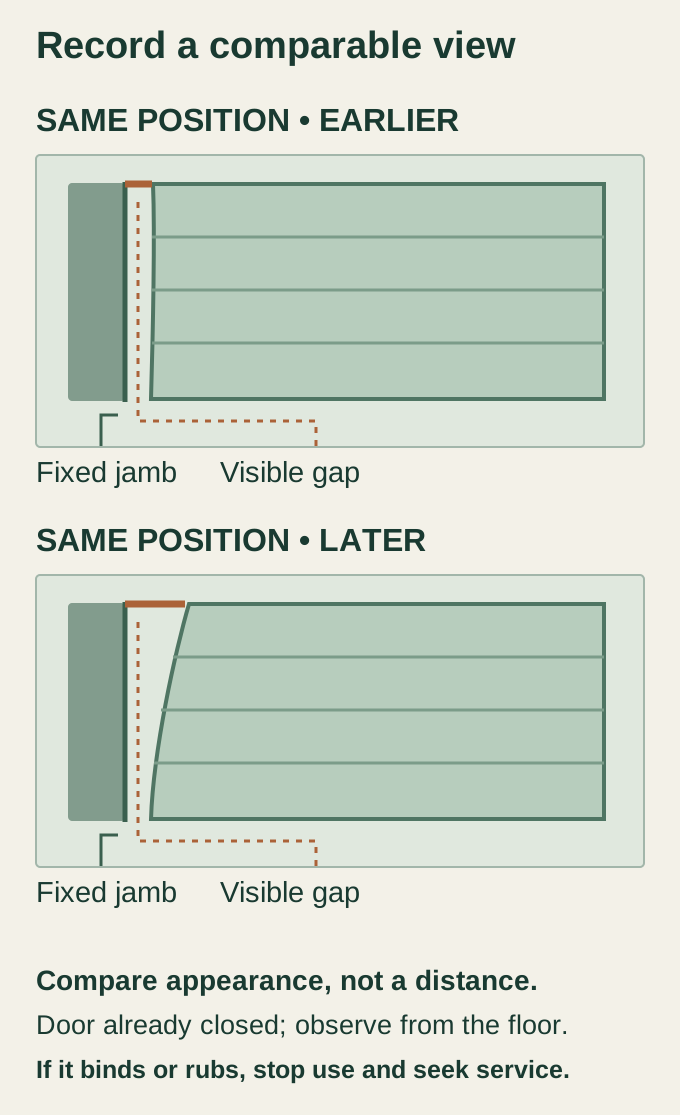
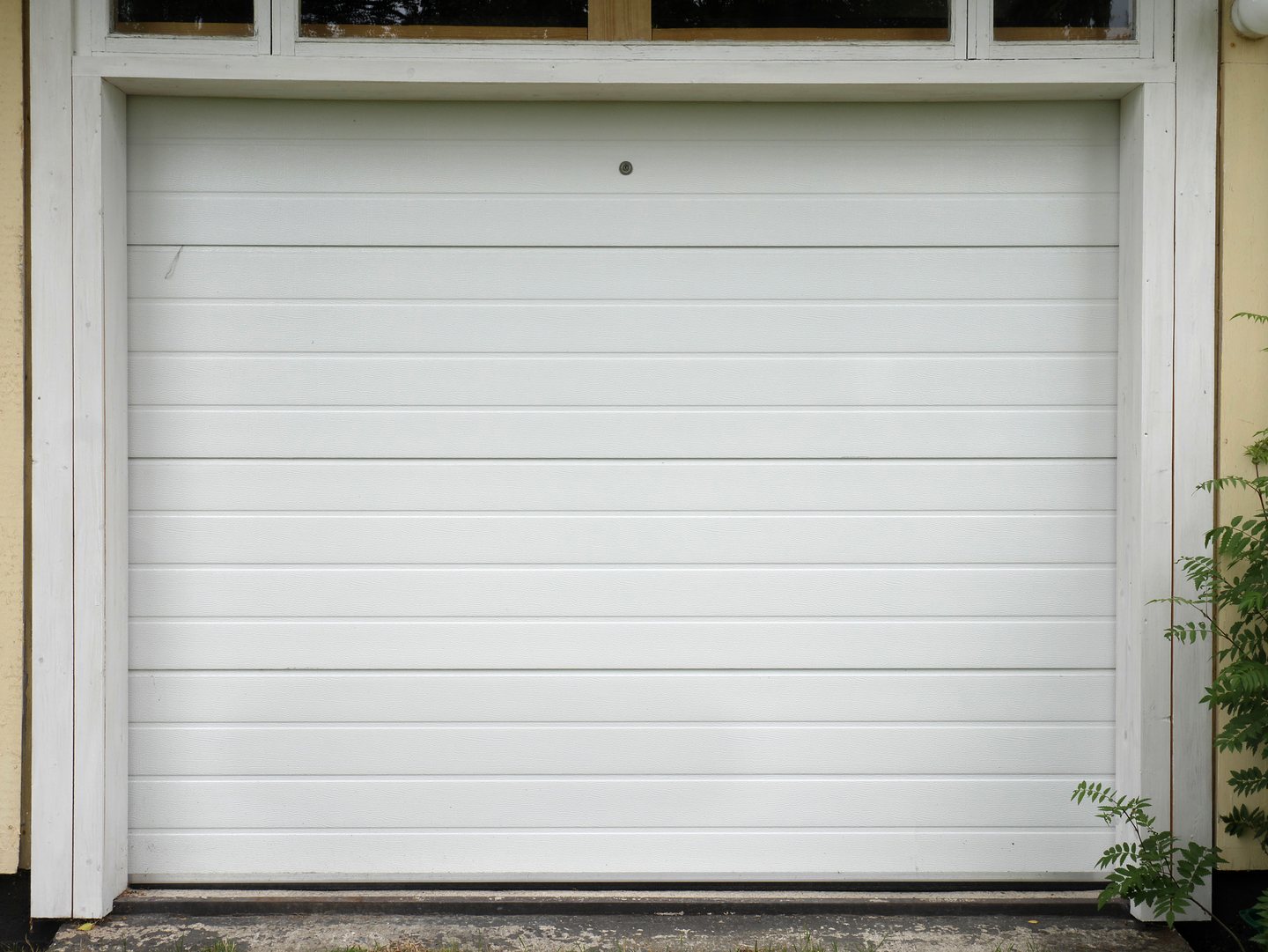
Photo: Santeri Viinamäki · CC BY-SA 4.0
4. Separate changing shape from known damage
Tell the technician whether the condition follows a collision, new paint, replacement sections or recent service. Include when it first appeared and whether it changes with conditions. A pattern that varies through the day can help the investigation, but it does not rule out another problem. Keep unrelated symptoms in the record instead of explaining everything as heat.
5. Ask for the manufacturer's remedy for this door
DASMA identifies manufacturer-directed reinforcement and system adjustments as possible responses. That is not permission to add a generic strut, shift tracks or alter seals yourself. A trained door-systems technician should assess the complete installation and identify the applicable instructions. Ask what will be changed, why that method fits the model and how safe operation will be checked afterward.
6. Keep the before-and-after record
Retain the observation photographs, model information, service findings and the documented work. Review whether the original symptom has been resolved under comparable conditions, without deliberately overheating or stressing the door. Report recurring rubbing rather than repeatedly trying the opener.
Frequently asked questions
Is every bow a manufacturing defect?
No. Nor does the possibility of a thermal effect establish that a particular door is safe. The cause needs assessment.
Can I turn up the opener force?
Do not use force adjustments to conceal binding or damage.
Should I buy a reinforcing strut first?
No. Obtain the model-specific assessment before selecting a remedy.
Related Posts
 Practical Guide
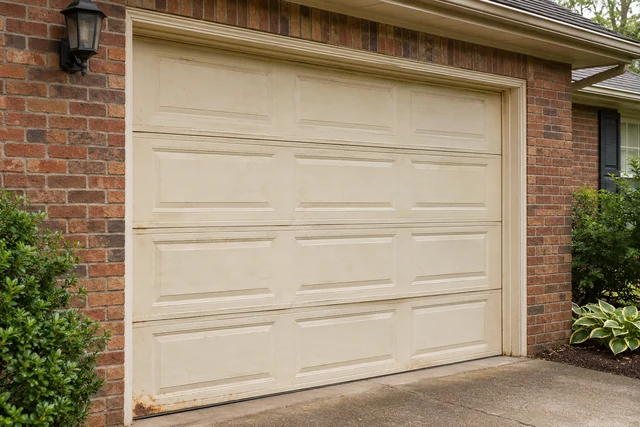
Damaged or Dented Garage Door Panels: Repair or Replace?
Separate cosmetic dents from structural damage, identify a compatible replacement section, and compare repair with full garage door replacement safely.
 Practical Guide
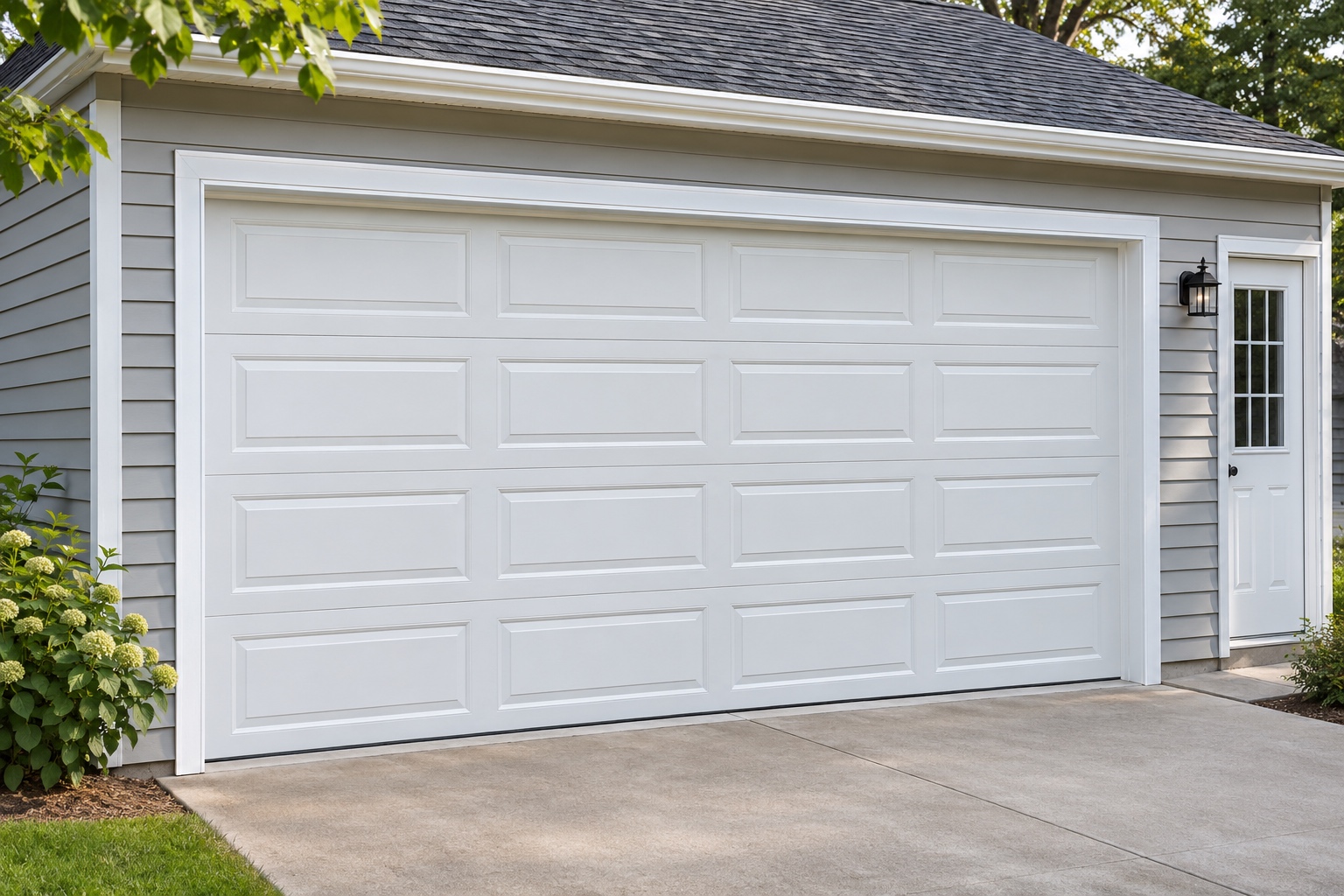
How Long Do Garage Doors Last? Repair or Replace
Judge garage-door lifespan by condition, not age alone. Compare safe repairs, compatible replacement sections and complete installed replacement quotes.
 Practical Guide
Plan a Garage Door Installation or Replacement
Organize a garage door replacement from site assessment and order confirmation to access, removal, testing and a useful owner handover.
Sources4
- DASMA TDS 185
- DASMA safety tips
- Photo: Santeri Viinamäki · CC BY-SA 4.0 · Resized and re-encoded for display
