Garage Door U-Factor vs. R-Value: Compare the Same Thing
A large R-value on one quote and a small U-factor on another are not competing scores on one scale. Before choosing a new sectional garage door, find out what each number describes. This guide compares specifications; it does not explain how to add insulation to an existing door.
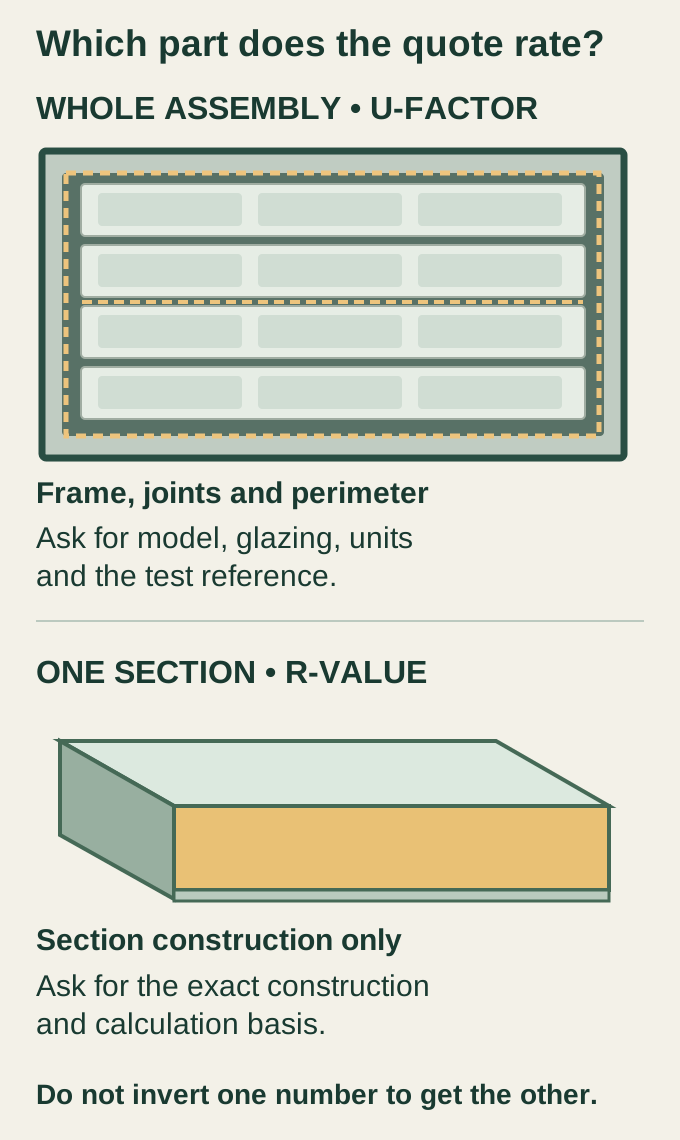
1. Name the item being rated
For sectional garage doors, DASMA distinguishes a calculated section R-value from a tested assembly U-factor. The section calculation describes resistance through the section. The assembly test accounts for the installed system, including joints and other features that a section-only calculation does not represent. DASMA TDS 163.
Ask the seller to identify the exact model, construction and configuration attached to the quoted rating. Do not let a product-family headline substitute for the specification of the door being ordered.
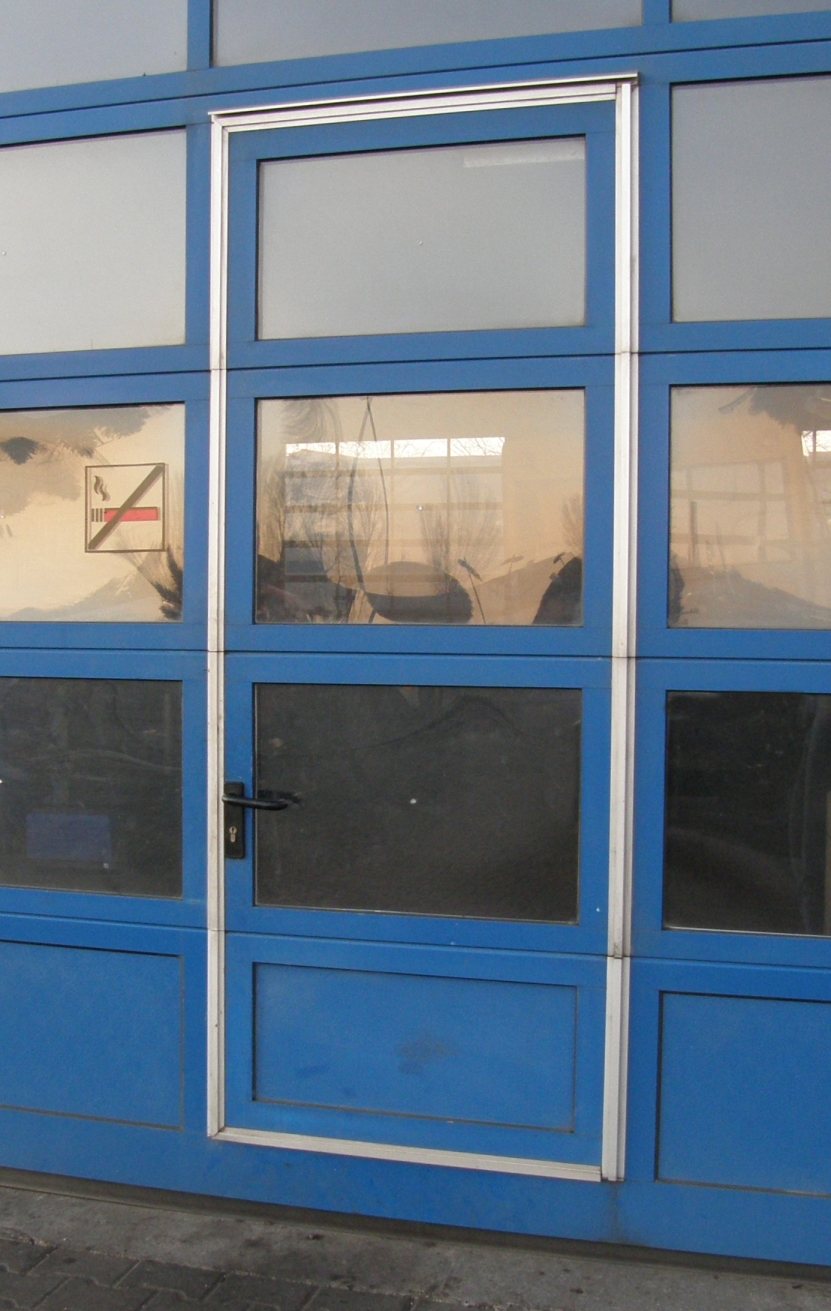
Photo: StromBer · CC BY-SA 2.0 DE
2. Read the direction correctly
Within a comparable rating method, higher R-value means greater thermal resistance; lower U-factor means lower thermal transmittance. In this garage-door context, do not calculate a whole-door U-factor by taking one divided by a published section R-value. The measurements describe different scopes. DASMA TDS 163.
US U-factor is commonly expressed in Btu/(h·ft²·°F). Keep the units visible. If one supplier uses another unit system, request a properly converted value before comparing; a bare number is not enough.
3. Ask what was tested
DASMA’s TDS 196 describes whole-door testing under ANSI/DASMA 105 and a verification program administered with ICC-ES. Ask whether the quoted assembly U-factor is tested and whether the specified model is listed in the program. A participating company may sell products outside that program; the company name alone does not establish a model’s listing. DASMA TDS 196; program and directory.
A useful comparison record has separate fields for model, door configuration, section R-value, assembly U-factor, units, test reference and verification listing. Leave an unavailable field blank and ask for clarification. Do not manufacture a missing value with a reciprocal calculation.
4. Confirm how windows affect the stated rating
Do not transfer a solid-door number to any glazed design by assumption. TDS 196 describes program treatment for doors with no more than 16% window area and different testing and labeling treatment above that threshold. It is a program rule, not permission to alter a door or proof that every window option performs identically. Have the supplier confirm the rating applicable to the exact proposed glazing configuration. DASMA TDS 196.
5. Keep the buying decision wider than one number
A rating describes thermal performance under its stated method. It is not a promise of a particular garage temperature or utility-bill reduction. Your use of the garage, how often the door opens and the rest of the building also matter. If you need a project-specific energy or code determination, give the complete specification to the relevant designer or local authority.
When two proposals differ, ask for the missing evidence before paying extra for a headline number. Keep installation scope, fit, operation and other required performance separate in the comparison. A thermally attractive product still has to be suitable for the opening and intended use.
A supplier question you can copy
“Please provide the tested installed-assembly U-factor, units and test reference for this exact door and glazing configuration. Is this model listed in the DASMA verification program? Please show any section R-value separately and identify any limitations.”
Questions
Is R-18 the same as a whole-door U-factor of 1/18? No. Section R-value and assembly U-factor are not reciprocal ratings here.
Does a verification badge replace the model specification? No. Check the listed product and the configuration being quoted.
Should I insulate the old door instead? That is a different decision involving added weight and compatibility. Use the existing insulation guide rather than this new-door comparison.
Related Posts
 Safety Guide
How to Insulate a Garage Door Without Ignoring Added Weight
Check kit compatibility, added weight, clearances and fire requirements before insulating a garage door; plan professional balance verification.
 Planning Guide
Garage Door Cost: How to Compare Complete Installation Quotes
Understand garage door cost components, installation exclusions, and the information needed for a reliable like-for-like quote.
 Practical Guide
Plan a Garage Door Installation or Replacement
Organize a garage door replacement from site assessment and order confirmation to access, removal, testing and a useful owner handover.
Sources5
- DASMA TDS 163
- DASMA TDS 196
- program and directory
- Photo: StromBer · CC BY-SA 2.0 DE · Resized and re-encoded for display
