Do You Need a Permit for Garage Door Work?
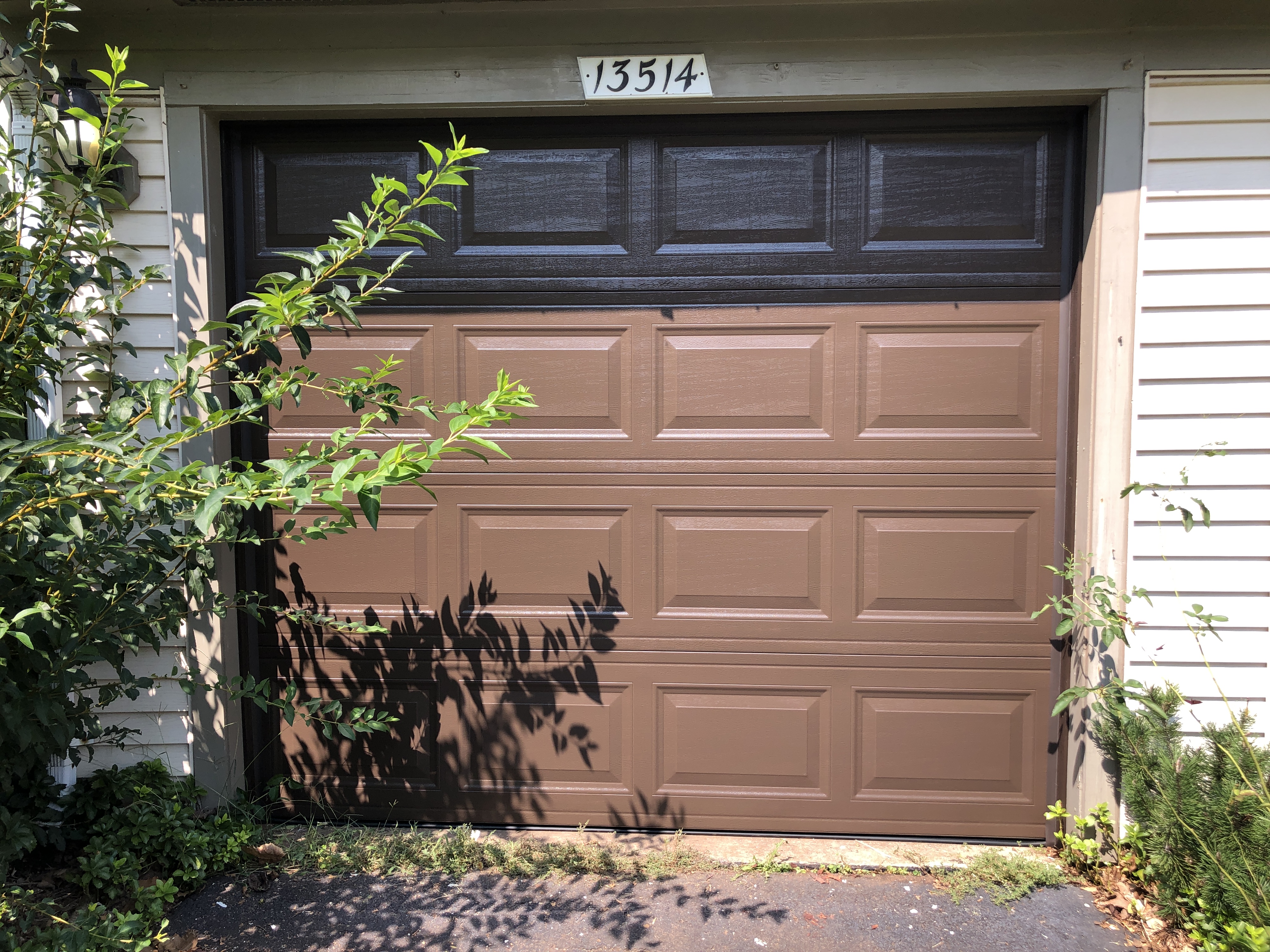
Photo: Famartin · CC BY-SA4.0
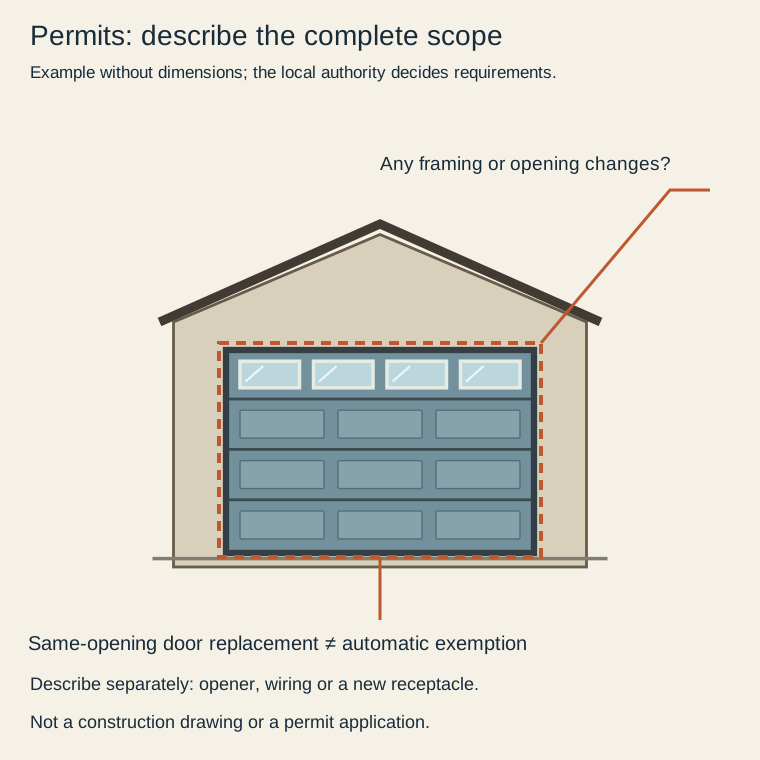
The useful question is not whether garage doors “usually” need permits. It is what the responsible building authority requires for this address and this scope of work. Replacing a door, changing an opening and adding an electrical receptacle are different descriptions. Use this workflow to get a documented answer before committing to the job.
1. Find the authority for the property
Start with the official city or county building department, not a contractor advertisement or a forum. Confirm that it handles the property's address; the postal city is not enough to settle jurisdiction. Ask which office answers permit questions if the first office does not cover it. Keep the official page and date with your project notes.
2. Describe all the work, without calling it a small repair
List whether the job replaces the door in the same opening, changes framing or opening dimensions, replaces only the opener, adds wiring or a receptacle, or changes the use of the garage. State the building type and whether other work is part of the same project. Avoid a vague question that leaves the electrical or structural work out.
Ask separately which building, electrical or other permits apply. An answer about the door alone may not cover the entire job. Do not treat an HOA approval as the building department's decision; ask about each applicable approval independently.
Photo: Stilfehler · CC BY-SA 4.0
3. Use local examples only as examples
Martin County, Florida, explicitly requires a permit for garage-door replacement. Miami-Dade's stand-alone replacement checklist includes an application, an elevation identifying the doors and sizes, and product-approval documentation. Those examples show why “same opening” does not establish a universal exemption.
Oregon's residential guidance lists adding a receptacle for a garage-door opener among electrical work requiring a permit. Its stated scope is detached one- or two-family dwellings, and it directs project-specific questions to the local jurisdiction. Do not apply that rule automatically to another state or building type.
4. Turn the answer into a responsibility list
Ask who will apply, whose name appears on the permit, which documents the supplier must provide, what fees are included in the quote and who schedules inspections. Have the installer identify any product substitution that would require revised paperwork. Obtain the required authorization before work rather than assuming an application receipt is approval.
If the office says no permit is required, keep its written response with the exact scope you described. If the scope later changes, ask again. Do not reuse a neighbor's answer as an approval for your address.
5. Plan inspections before the crew arrives
Ask the authority which inspections are required, when they must occur and what must remain visible. Put those steps into the installation schedule. Do not conceal work that is awaiting a required inspection or assume the installer will automatically arrange it. Request clarification when the issued documents differ from what you expected.
6. Close the paperwork loop
Keep the permit number, approved product information, inspection results and any corrections together. Confirm the final status through the official process. A door that operates is not proof that the permitting process is complete. This guide does not decide permit eligibility or submit an application for a particular property.
Frequently asked questions
Does same-size replacement always avoid a permit?
No. Check the local requirement for the specific work.
Does the door permit also cover a new outlet?
Do not assume it; ask about the electrical scope separately.
Can I rely on a verbal answer from a salesperson?
Use the responsible authority's decision and retain the described scope and response.
Related Posts
 Practical Guide
Plan a Garage Door Installation or Replacement
Organize a garage door replacement from site assessment and order confirmation to access, removal, testing and a useful owner handover.
 Practical Guide
How to Choose a Garage Door Installer
Check a garage door installer's identity, qualifications, system experience, warranty support and handover before you hire.
 DIY Guide
How to Measure a Garage Door Opening and Clearances
Record opening width, height, sideroom, headroom and backroom safely before requesting a garage door quote.

