How to Clean Garage Door Tracks Safely

Quick answer
Clean only accessible surface dirt from stationary garage door tracks with a soft brush and a lightly damp cloth, then dry them. This surface-cleaning routine does not include lubricating the track. Do not loosen track bolts, straighten bends or push a roller aside to reach a dirty spot.
Treat this as surface cleaning, not track repair. If the door catches, tilts or grinds, cleaning may not address the cause and continued operation can make the situation worse.
Stop: A roller outside the track, a visibly bent rail or a loose track support is not a cleaning job. Leave the door in place, keep people clear and arrange professional inspection.
Before you start
This guide is for an intact residential sectional door with accessible tracks and no known movement problem. Rolling shutters, commercial doors and unusual track systems need their own procedures. The curved and horizontal overhead portions may be inaccessible without unsafe reaching; leave those portions alone rather than positioning yourself below an unsupported door.
Check the door manufacturer's maintenance instructions. Clopay’s maintenance guidance supports a small brush followed by a gentle damp-cloth wipe, and directs track problems to a professional. The steps below deliberately exclude the hardware tightening and spring maintenance discussed elsewhere on that page.
Inspect from a safe position first. You are looking for loose debris, not measuring track spacing or testing whether a bracket can move. Do not grab a cable to see whether it is tight.
Tools and realistic time
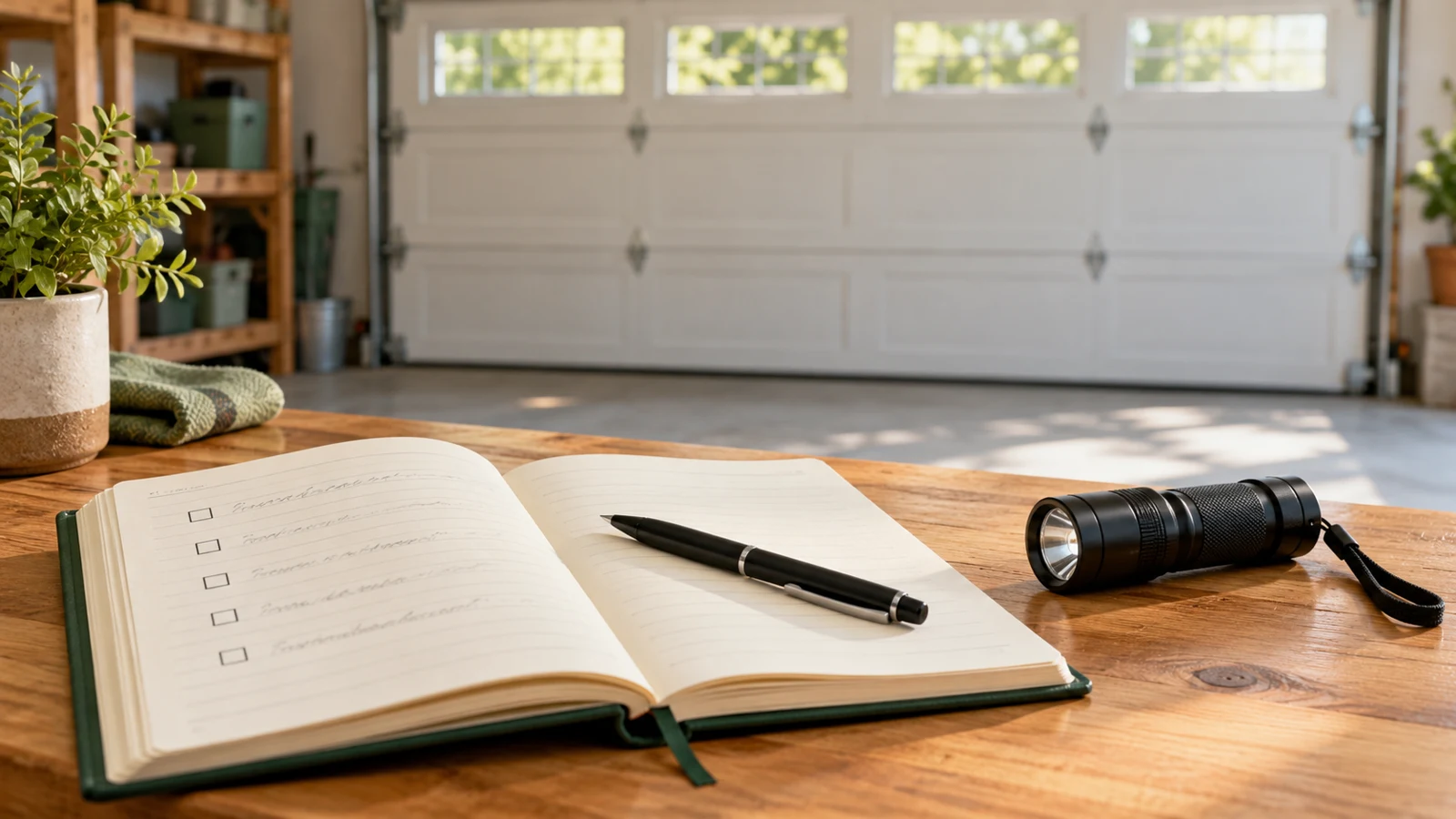
Use a soft brush, clean cloths, water, eye protection and suitable work gloves. A flashlight helps inspect without reaching into corners. As an editorial planning allowance, reserve approximately 15–30 minutes for reachable surface cleaning, excluding any repair or work at height. Do not bring a hammer, pry bar or wrench into this task: they encourage turning a wipe-down into an unplanned adjustment.
Cleaning steps and expected results
Wipe the free span between rollers
Start only with an intact, normally operating door fully closed. Prevent unintended movement using the opener’s instructions, including its battery backup if fitted. Unplugging alone may leave backup power active.
Scroll sideways to inspect the complete diagram; the steps are also written below.
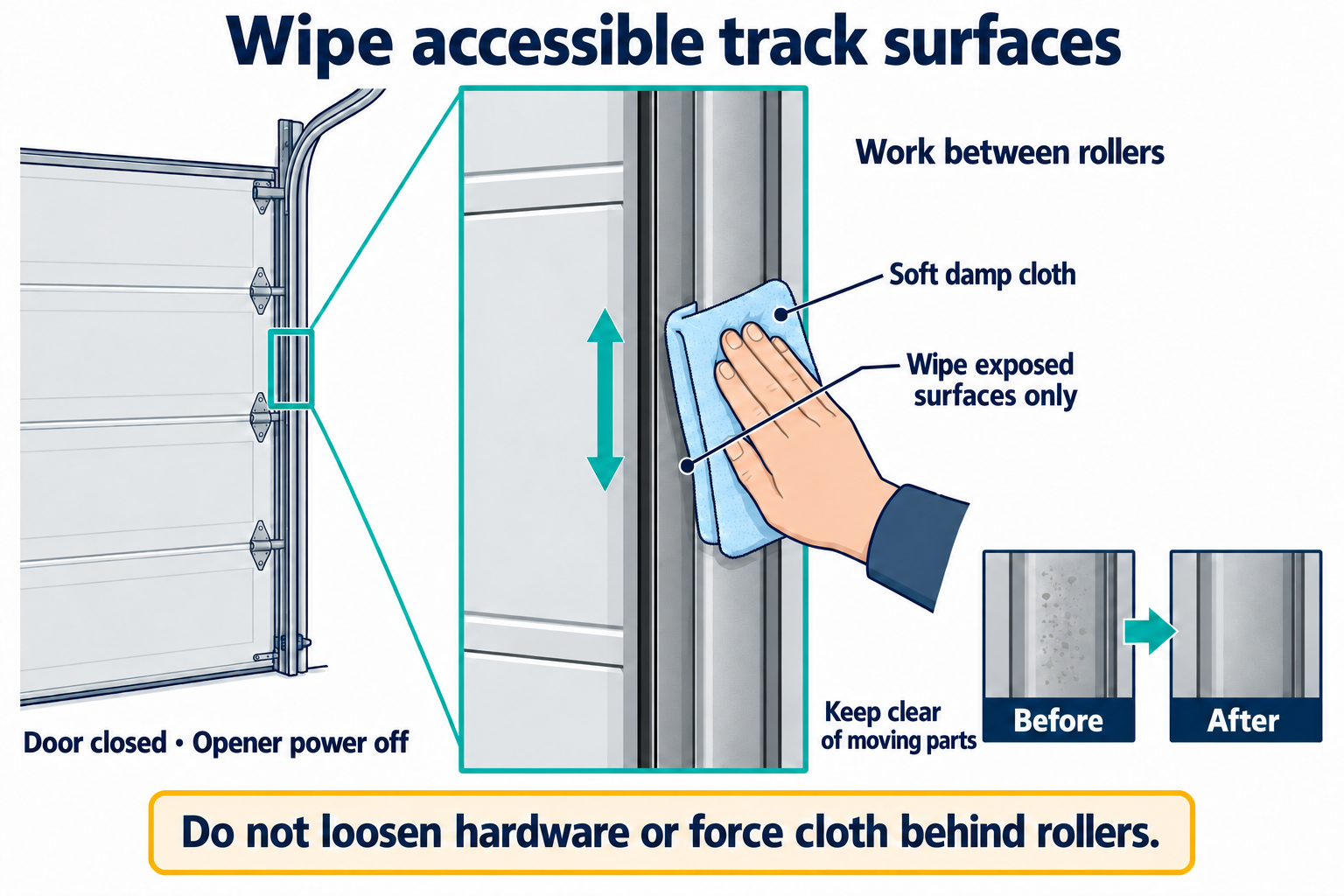
- Identify a reachable, exposed surface between rollers. Leave any area blocked by a roller, bracket or cable untouched.
- Wipe the exposed metal with a lightly damp soft cloth, then dry it. Do not force the cloth behind a roller or reach into a pinch point.
- Do not loosen hardware, move rollers or straighten the track. Stop if the track is bent, loose or damaged. Lubrication is outside this cleaning procedure; follow the door manufacturer’s separate maintenance instructions.
Clopay maintenance guidance and track arrangement, pages 18–19 of the Clopay manual.
- Set a safe starting position. If the door already works normally, close it using its normal control before the job. If it is stuck open or moving unevenly, do not force it closed for cleaning. Expected result: a closed, undamaged door with reachable track surfaces; otherwise, stop at visual inspection.
- Prevent unintended movement. Follow the opener's isolation instructions, including battery backup where fitted. Do not assume unplugging an opener disables a battery-powered system. Do not dismantle the opener or touch wiring; if the safe isolation procedure is unclear, stop and ask the manufacturer or service provider. Inform other household members. Keep the remote and app controls out of use. Expected result: no one operates the door while your brush or cloth is near the running path.
- Brush loose debris away from exposed surfaces. Use light pressure. Keep the brush out of the narrow roller-to-track contact area and away from cables. Expected result: loose dust and small surface debris come free. If something is wedged behind a roller, do not fish it out with a screwdriver or move the roller by hand.
- Wipe exposed, reachable track surfaces. Use a lightly damp cloth rather than flooding the track. Keep fingers, fabric and tools outside the roller-to-track pinch points. Leave any surface blocked by a roller, cable or bracket untouched. Work in short sections and fold to a clean face often. Expected result: the exposed surface is clean enough to inspect. Stop if the cloth snags on a sharp edge, a metal fragment appears or the surface is badly corroded.
- Dry and inspect again. Remove residual moisture with a clean dry cloth. Do not apply grease to make the metal look finished. Clopay’s lubrication guidance says not to lubricate the actual tracks. Raynor’s general care page includes a specified track spray, so do not assume all makers prescribe the same treatment. Follow the exact model manual; lubrication is outside this surface-cleaning task.
- Return to normal use only after clearing the area. Remove tools and restore power as directed. Observe a normal cycle from outside the path only if the initial inspection found no damage. Expected result: ordinary smooth travel. If the door still catches or scrapes, stop use and describe the symptom to a technician.
What the dirt can tell you
A thin layer of ordinary garage dust is different from fresh metal shavings or recurring dark debris in one location. Photograph unusual debris before removing it and note its location: left or right, near the floor or near the curve. Do not infer that a shiny wear mark means you should bend the track away from it.
If an oily deposit returns after cleaning, record where it starts. Repeatedly adding degreaser is unlikely to solve an unidentified source and may affect surrounding finishes or parts.
Practical tip: Write “reachable vertical surfaces cleaned” in your maintenance notes. It is more accurate than claiming the entire track system was serviced when the overhead sections were not accessed.
Common mistakes and safety
Avoid pressure washers, abrasive pads and solvent soaking unless the exact manufacturer instruction requires a specific treatment. Do not wipe while another person slowly runs the opener. A slow moving roller can still trap a finger, cloth or glove.
Do not remove a track section to clean its back or tighten supports simply because a bolt looks accessible. Track position is part of the installed system, and changing it can create a movement problem where none existed.
Common questions
Should tracks feel slippery?
No general slipperiness target applies. Keep them in the condition specified by the door manufacturer; do not use grease as a finish coat.
Can we clean a track with the door halfway open?
Not under this routine. A partially open door creates support and access risks. Use an appropriate service provider for inaccessible areas.
What if cleaning does not stop the squeak?
Noise can come from other parts. Follow the separate approved-lubrication guide or seek diagnosis; do not keep scrubbing or adjust the track to chase a sound.
Manufacturer references
- Clopay maintenance and track repair guidance
- Clopay lubrication guidance — track exclusion
- Raynor garage door care
Was this guide useful?
Your choice stays in this browser only. It is not sent to us.
Sources & manuals4
Manufacturer instructions and references for this guide. Match the document to your exact product.
- Clopay’s maintenance guidance · Clopay maintenance guidance · Clopay maintenance and track repair guidancewww.clopaydoor.com
- track arrangement, pages 18–19 of the Clopay manualliterature.clopay.com
- Clopay’s lubrication guidance · Clopay lubrication guidance — track exclusionwww.clopaydoor.com
- Raynor’s general care page · Raynor garage door careraynor.com