How to Clean a Garage Door Without Damaging the Finish
Quick answer
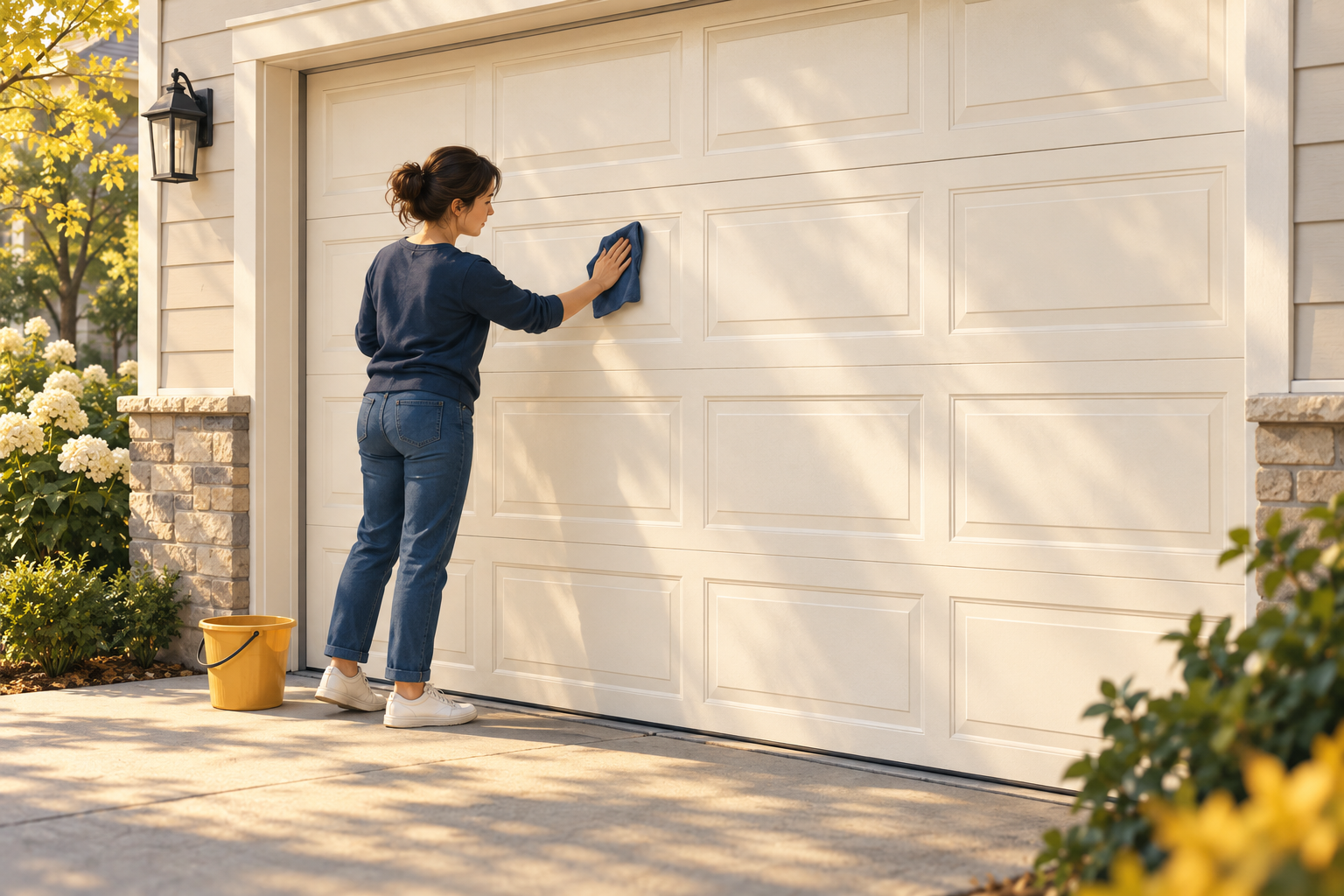
For a compatible, intact finish, use the door manufacturer's diluted mild cleaner, a soft wet cloth or sponge and a gentle clean-water rinse. Work on a closed, cool door and dry or allow it to dry as its care sheet directs. Avoid pressure washing, abrasives and improvised chemical mixtures.
Treat the finish, windows and seals as three separate materials. A cleaner that is acceptable on painted steel may not be suitable on a plastic window or decorative overlay.
Check first: “Looks like wood” does not identify the material. A faux-wood finish, composite overlay and real wood panel can require different care.
Prerequisites and limits
Find the model and finish information on your paperwork or accessible identification label. Check whether a later repaint, wrap or stain has changed the cleaning instructions. If the coating is peeling or the door has deep corrosion, do not scrub until it looks uniform: cleaning can expose damage but does not repair it.
Clopay’s cleaning guidance separates panel care from special-window care. For its impact-resistant polycarbonate, it specifies mild soap, a soft sponge or cloth, and no scrubbing or brushes. Do not apply a glass-cleaning routine to an unidentified plastic window.
Keep water away from outlets, opener equipment and sensor wiring. This guide covers reachable surfaces, not climbing above a door or removing panels to wash hidden edges.
Tools and time
Set out two clean buckets, the approved mild cleaner, soft cloths or sponges, a gentle hose supply if appropriate, gloves and eye protection required by the cleaner. For scheduling, allow roughly 30–60 minutes as a planning allowance, not a manufacturer time estimate, plus drying. Heavy staining, extensive glass or special finishes require separate planning; faster scrubbing is not the solution.
Step-by-step wash
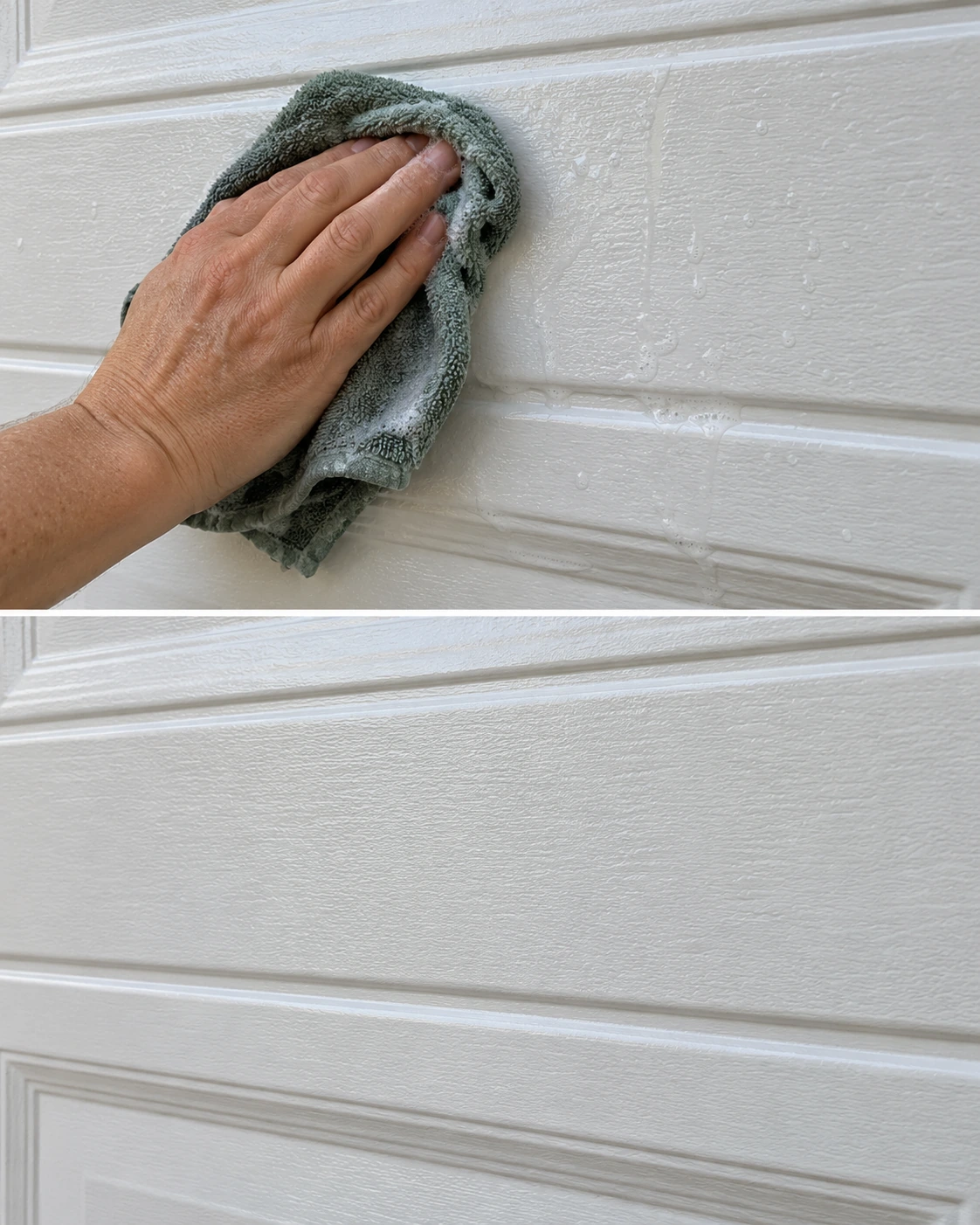
Use the cleaning instructions for the actual finish, not a stronger treatment chosen from the picture. Keep fingers away from panel joints and prevent unintended door operation as described in the steps below.
- Choose suitable conditions. Work when the surface is cool and the cleaner will not dry before rinsing. Close the door normally only if it is operating safely. Follow the opener manual’s procedure to prevent unintended operation, including any battery backup, and tell household users not to activate it. Do not pull the emergency release for cleaning. If you cannot establish a safe stationary setup, postpone the job. Expected result: a stable work area with no need to chase drying soap across a hot panel.
- Inspect and photograph problem areas. Look at the bottom section, fastener surroundings and edges for flaking, blisters or staining. Expected result: a baseline that lets you distinguish existing marks from a cleaner reaction. If you see deep rust, cracks or structural damage, stop and get advice before washing that area.
- Mix only the approved solution. Follow the dilution for your door finish and product, not an online recipe intended for another brand. Test an inconspicuous accessible area first and let it dry. Expected result: no softening, discoloration or loss of gloss. Stop if the cloth lifts coating rather than ordinary dirt.
- Wash in manageable sections. Use light pressure and keep the cloth wet and free of grit. Work downward so dirty runoff does not repeatedly cross finished sections. Rinse the cloth often; use a fresh one if it picks up sharp debris. Expected result: loosened dirt without scratches or burnished shiny patches.
- Rinse gently and completely. Remove cleaner residue without driving water into joints, seals or electrical equipment. Raynor’s care instructions explicitly prohibit pressure-washer rinsing. This routine also excludes bleach and improvised chemical mixtures; a persistent stain needs finish-specific advice, not stronger chemistry.
Gentle rinsing after washing
- Follow the care instructions for the exact door finish. Keep a sound door closed and stationary, and prevent operation—including backup power—as specified by its manual. Do not use the emergency release for this task.
- Rinse only reachable exterior flat panels. Do not use a ladder or place fingers in joints. Keep water off electrical equipment, sensors and wiring; do not force water into joints or seals.
- Do not use a pressure washer. Follow the finish-care sheet for rinsing and drying.
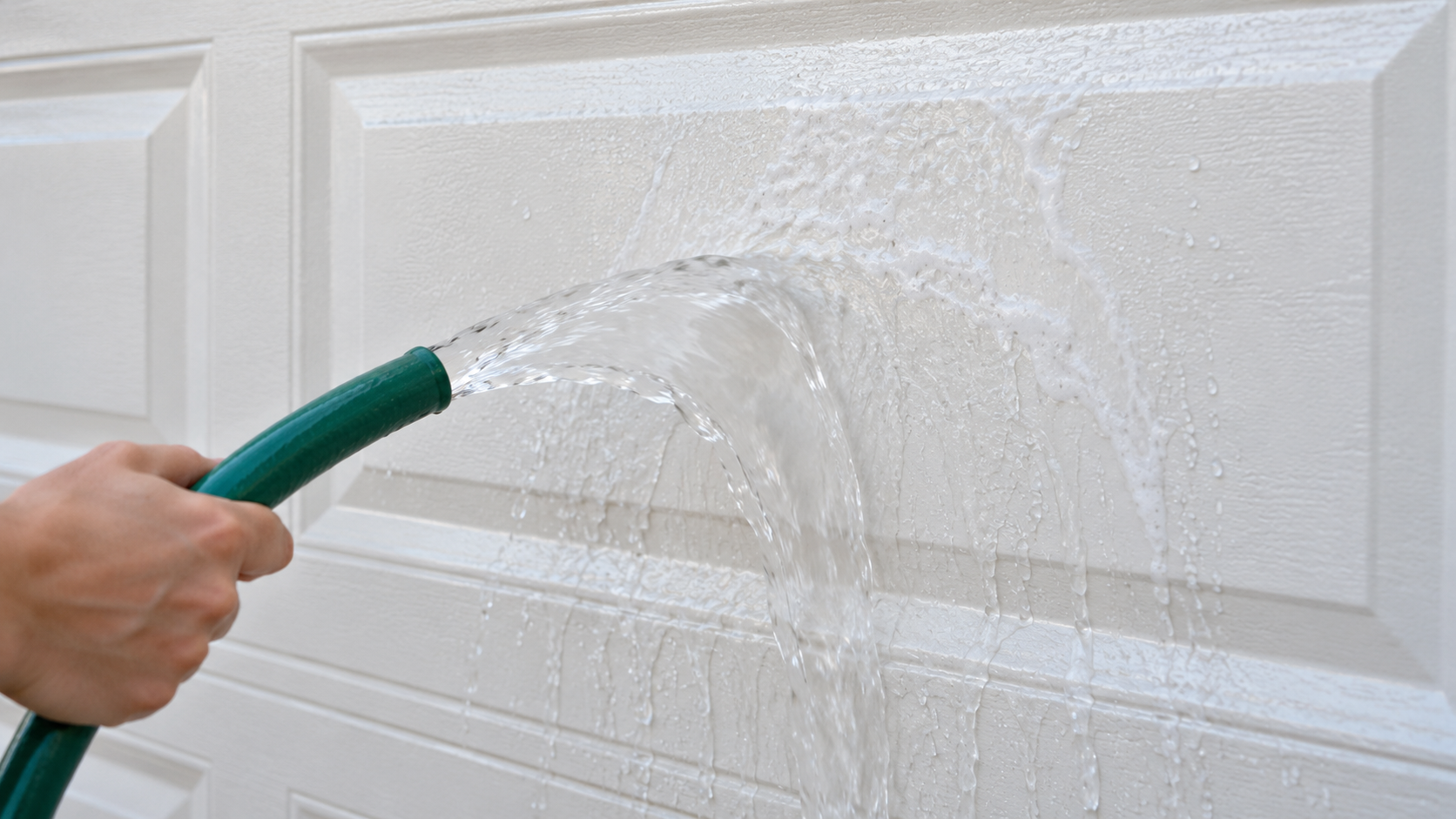
Rinse away cleaner gently with clean water. Gentle clean-water rinse on an accessible painted exterior panel. Avoid pressure washing, joints and electrical equipment. Use the exact finish-care instructions.
- Treat windows separately. Identify glass versus plastic glazing and any film or special coating before selecting its cleaner. Do not use a razor to remove a mark on an unidentified window. Expected result: clear glazing without streaks or scratches; persistent marks go back to the glazing care instructions.
- Inspect after drying. Compare the suspect areas with your photographs. Record chips, worn seals and remaining stains. If the finish requires a protective treatment, verify the exact product and application surface before applying it; do not assume every door needs automotive wax.
Common mistakes
The most expensive shortcut is increasing pressure or chemical strength when a stain does not lift. It may be discoloration within the finish rather than dirt on top. Another mistake is using the same dirty sponge on the lower salty section and the windows.
Avoid washing around a running opener or moving the door to expose joints while someone is cleaning. A person controlling the remote from across the driveway cannot reliably see every hand near the door.
Practical tip: Label your dedicated door-washing cloths. Grit from wheel cleaning or driveway work can scratch a finish even when the detergent itself is mild.
Safety and follow-up
Do not remove warning labels or hardware to make washing easier. Keep the floor from becoming a slip hazard and leave adequate access through a separate doorway. If a stain suggests a leak, photograph where it begins rather than just treating the visible streak.
Common questions
Can we use bleach on mildew?
Not as a general recommendation. Some specific materials have manufacturer-approved mildew procedures, but the concentration, protection and compatibility must match. Never mix bleach with other cleaners.
How often does the door need washing?
Use the care and warranty schedule for the exact finish and exposure. Clopay’s general cleaning page describes twice-yearly cleaning and more frequent cleaning in harsh environments, but that is not a universal schedule. Record dates, products and any finish changes.
Will cleaning remove rust?
It may remove surface contamination, but corrosion repair and coating restoration are separate tasks. Do not sand through a finish as part of a routine wash.
A clean finish is not a repaired finish
After drying, ordinary dirt should be reduced without a change in coating texture or gloss. Remaining discoloration is a reason to stop and identify the material or damage. Photograph it for the door or finish supplier; do not sand, repaint, remove overlays or pull out seals as part of this wash.
Manufacturer references
- Clopay garage door cleaning and finish care
- Raynor garage door care
Was this guide useful?
Your choice stays in this browser only. It is not sent to us.
Sources & manuals2
Manufacturer instructions and references for this guide. Match the document to your exact product.