How to Manually Close a Garage Door: When to Stop Instead
Quick answer
Do not pull the emergency release on an open or unsupported garage door to make it close. Manual closing is only a candidate when the door is already safely in manual operation, intact and properly balanced, and its exact instructions permit the movement with a designated gripping point you can control.
If the door is open, still connected to the opener, stuck, tilted or of uncertain condition, keep clear and obtain qualified help. We recommend accepting a temporary access inconvenience rather than turning an opener problem into an uncontrolled falling-door event.
Immediate stop: Do not close a door with a broken spring, displaced cable, off-track roller or suspected structural damage. Do not stand beneath it, release it, shove it, or use a vehicle or improvised prop.
Understand the starting state
Open door: treat uncertain support as a stop
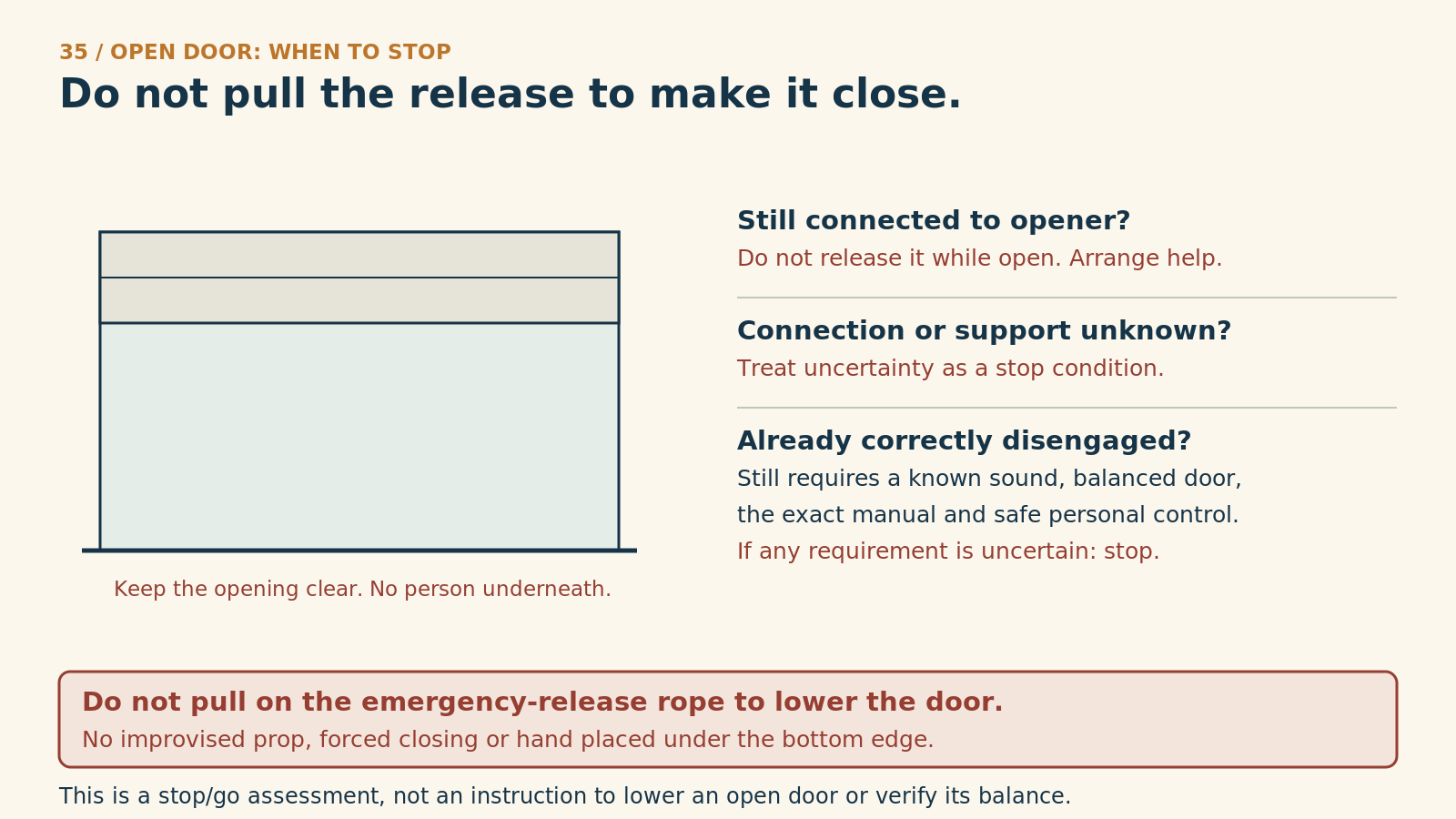
Keep people out of the opening. Do not release an open door to make it close, and do not use a prop or stand beneath it.
Still connected
Do not pull the release while it is open. Arrange qualified assistance.
State unknown
Unknown coupling, balance or support is a stop condition. Do not experiment to identify it.
Already disengaged
That alone is not permission to lower it. A known sound and balanced system, exact instructions and safe personal control are still required. If anything is uncertain, stop.
Do not pull the emergency-release rope to lower the door, place a hand under its bottom edge, force movement or adjust springs/cables. Use qualified advice for the actual system before attempting a route that is not clearly safe.
The drawing communicates decision boundaries, not a manual-lowering technique or a method for proving balance.
References
- Chamberlain manual-operation guidance
- Chamberlain C2212T/C2405 manual 114-5554-000
“Open” can describe several different situations. A door that you just opened manually under its instructions is different from a door hanging halfway up after a loud bang. A door held by its opener is different from one safely established in manual mode.
Chamberlain warns that releasing a door with weak or broken springs can result in rapid movement and advises release with the door closed where possible. Its manual-operation guidance also says not to use the release handle to move the door.
This article deliberately does not turn that warning into a generic open-door release procedure. If safe support is uncertain, a technician must establish it.
Prerequisites, tools and time
For the conditional manual-closing path, you need a known intact and balanced door already in manual mode, the exact door/opener instructions, a usable designated handle and the ability to control the entire permitted movement. Keep people and objects clear and ensure the opener cannot activate as directed by its manual.
Have adequate light and the manuals. Do not bring winding bars, jacks, ladders or props into an improvised rescue. A safe routine closing may take a few minutes; a stuck or uncertain door has no homeowner completion-time target.
Step-by-step decision workflow
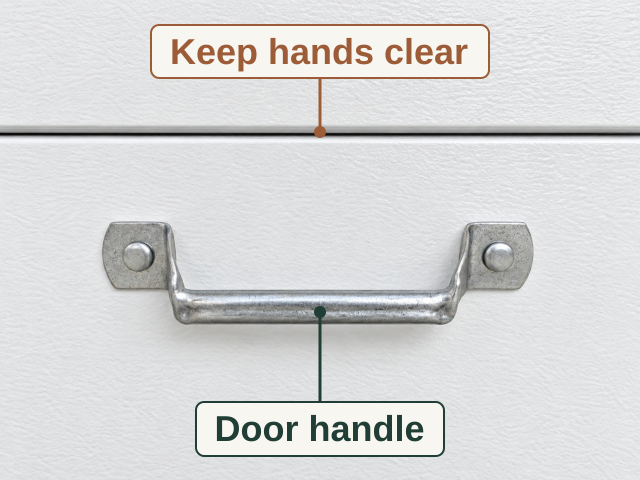
Scroll within the image if needed, or open the full-size view. The key details are also written below.
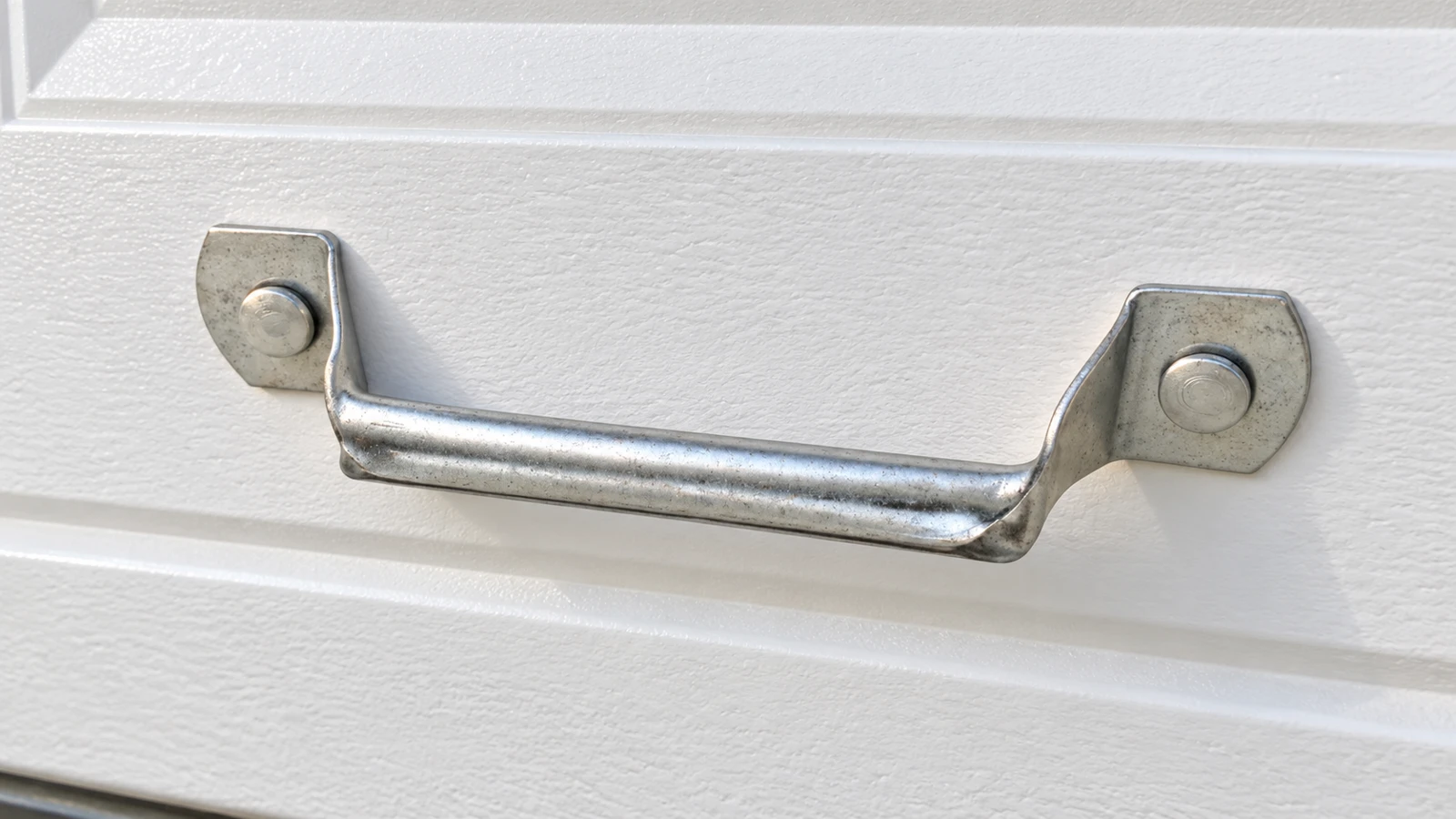
The callout at the horizontal section joint means keep hands clear. The other callout identifies the designated door handle. Neither the picture nor the handle’s presence makes an unassessed or unsupported door safe to move; retain the stop conditions above.
- Observe without touching. Note whether the door is fully or partly open, level or tilted, and whether there was a bang, impact or sudden change. Expected result: a clear description of its state. Any mechanical warning means no further movement attempt.
- Identify whether it is still coupled to the opener. Use the known operating history and manual, not pulling the release as a test. Expected result: certainty about the state. If it is coupled while open, do not disengage it under this guide; arrange the correct professional response.
- Decide whether the conditional route applies. Continue only if the door was already placed safely in manual mode, its integrity and balance are known, and the exact manual permits closing from this position. Expected result: all prerequisites satisfied. “It looks okay” or “someone is holding it” is not enough.
- Prepare the route and intended grip. Keep everyone clear and identify the handle or safe gripping point specified by the door maker. Expected result: you can perform the movement without placing fingers in joints or reaching beneath the panel. If the handle is inaccessible, stop rather than pull the opener's release cord.
- Lower only with steady control under the manual's method. Do not jerk, force or let the door free-fall. Expected result: smooth, manageable descent. If it binds, tilts or begins moving beyond your control, do not get underneath it or attempt to catch it. Move clear and obtain help.
- Confirm full closure without forcing. Keep fingers and feet out of the bottom closing area. Expected result: the door reaches its intended closed position without excessive effort. A remaining gap or rebound is not permission to push harder, add weight or alter track position.
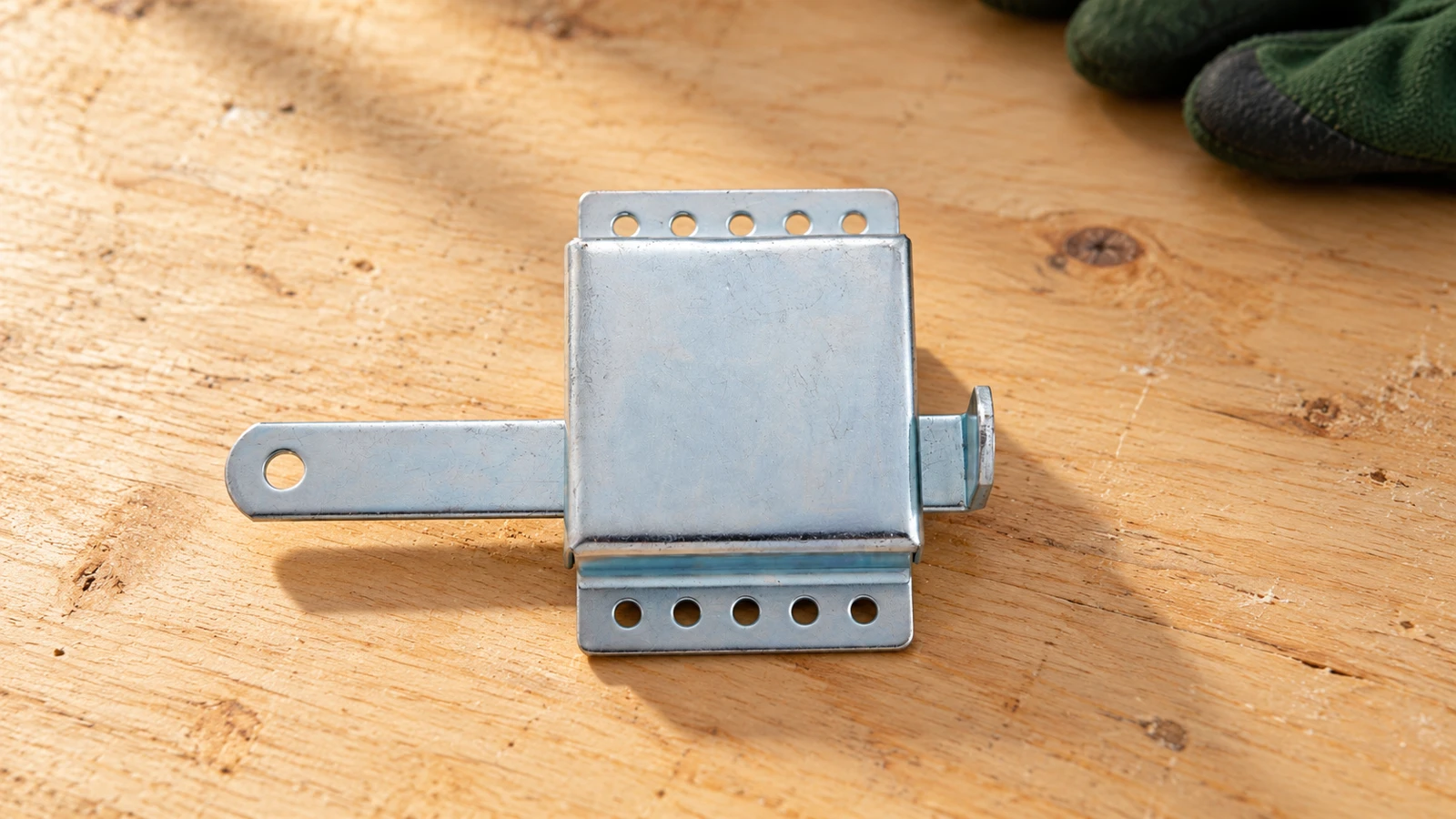
- Keep the operating state clear. Tell the household the door remains in manual mode and follow the separate exact reconnection procedure before powered use. If an authorized manual lock is used, ensure the opener cannot run against it and remove the lock before reconnecting as instructed. Expected result: no mixed manual/powered state that can surprise the next user.
When the door cannot be closed safely
Keep the opening clear, prevent further commands and use a separate entrance. Secure access to the rest of the property without approaching the suspended door. Give the service provider the model, position, last movement and any visible damage. Do not repeatedly recreate a fault or climb beneath the door for photographs.
A closing problem caused by photoeyes should be repaired and tested rather than bypassed. CPSC's safety guidance treats a failed reversing function as a reason to take the opener out of service until corrected.
Practical tip: Tell the next person exactly what changed: “door remains disconnected from opener,” not merely “power is off.” Power returning does not automatically establish a safe operating configuration.
Common mistakes
Do not use the release rope as a pull-down handle. Do not assume two people can safely control a door with a failed spring. Do not leave a partially raised door propped with a ladder or timber and treat that as a finished solution.
FAQ
What if it is raining and the garage is open?
Protect people first and arrange help. Weather urgency does not make an unsupported door safe to release.
Can we close it manually because the sensors failed?
Not automatically. Apply every mechanical and manual-operation prerequisite; otherwise, leave movement to a qualified technician.
What if it becomes very heavy halfway down?
That is a stop condition, not normal resistance to overcome. Keep clear of uncontrolled movement and obtain service.
Explore guides · About this guide
Was this guide useful?
Your choice stays in this browser only. It is not sent to us.
Sources & manuals2
Manufacturer instructions and references for this guide. Match the document to your exact product.
- Chamberlain manual-operation guidancesupport.chamberlaingroup.com
- Chamberlain C2212T/C2405 manual 114-5554-000images.thdstatic.com