How to Open a Garage Door Manually: Check Safety Before Releasing It
Quick answer
Manual opening is appropriate only for an intact, properly balanced door, starting closed, when you have the exact opener procedure and can control the door safely. Isolate the opener as directed, disengage it using its specified release method, and move the door with its designated lift handle or gripping point.
Do not attempt manual opening with a broken spring, damaged cable, off-track roller, tilted panel or a door that has become heavy. We recommend treating a power outage differently from an unexplained mechanical failure: no electricity does not itself prove the door is safe, but it also does not require dismantling the mechanism.
Stop before releasing: Never disconnect an open or unsupported door. Do not use extra people, a vehicle, jack or lever to lift a door with a suspected spring problem.
Prerequisites: all must be true
Establish the prerequisites before release
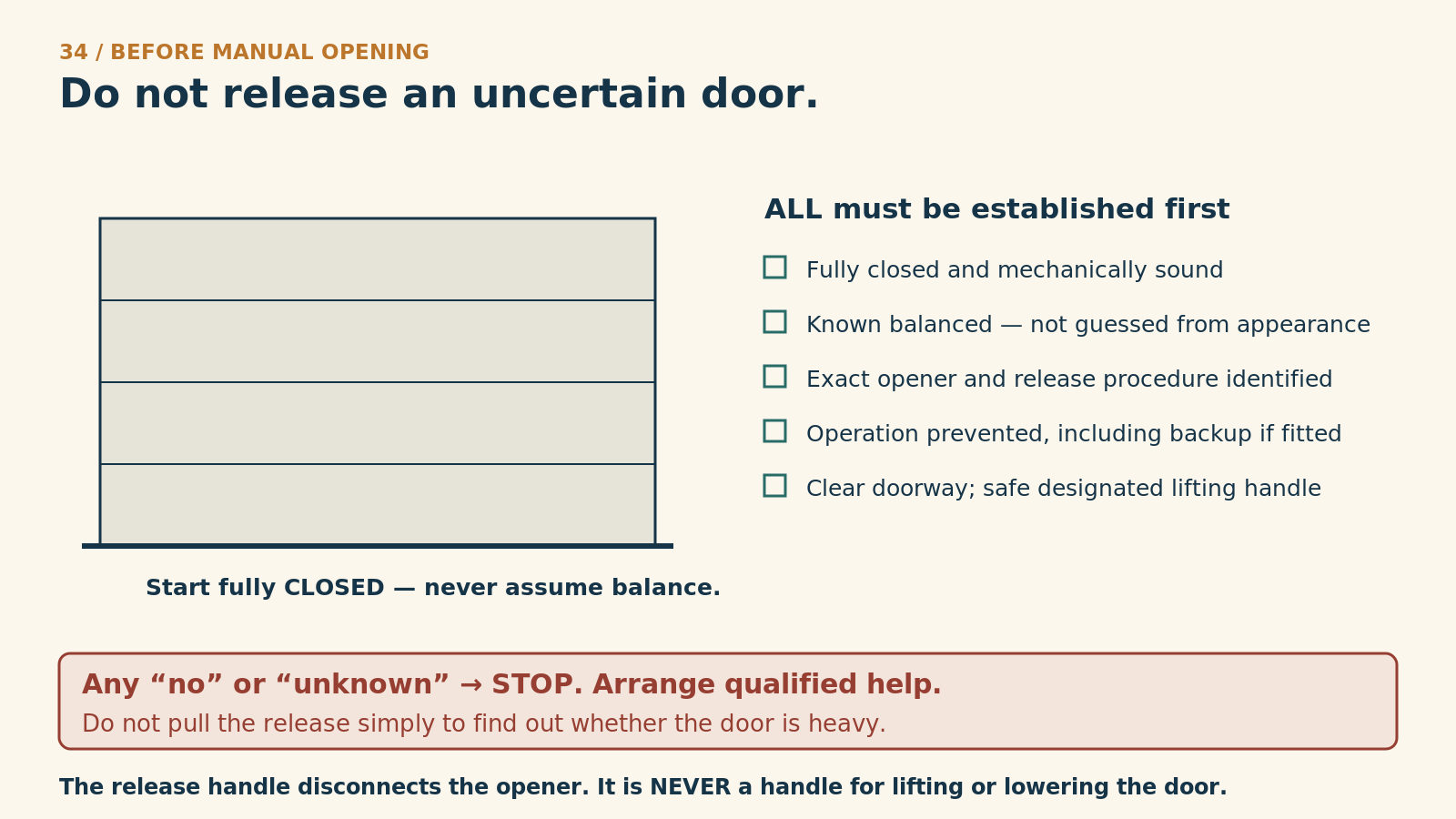
Do not pull the release to discover whether an uncertain door is heavy. A fully closed appearance does not prove balance or intact support. If it is already open or unstable, do not force or operate it closed just to satisfy this gate.
All prerequisites must already be established
- Door fully closed and mechanically sound.
- Balance known—not inferred from a photograph or a closed position.
- Exact opener and release instructions identified.
- Operation prevented, including backup power when fitted.
- Doorway clear and the designated lifting handle accessible safely.
Any no or unknown means stop and get qualified help. Do not recreate a balance test on a suspect door.
Two different functions
The emergency-release handle disconnects the opener. It must never be used to lift or lower the door. Actual manual movement uses the door’s designated handle only under its complete instructions and safe-control requirements.
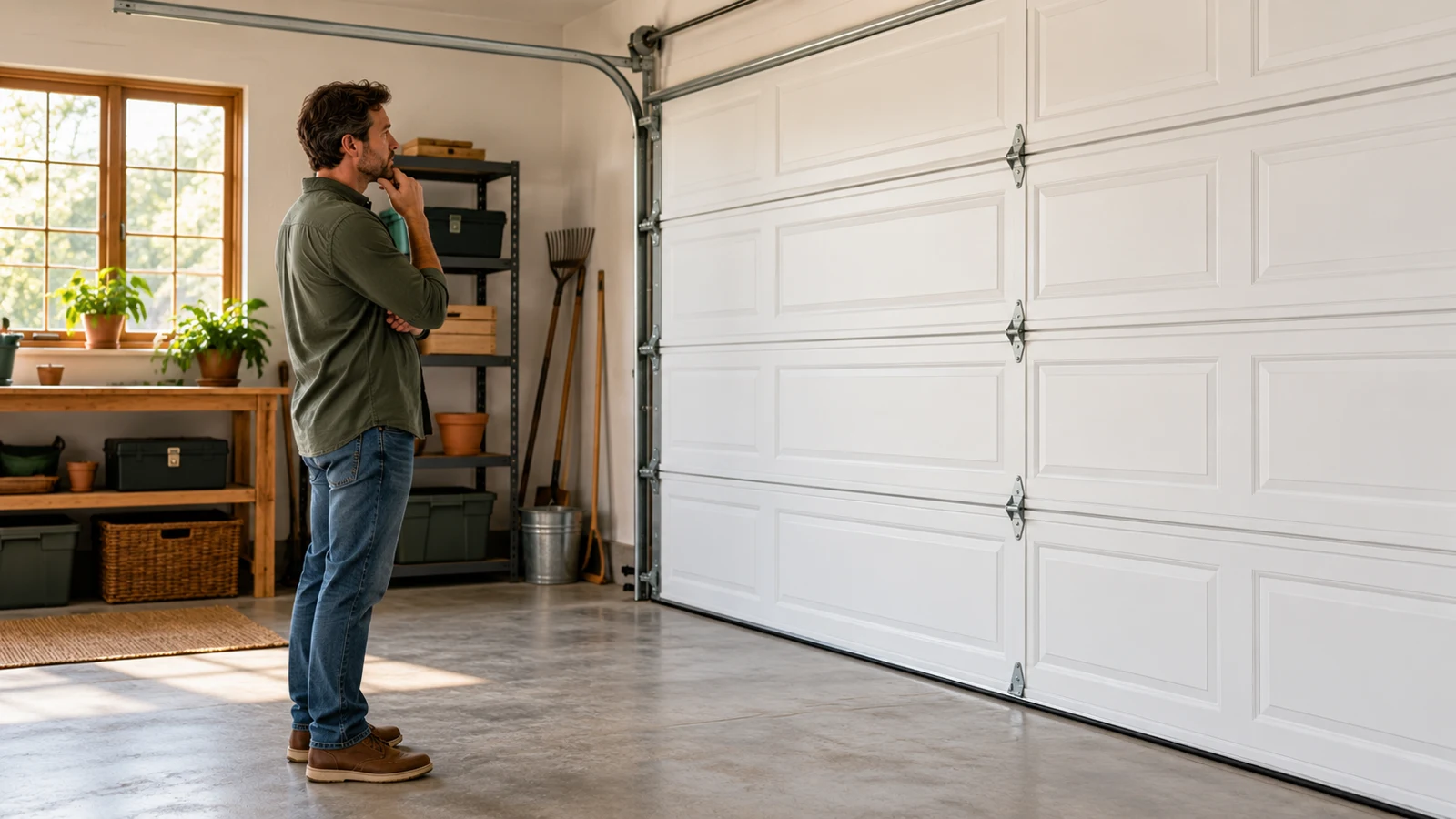
This visual is a pre-release decision gate; it deliberately does not depict a release pull or promise that manual lifting will be safe.

References
- Chamberlain manual-operation guidance
- Chamberlain C2212T/C2405 manual 114-5554-000
The door is closed. Its recent operation has been normal, with no new heaviness, bang, tilt or uncontrolled movement. The visible components appear intact. You have the manual for the actual opener type and know the designated door handle. You have enough light and physical ability to control the door throughout the permitted movement.
A visual check cannot establish balance by itself. If the history or condition is uncertain, obtain professional assessment rather than using manual opening as an experiment.
Chamberlain warns that weak or broken springs can let a released door fall and that an unusually heavy or uncontrolled door requires professional help.
Tools and time
Have the owner manual and a safe light source. This should not require spring tools, a pry bar or removal of door-arm hardware. A straightforward authorized opening may take only a few minutes after the safety checks, but there is no safe speed target for an unfamiliar system.
If you cannot reach the release safely, stop. Do not climb the door, stretch from an unstable object or attach an improvised extension that changes how the release works.
Step-by-step workflow
- Confirm the reason for manual use. Identify whether this is a power outage or an opener fault. Expected result: a plausible nonmechanical reason with a door that otherwise has a known safe history. A loud bang, sudden heaviness or one-sided movement sends you to professional service instead.
- Inspect from a safe position. Look at the door line, visible cables, tracks and rollers without touching them. Expected result: no visible defect. Do not pull a cable, squeeze a spring or try a small lift to test a suspected failure.
- Prepare the space and controls. Clear people and objects from the doorway and follow the manual's isolation procedure, including backup power if present. Tell household members not to operate the opener. Expected result: no unexpected powered movement during the change to manual operation.
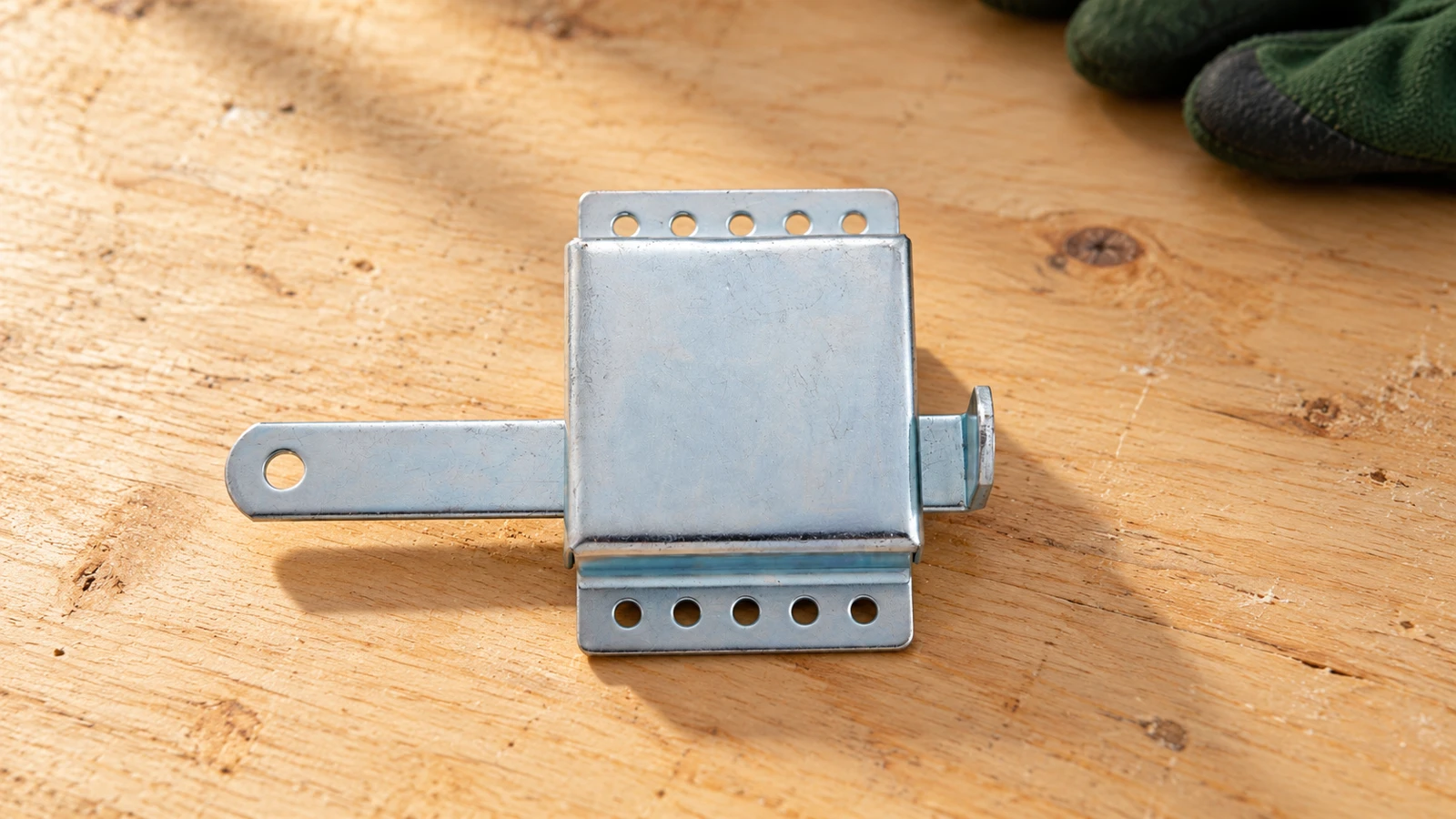
- Read the release and lock instructions for your model. Identify the designated mechanism and confirm any authorized manual door lock is disengaged before lifting. Expected result: you know the exact sequence. Ceiling trolley and wall-mounted systems may differ; do not copy a release direction from another model.
- Disengage only as the exact manual permits, with the door closed. Use the specified release operation, not removal of pins, arms, brackets or cables. Expected result: the door is disconnected from the powered drive without forcing hardware. If the mechanism will not release normally, stop and seek help.
- Use the door's intended lifting point. Keep fingers away from section joints and lift in the controlled manner described by the door manual. Expected result: smooth, manageable movement. If it binds, tilts or requires unusual effort, stop; return it gently to closed only if you can maintain safe control. Never struggle underneath it or attempt to catch a falling door.
- Verify a safe open condition before passage. Follow the manual's full-open requirement and ensure the door remains safely in its intended position. Expected result: no downward drift or instability. Do not pass beneath a door whose support or position is uncertain, and do not leave a partially raised door as a temporary arrangement.
Use the correct handle
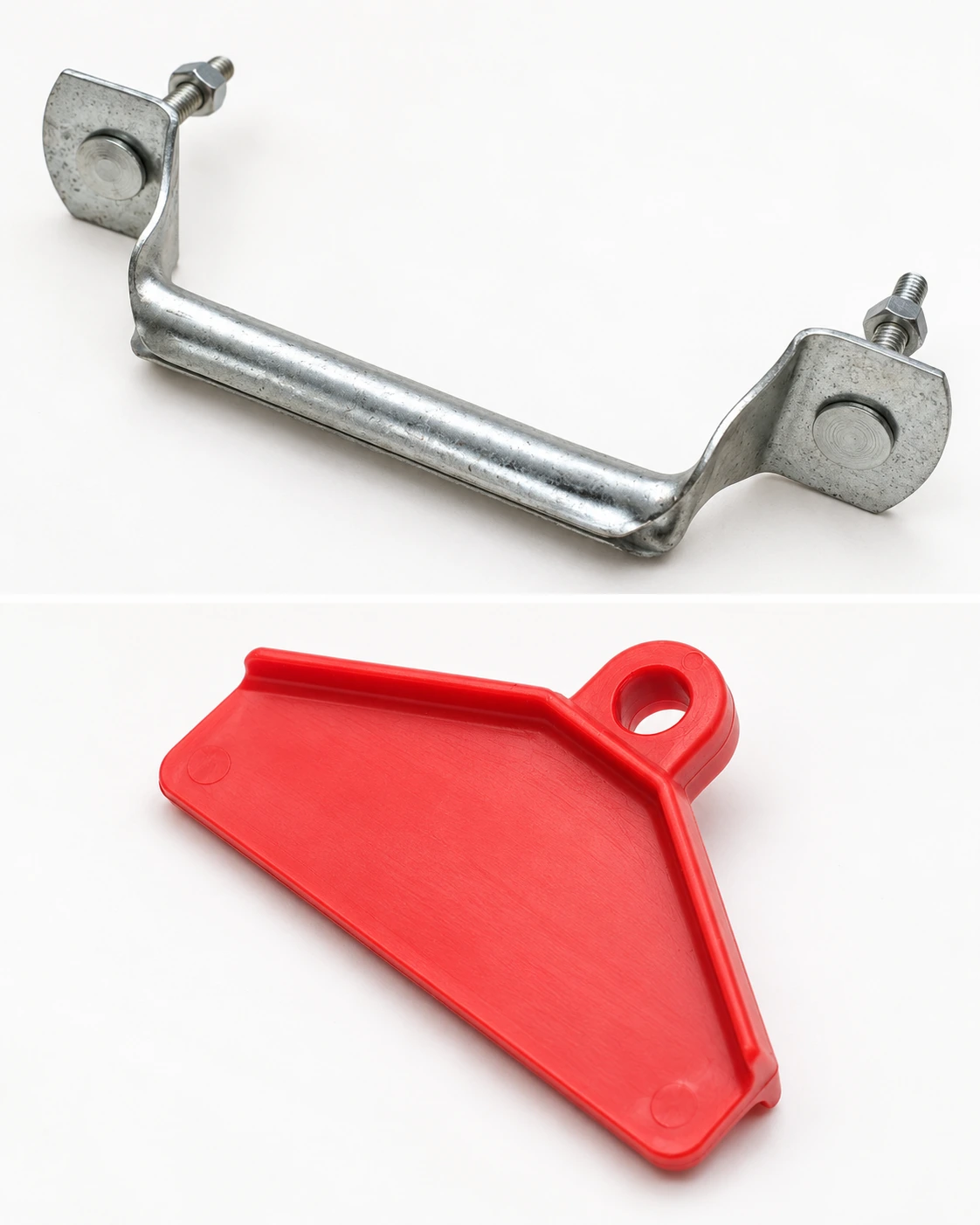
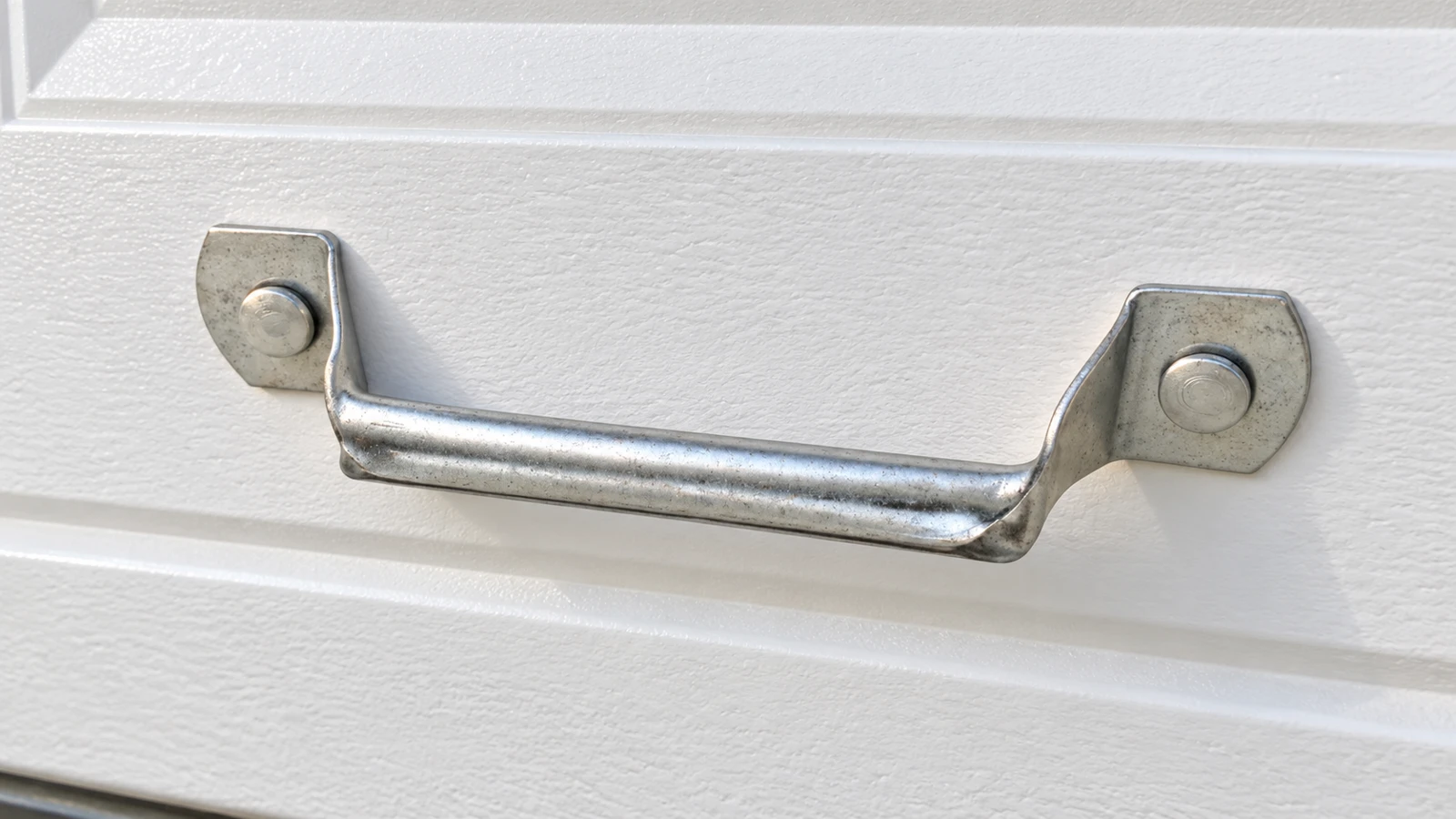
The metal sample is a door lifting handle. The red sample is an opener emergency-release grip, not a handle for lifting the door. These separate samples show function, not a release method or compatible parts pair.
The emergency-release handle disconnects the opener; it is not a lifting rope. Genie likewise directs manual operation using the door handle and warns about section pinch points.
If there is no usable intended gripping point, that is a reason to stop, not to use the bottom edge or section gap. Do not install a new handle as part of an urgent opening attempt.
Practical tip: Read and store the release instructions before an outage. A printed page avoids trying to identify a mechanism by phone light under pressure.
Common mistakes and aftercare
Do not assume the opener reconnects the same way it disconnects. Leave powered operation disabled until you follow the separate model-specific reconnection procedure and complete the required checks. Do not engage a manual lock while leaving the opener able to operate against it.
FAQ
Can we open it with a broken spring?
No. Keep it out of use and arrange professional service; use another route or transport option.
What if we are locked outside?
Use an authorized alternative entrance or a professionally installed, model-approved access arrangement according to its instructions. Do not fish for the release through the door.
Should two people lift a heavy door?
Extra people do not correct a failed counterbalance system. Unexpected heaviness is a stop condition.
Explore guides · About this guide
Was this guide useful?
Your choice stays in this browser only. It is not sent to us.
Sources & manuals2
Manufacturer instructions and references for this guide. Match the document to your exact product.
- Chamberlain manual-operation guidancesupport.chamberlaingroup.com
- Chamberlain C2212T/C2405 manual 114-5554-000images.thdstatic.com