Torsion vs. Extension Springs: Choosing a Garage Door Counterbalance System
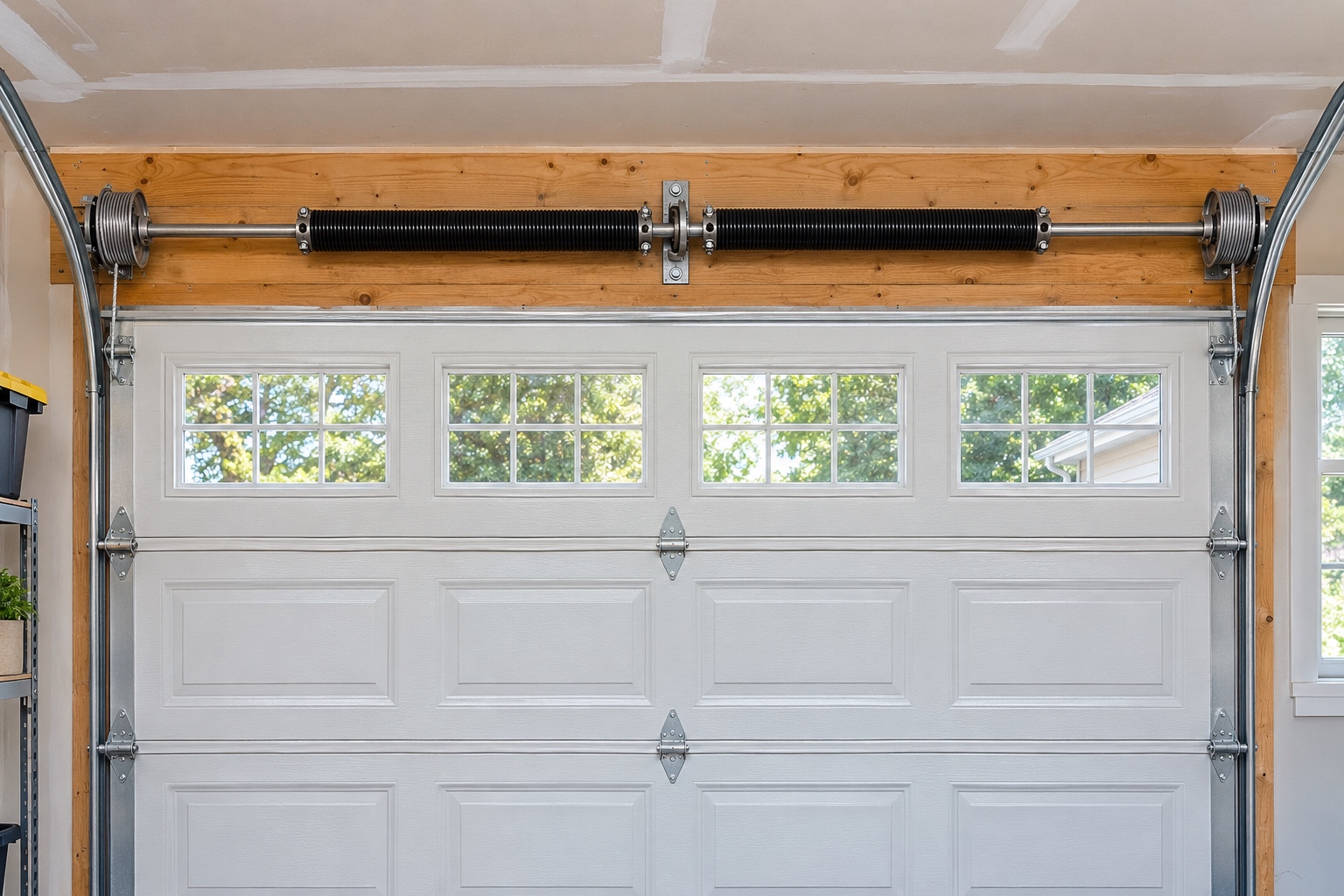
A torsion system is worth asking about when you are buying a new sectional garage door or considering a professionally designed conversion. Keeping an existing extension system can also be reasonable when a qualified technician confirms its condition, containment and suitability. The useful question is not “Which spring wins?” It is “Which complete system is appropriate for this door, this garage and the work I actually need?”
This guide compares system choices, not replacement parts. It does not explain how to adjust tension, measure springs or convert hardware. If a spring is broken, leave the door out of service. Keep clear of an unstable or partly open door and arrange professional help rather than operating it for this comparison. DASMA inspection checklist.
1. Understand the two arrangements without touching them
Common exposed torsion systems have a spring or springs around a shaft above the opening. Common extension systems have elongated springs beside the horizontal tracks. The former uses twisting action; the latter stretches and contracts. Both are counterbalance systems: they help offset the door's weight rather than replacing the door's tracks or motor. Clopay spring-system overview.
Those usual locations are useful descriptions, not a complete identification method. Low-headroom arrangements can differ, and some systems conceal the spring. Use existing installation paperwork and the door model before relying on appearance. If you cannot identify the arrangement from a safe position, put “unknown” in your request. There is no need to remove a cover or reach beside a spring.
Your decision concerns the whole counterbalance assembly. Clopay's torsion documentation, for example, lists a tube, bearing plates and cable drums as well as springs. Its extension documentation has a different component set. A conversion therefore needs a written system proposal, not an order for a spring that looks similar. Torsion manual and extension manual.
2. Compare containment, not claims of “risk-free” springs
A useful physical difference is containment. DASMA explains that a torsion shaft contains broken spring parts, while an extension spring needs a secure containment cable through its center. Containment reduces one failure hazard; it does not make the system safe to dismantle. DASMA checklist, spring containment.
Ask the technician to identify the containment arrangement and its condition on either proposal. A cable visible somewhere near an extension spring is not proof that the required containment is present. Do not trace it by hand, pull it or attempt to add one yourself. Clopay explicitly warns against operating extension-spring doors without properly installed containment cables. Clopay extension-spring supplement.
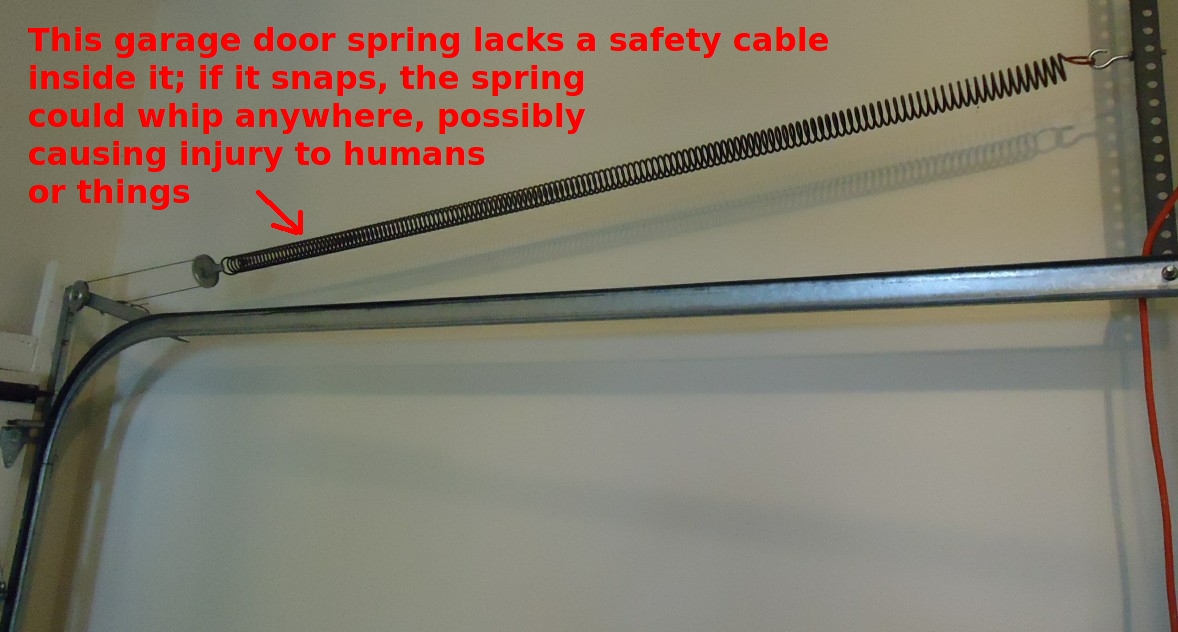
For a homeowner comparing options, the practical result is simple: do not accept “extension springs are unsafe” as a substitute for inspecting the installed system, or “torsion is safe” as permission for DIY work. Ask what is wrong, what will correct it, and how the completed arrangement will be checked. A safety defect needs attention regardless of whether you choose conversion.
3. Let the garage layout narrow the options
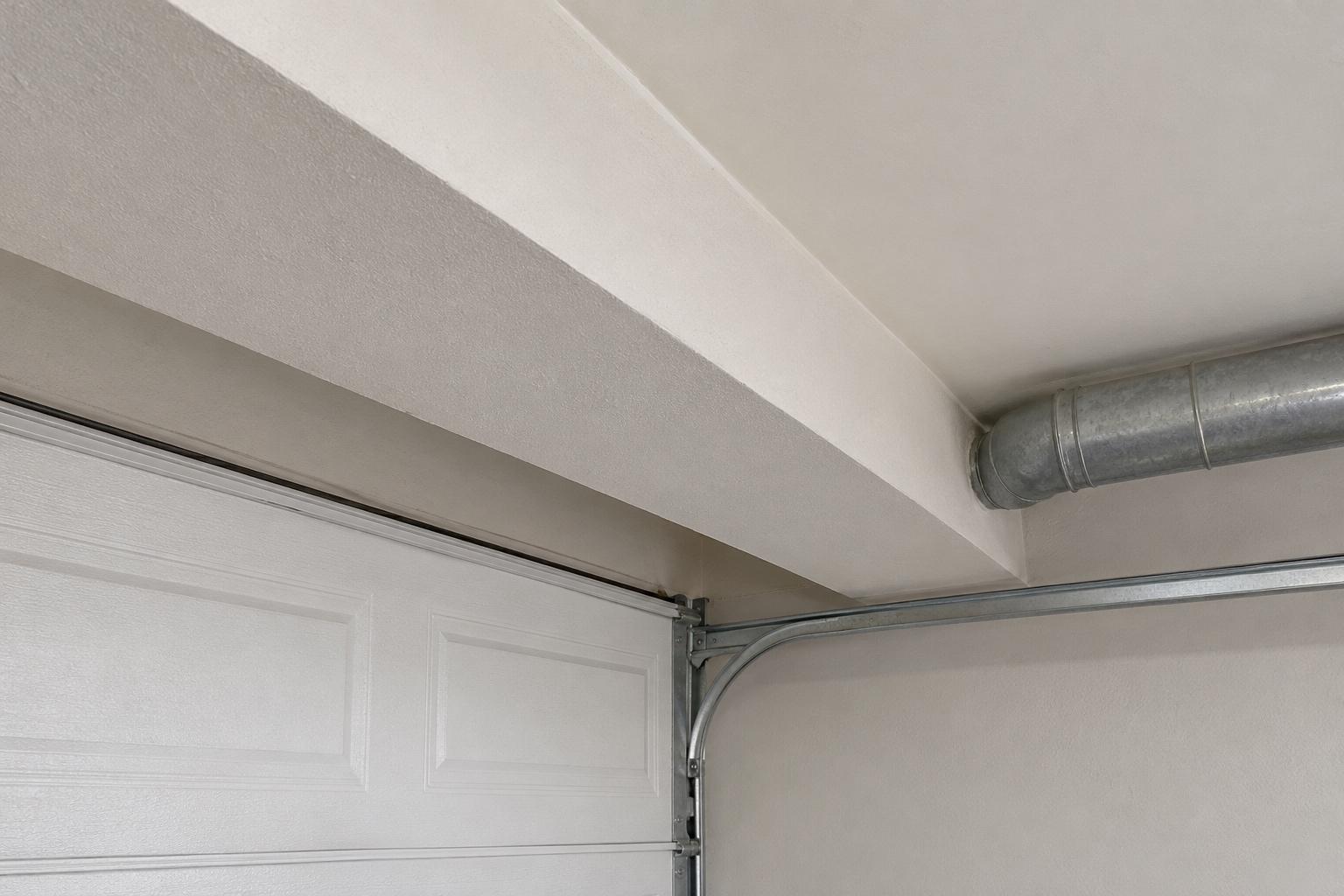
Limited overhead space does not automatically decide the comparison. Clopay's general guidance gives different requirements for standard extension and torsion layouts and notes that an opener needs additional clearance. Those are manufacturer-specific planning figures, not universal installation allowances. Clopay headroom FAQ.
There are also specialized low-headroom arrangements. Clopay publishes separate instructions for front-mounted torsion, rear-mounted torsion and extension configurations, with different limitations. A general statement that a particular spring “fits low ceilings” leaves out the track layout and the actual door. Clopay double-track low-headroom supplement.
For the survey, mention ceiling beams, ducts, storage racks, lighting and the existing opener. Share photographs already available or obtainable from the floor without approaching suspect hardware. Ask the installer to record which obstructions matter and whether any proposed relocation is included. Do not move structural or spring-system attachments to make the preferred option fit.
If a contractor proposes conversion, ask: “What exact layout are you proposing, and which door and track configuration does it suit?” A drawing attached to the quote can help distinguish two genuinely different proposals. It is a planning document for the installer, not a layout to copy yourself.
4. Choose between retaining, converting and replacing
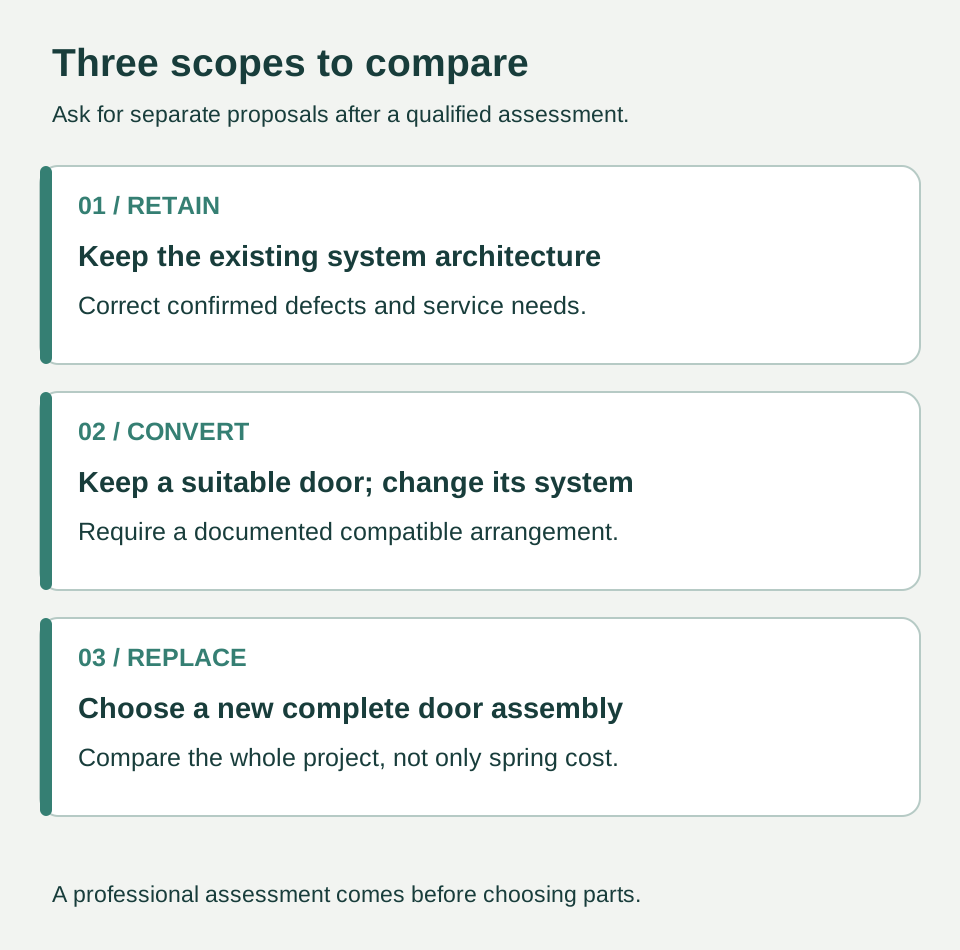
Start with three alternatives rather than a single upgrade pitch. Retaining means keeping the existing system architecture while addressing confirmed service needs. Converting means changing that architecture professionally while keeping a suitable door. Replacing the door means considering the spring system as part of a new complete assembly. Each option deserves its own scope and installed total.
Retaining can be the sensible proposal when the inspection finds a serviceable door and a suitable existing system. Conversion deserves consideration when the contractor can explain a concrete benefit, verify compatibility and identify the associated work. Neither conclusion follows just from the house's age or a photograph of the spring.
If you are already planning different door sections, windows, insulation or decorative additions, disclose that before approving the counterbalance proposal. DASMA warns that added weight can affect balance, operation and other components; the door was designed as an assembly. A spring conversion is not blanket approval for later changes. DASMA TDS 176.
An older door also deserves a broader discussion before money is committed to conversion. Ask what remains serviceable, which known problems the proposal does not address, and whether a new-door alternative is worth pricing. This is a budgeting comparison, not a rule that old equipment must be replaced.
 Open full diagram
5. Request comparable proposals, not generic promises
Tell each company the same goal: for example, “Compare keeping the existing extension arrangement with a compatible torsion conversion.” Ask for separate prices rather than a total that mixes mandatory repair, optional improvements and unrelated opener replacement. That makes it possible to understand what the extra money buys.
A useful proposal answers these questions:
- Which existing door and system have you identified, and is the recommendation suitable for them?
- What parts, mounting provisions and track-related changes are included or excluded?
- What condition findings justify additional work, and can you show them without a risky homeowner inspection?
- What performance or service-life specification is offered in writing, and what are its conditions?
- Which warranty covers parts and which covers labor, visits and exclusions?
- What commissioning checks and documentation will be supplied before the door returns to service?
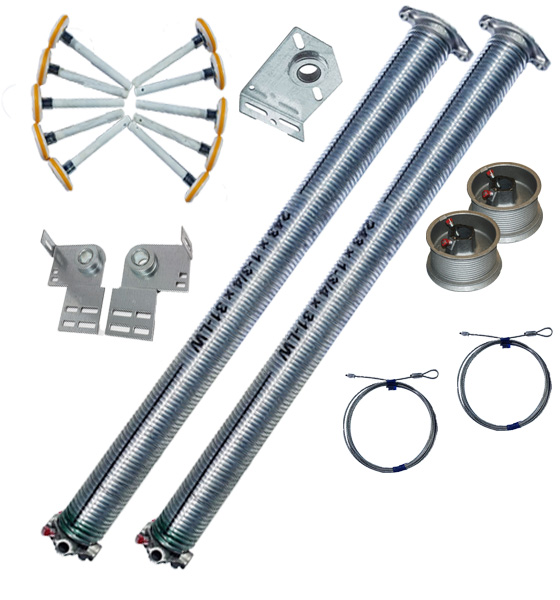
Avoid treating “heavy duty,” “lifetime” or “maintenance free” as specifications. Ask the seller to translate each claim into identifiable coverage or a documented product feature. A spring-type label alone does not let you calculate a service date or compare warranty value. If lifespan is the main question, use the separate spring-life guide rather than treating conversion as a guaranteed extension of life.
6. Agree on the handover before authorizing work
Ask who will perform the conversion, which instructions apply and what will be recorded afterward. This article does not certify a design or an installer. The proposal still needs a qualified technician's site assessment and confirmation that the chosen assembly is appropriate. Do not buy parts first and ask the installer to make them fit later.
Arrange a handover that identifies the installed system, supplied manuals, service contact and any remaining limitations. Ask the technician to demonstrate the completed door's operation and explain the applicable safety checks from a safe viewing position. DASMA recommends keeping both door and opener manuals and having regular professional service. DASMA system safety guidance.
Keep the work order and photographs with your household records. If the proposal changes after inspection, request the revised scope before the extra work is authorized. A clear decision might be “retain and correct the identified defect” or “convert using the documented compatible arrangement.” Either is more useful than approving “better springs” without defining the result.
7. Frequently asked questions
Are torsion springs always better than extension springs?
No single label settles suitability. Compare the proposed complete system, containment, available space, condition of the existing door and documented scope. Ask why the recommended option is better for your installation rather than accepting a universal ranking.
Can I change only the spring and call it a conversion?
Do not treat conversion as a spring-only swap. The two arrangements use different hardware. Ask for a complete professional proposal that identifies what stays and what changes. Do not modify or dismantle the installed assembly yourself.
Does a low ceiling mean I must keep extension springs?
Not necessarily. Manufacturer-approved low-headroom configurations exist, but their applicability must be checked against the exact door, tracks, clearances and opener. A generic clearance figure cannot approve a conversion.
Should I convert just because the door is noisy?
Not without a diagnosis. Noise alone does not establish that the counterbalance architecture needs changing. Document the complaint safely and use the noise-observation guide; keep repair findings separate from an optional conversion proposal.
Can I compare options while waiting to repair a broken spring?
You can compare written proposals without operating the door. Tell the service company its current position and that it is out of service. Arrange safe access separately; do not test-lift it or use the opener to continue the shopping process.
Related Posts
 Safety Guide
How Garage Door Springs Are Replaced: A Homeowner’s Safe Planning Guide
Recognize a possible broken spring, prepare for professional replacement, and compare repair scopes without handling high-tension hardware.
 Safety Guide
How Long Do Garage Door Springs Last? Understand Cycles and Condition
Understand garage door spring cycle ratings, usage-based planning, warning signs, and why a calculated lifespan is not a guarantee.
Sources
Manufacturer instructions and references for this guide. Match the document to your exact product.
- DASMA inspection checklist · DASMA checklist, spring containmentwww.dasma.com
- Clopay spring-system overviewwww.clopaydoor.com
- Torsion manualliterature.clopay.com
- extension manual · Clopay extension-spring supplementliterature.clopay.com
- Clopay headroom FAQwww.clopaydoor.com
- Clopay double-track low-headroom supplementliterature.clopay.com
- DASMA TDS 176www.dasma.com
- DASMA system safety guidancewww.dasma.com
Photo credits
- Unsafe example: this extension spring lacks an internal containment cable. The red warning says a broken spring could whip outward and cause injury or damage. This is not a correct installation. Stop using a door in this condition and arrange qualified service; do not attempt to add a cable yourself. Tomwsulcer · Wikimedia Commons · CC0 1.0 Wikimedia Commons CC0 1.0
- Loose hardware illustrates why a counterbalance proposal needs more detail than a spring-type label. These are examples of components, not a compatible conversion kit or a parts-shopping list. Blizzard6204 · Wikimedia Commons · CC0 1.0 Wikimedia Commons CC0 1.0
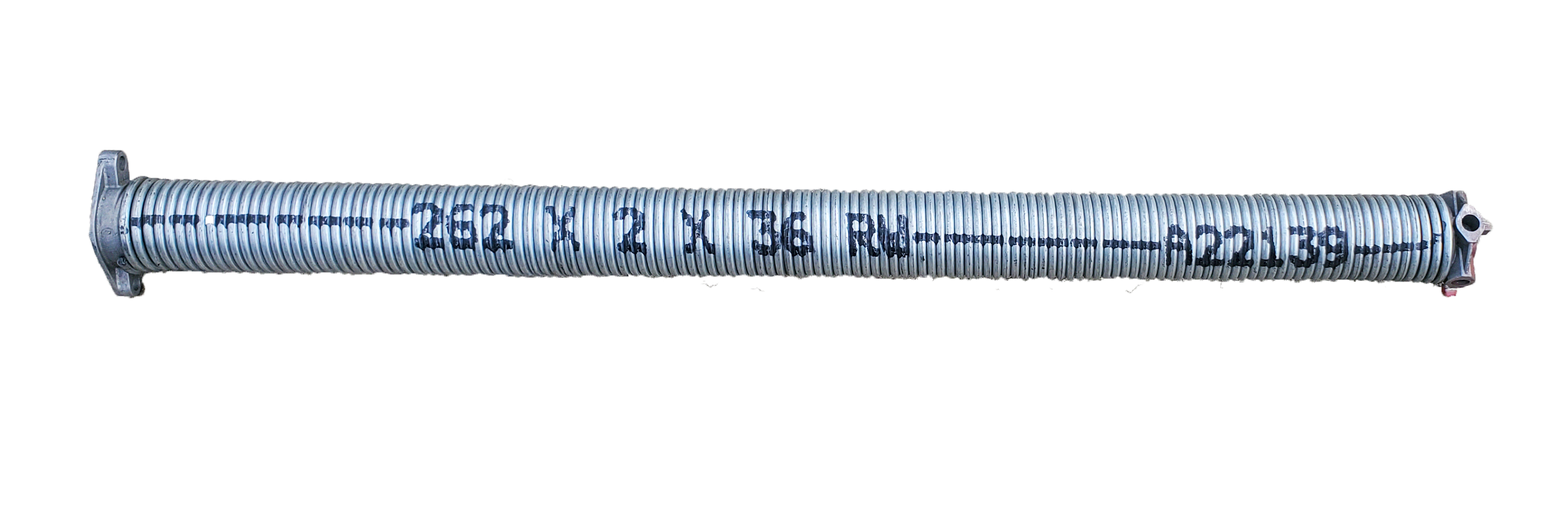
- An isolated torsion spring illustrates one component, not a compatibility specification or a conversion kit. Do not select or handle loaded spring hardware from a photograph; system selection and service require a qualified professional. Blizzard6204 · Wikimedia Commons · CC0 1.0 Wikimedia Commons CC0 1.0


