Walk-Through Garage Doors: Planning a Wicket Door
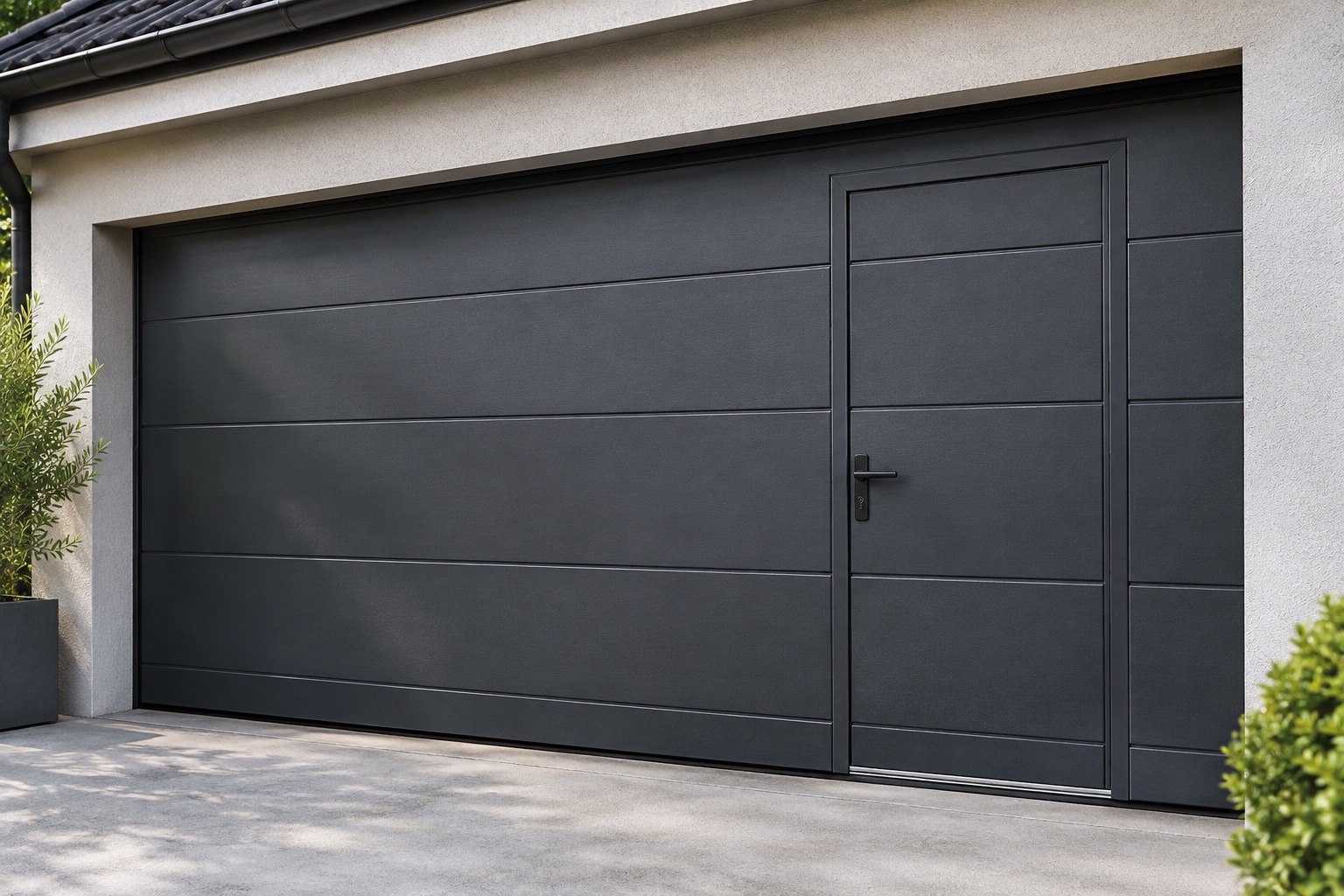
A wicket door is a smaller pedestrian door built into the moving garage door. It can provide access without raising the entire door, but the opening, threshold, hardware and opener must work as one compatible system. Start with a product-specific assessment, not a plan to cut a hole in an existing panel.
This guide helps you decide what to specify and what to ask before ordering. It is not a cutting, spring-adjustment or electrical-wiring procedure. Do not modify sections, reinforcement, cables, springs or safety circuits yourself.
1. Decide which access problem you are solving
Describe a normal trip through the garage: walking out with a bag, pushing a bicycle, moving a cart, or entering when the main door is closed. Note who uses the route and what they carry. A smaller opening is only convenient if the person and equipment can pass through it comfortably.
Compare an integrated wicket with a separate side entrance. A side entrance does not move with the overhead door, but its feasibility depends on the building and available wall space. A wicket keeps pedestrian access within the garage-door opening, but shares that opening with a moving assembly. Neither option should be chosen solely from an exterior photograph.
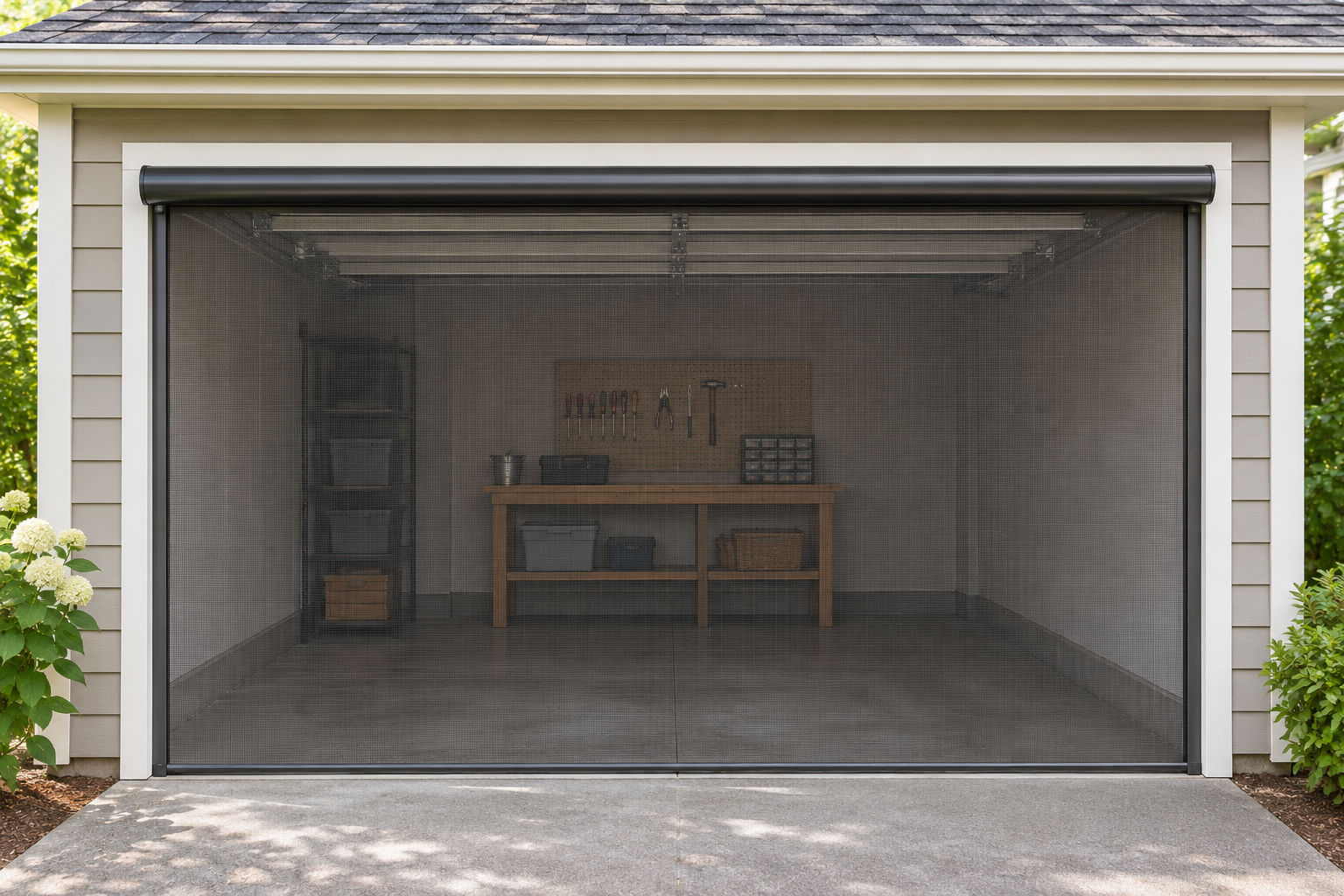
If the goal is airflow or insect protection rather than a solid pedestrian entrance, review garage screen systems. A screen’s pedestrian opening is not the same product as a wicket in a solid sectional door.
2. Establish whether the proposal is a new system or a conversion
Ask the supplier to identify the complete door model and the approved wicket option or conversion method. “We can add a small door” is not a complete specification. Request written confirmation of who designs the modification, what components change, and which warranties remain applicable.
Garaga states that it does not manufacture pedestrian doors itself, while some of its dealers offer conversions. That is evidence that a dealer-specific route exists, not permission to convert any Garaga door or another brand. Do not treat a dealer’s capability as a universal factory option.
For a new assembly, request a drawing showing the wicket location, panel divisions, frame and threshold. For a proposed conversion, ask how the existing door’s condition and exact construction are evaluated. If compatibility cannot be documented, keep the decision open rather than accepting an improvised cutout. Use the separate whole-door installation planning guide for ordering, access and installation-day arrangements.
3. Specify usable passage, not just nominal dimensions
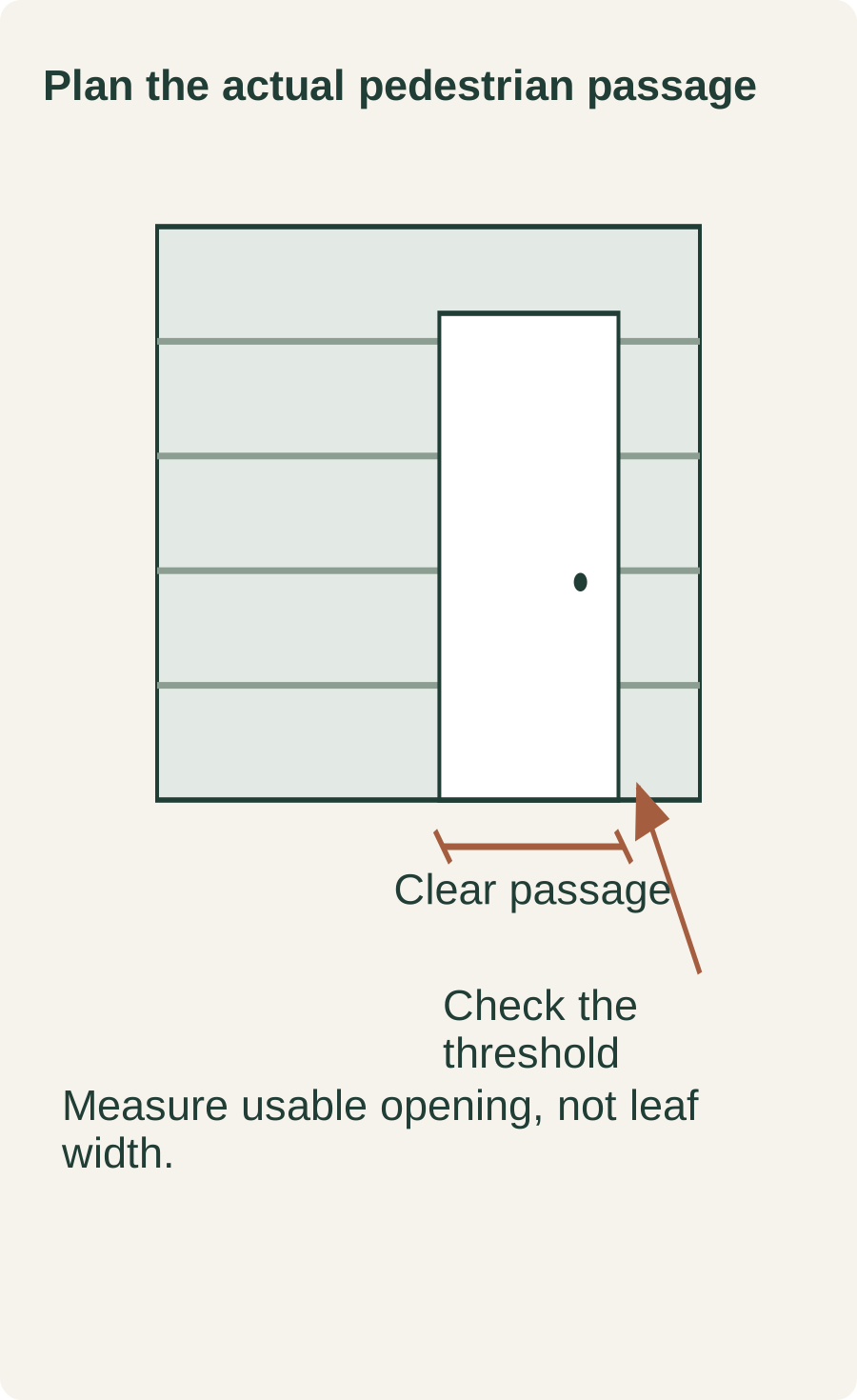
Ask for the finished clear width and height, the threshold profile and the opening direction. These are separate from the garage-door size and the wicket leaf size. Have the supplier identify where each dimension is measured, including the effect of handles, closers and the leaf at its usable opening angle.
Sketch the approach on both sides. Include a parked vehicle, shelving, steps, bins and anything that could block the swing or leave a person standing in the main door’s path. Ask the installer to confirm the arrangement on site. Do not move or operate a damaged garage door to obtain measurements.
Low threshold does not mean no threshold. Hörmann’s UK sectional-door information, for example, describes a particular low-profile threshold; that is not a universal dimension or proof of suitability for your project. If someone uses a wheelchair, walker or cart, ask them what passage and threshold they can use and have the proposed route evaluated accordingly. A product described as easy to cross is not automatically an accessible route.
For preliminary opening and clearance records, use the garage-door measurement guide. Final ordering measurements and product eligibility belong with the supplier.
4. Treat the wicket interlock as a separate safety requirement
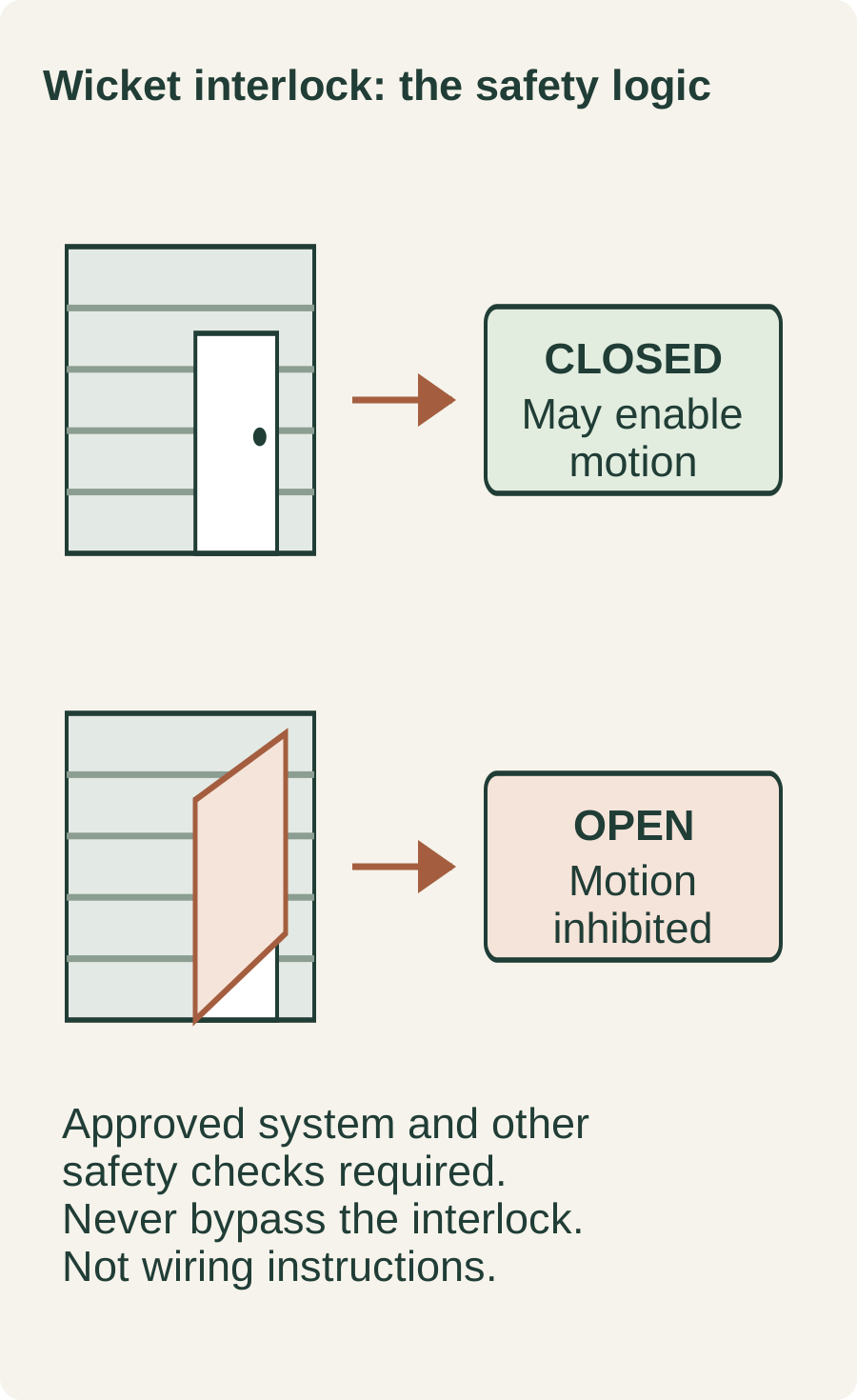
A powered main door must not be allowed to operate with an incompatible open pedestrian leaf. Ask which manufacturer-approved interlock or contact is required for the exact door and opener combination, who installs it and how its correct operation will be demonstrated.
Garaga calls for an opener-blocking mechanism when the pedestrian door is not fully closed. Ryterna’s UK wicket information describes a microswitch for its automated arrangements. Neither source supplies a universal wiring method. Do not bridge terminals, tape a contact closed, substitute a loose magnet or defeat the device because the main door will not run.
The wicket contact is not a replacement for the opener’s other required entrapment protections. Ask for the full safety checklist for the installed system, including the approved procedure for any fault. A label saying “sensor fitted” is not enough to establish compatibility. Have the installer identify the exact components in the handover record.
5. Choose the opener, locks and closer together
Do not assume that an existing opener is acceptable merely because it can lift the main door. Hörmann’s UK operator comparison distinguishes a wicket-door application within its product range, illustrating why the exact combination matters. That UK listing does not establish US availability, approval or compatibility with another door.
Ask how the pedestrian latch and lock interact with the operating sequence. Which parts must be closed or secured before the overhead door can move? What happens if the closer does not bring the leaf fully shut? Which checks are appropriate for an owner, and which require service?
Plan keys and access for all intended users, including what happens during a power failure. Do not assume that a manual release will be reachable or usable from outside. Ask the installer to demonstrate the documented arrangement without putting anyone beneath a suspended door or disabling a protective device.
6. Resolve building and exit questions before ordering
A convenient pedestrian opening is not automatically an approved emergency exit or a substitute for a required entrance. If the project depends on accessibility, emergency escape, occupancy changes or a required route, have the relevant local authority and qualified designer confirm the requirements for the address and proposed product. Do not rely on a foreign brochure’s classification as US approval.
Also ask for the exact assembly’s weather, thermal and security documentation where those features matter. Keep claims about the wicket-equipped version separate from ratings for an otherwise similar solid door. Request clarification rather than assuming that every published rating carries over to every option.
7. Accept the installation only after a practical handover
Have the installer show the correct pedestrian-opening sequence, the main-door operating sequence and the product’s specified safety checks. The demonstration should establish what the system does when the wicket is not properly closed, without a homeowner improvising a test or standing in a travel path.
- Keep the door, wicket, opener and safety-device identifiers with the manuals.
- Record the finished passage, threshold and any operating restrictions.
- Get the approved cleaning, inspection and service instructions.
- Record whom to contact for a damaged closer, unreliable latch, loose frame or interlock fault.
If the wicket starts binding, the frame shifts, the main door interferes with it, or a protective device is unreliable, stop the affected operation and arrange service. Do not solve it by forcing the leaf, increasing opener force or bypassing the contact. A useful wicket installation is one whose daily sequence is clear and whose safety functions remain intact.
Frequently asked questions
Can I cut a pedestrian door into my existing garage door?
Do not treat it as a DIY panel alteration. Obtain a documented assessment for the exact door and a supported conversion or replacement proposal. A conversion offered by one dealer does not establish that every door can be modified.
Will a wicket door work with my current opener?
Only after the specific combination, required interlock and operating instructions are confirmed. Lifting capacity alone does not establish compatibility.
Is a low-threshold wicket wheelchair accessible?
Not automatically. Clear passage, threshold shape, approach space, opening force and applicable requirements must be assessed for the intended user and installation.
Can the main door move while the wicket is open?
Do not operate it that way. The installed system must follow its manufacturer’s interlock requirements and operating sequence. If it moves contrary to those instructions, stop using the affected operation and arrange service.
Related Posts
 Practical Guide
Plan a Garage Door Installation or Replacement
Organize a garage door replacement from site assessment and order confirmation to access, removal, testing and a useful owner handover.
 Practical Guide
Garage Door Screens: Choosing and Planning a Compatible System
Compare garage screen mechanisms, measure clearances, protect safety sensors, and plan safe operation before choosing a compatible system.
Sources
Manufacturer instructions and references for this guide. Match the document to your exact product.
- Garaga: pedestrian-door availability and opener blockingwww.garaga.com
- Hörmann UK: sectional doors and wicket threshold examplewww.hormann.co.uk
- Ryterna UK: wicket options and automatic-door contactwww.ryternagaragedoors.co.uk
- Hörmann UK: operator application comparisonwww.hormann.co.uk