Garage Doors With Low Headroom: System Options and Constraints
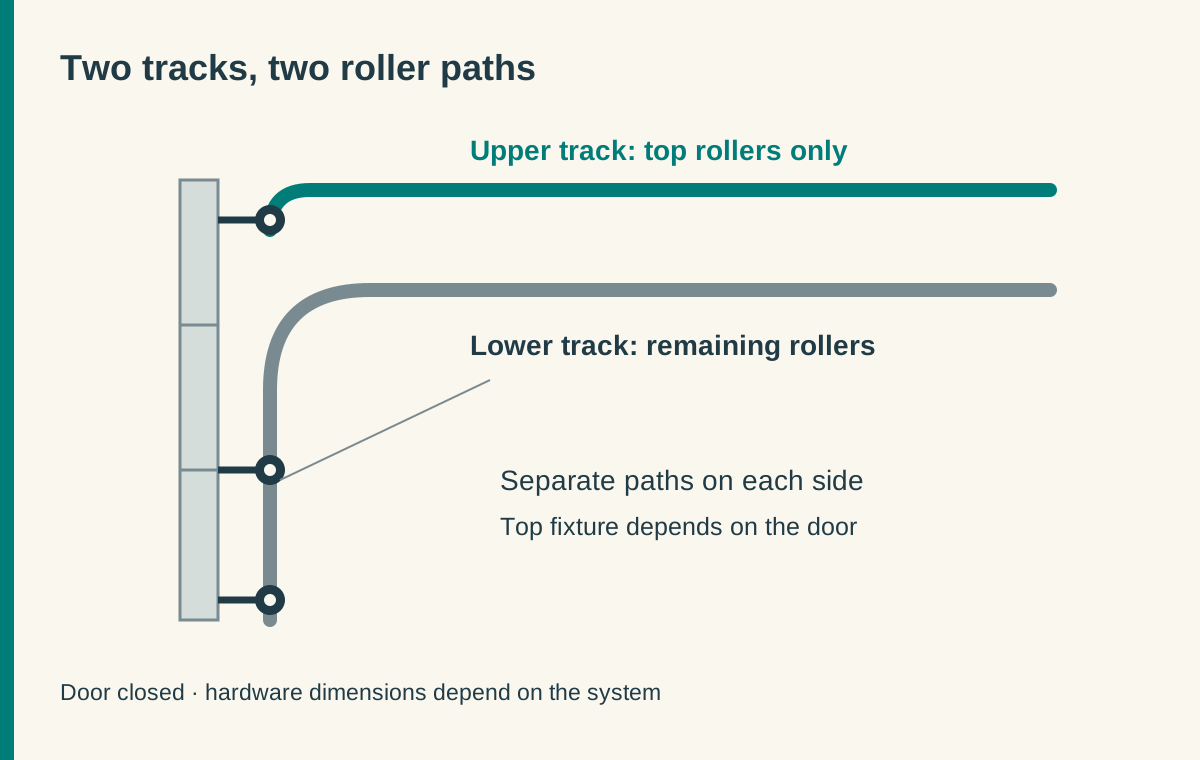
A low-headroom garage door uses a track and counterbalance arrangement designed for limited space above the opening. A common solution is double horizontal track: the top rollers have their own upper path, while the remaining rollers travel through the lower track. Choosing it means checking the complete door, spring system and opener together, not buying the smallest bracket advertised online.
 Open full diagram
What changes in a low-headroom system?
On a conventional sectional door, the rollers follow a single track on each side as the sections turn overhead. In a double-track low-headroom arrangement, separating the top roller path lets the top section begin its turn with less rise above the opening. The door still needs space inside the garage when open.
Amarr’s residential instructions explicitly distinguish the upper path for the top rollers from the lower path for all other rollers. The top rollers and the remaining rollers follow different paths. The exact top fixture and track shape belong to the selected door system. See Amarr’s residential instructions, low-headroom supplement.
 Open full diagram
Low headroom and high lift solve different problems. High lift makes use of additional height before the door turns inward; it is not a shortcut for a garage with a low ceiling. Clopay describes these as separate track options.
Front torsion, rear torsion and other options
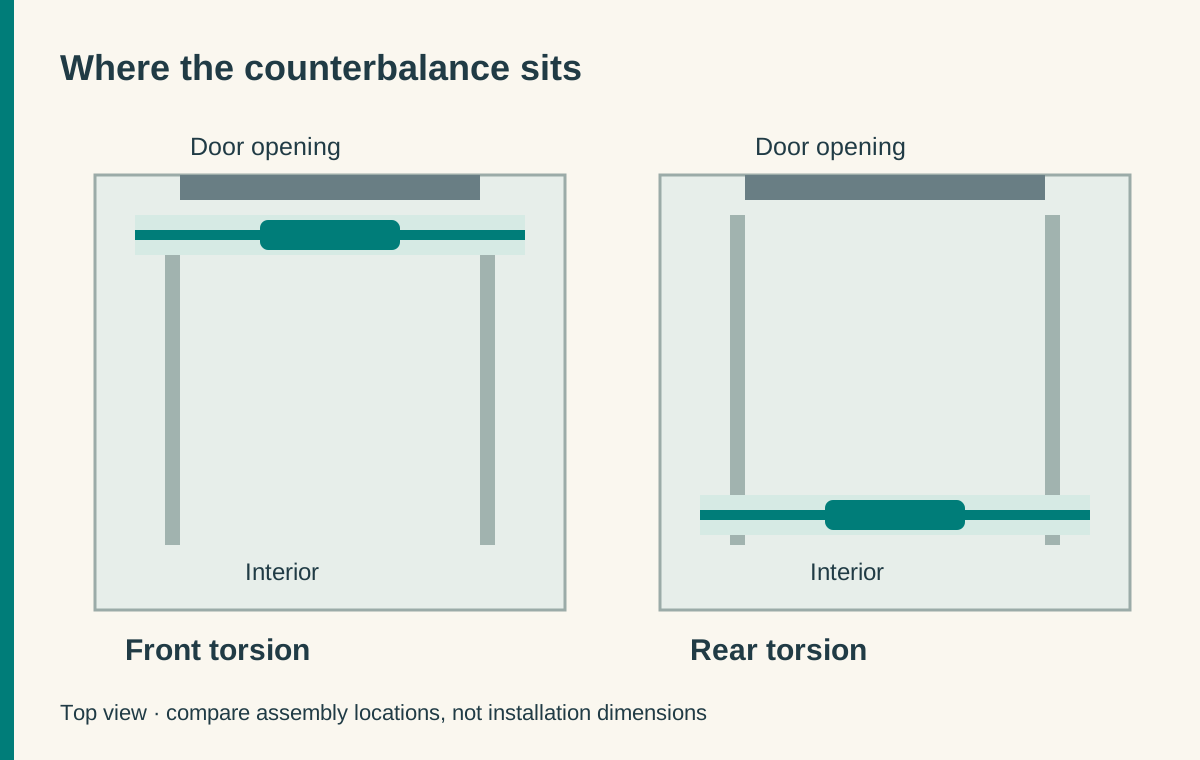
Front-mounted torsion: the counterbalance assembly stays near the opening. Ask whether the space above the header can accommodate the complete specified assembly, not just the two tracks. Drum and cable arrangements can differ from those on a standard-lift door.
Rear-mounted torsion: the assembly sits farther into the garage, toward the rear of the horizontal tracks. This can be worth asking about when the front space is especially restricted. It also makes the rear location, support and access part of the feasibility check. A rear-mounted system is not a front system moved backward using the same parts.
Amarr lists both arrangements in its track detail library. Commercial drawings establish available system types; their dimensions should not be applied to an unrelated residential door.
 Open full diagram
Extension-spring or special top-fixture arrangements: these exist for particular products, but a kit name does not establish compatibility with your door. Clopay’s double-track supplement gives separate headroom figures for its covered front-torsion and extension systems, plus a door-weight restriction. That is a useful warning against treating one published minimum as a universal promise.
The obstruction may be behind the opening
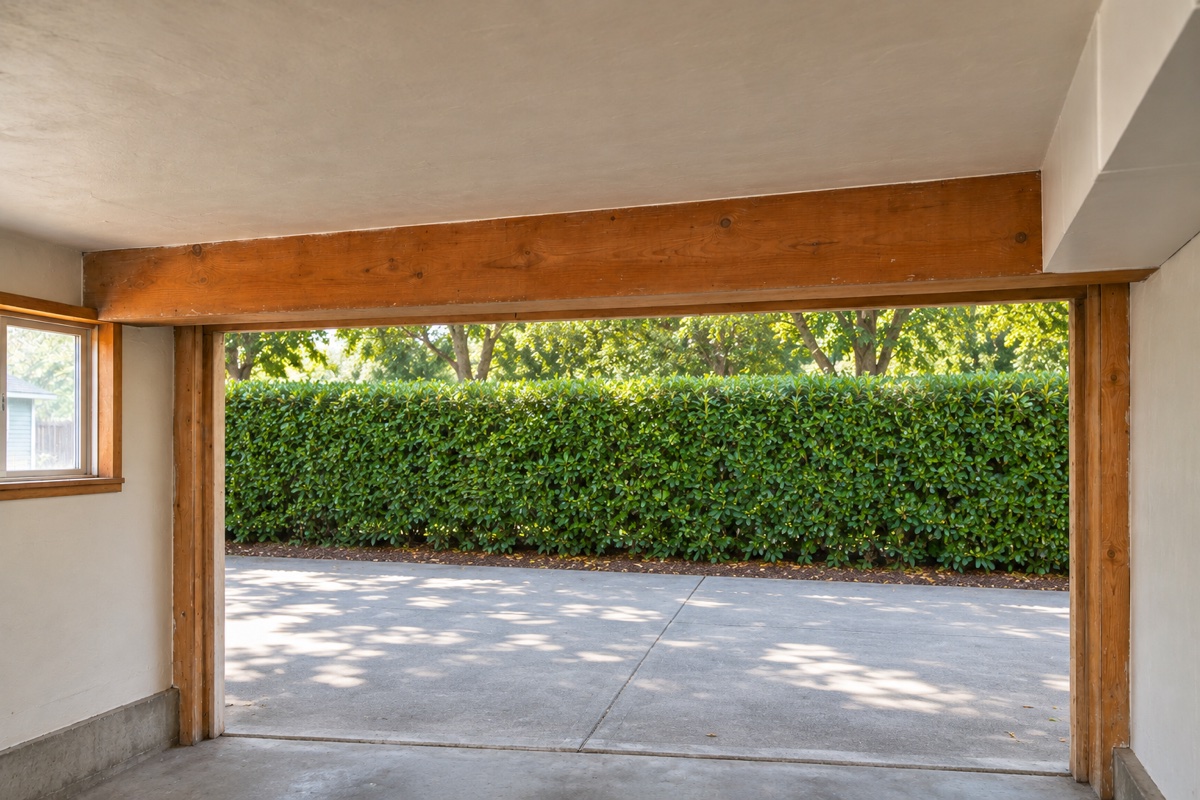
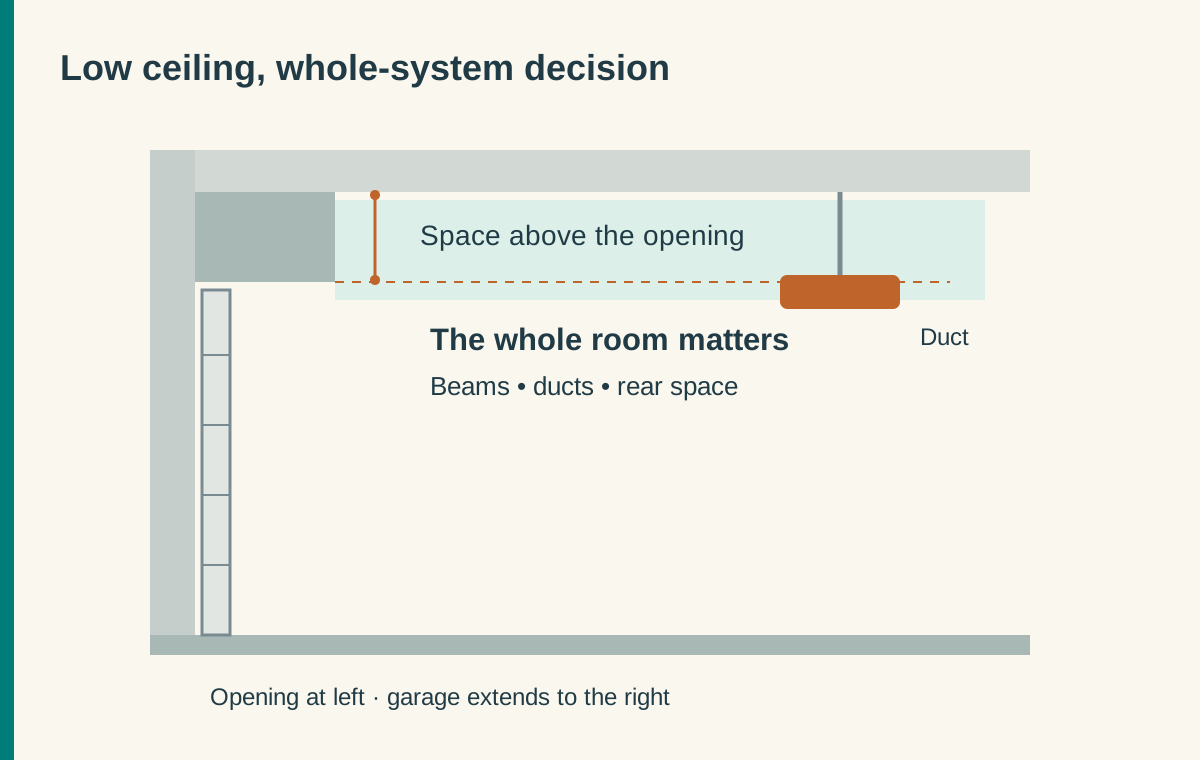
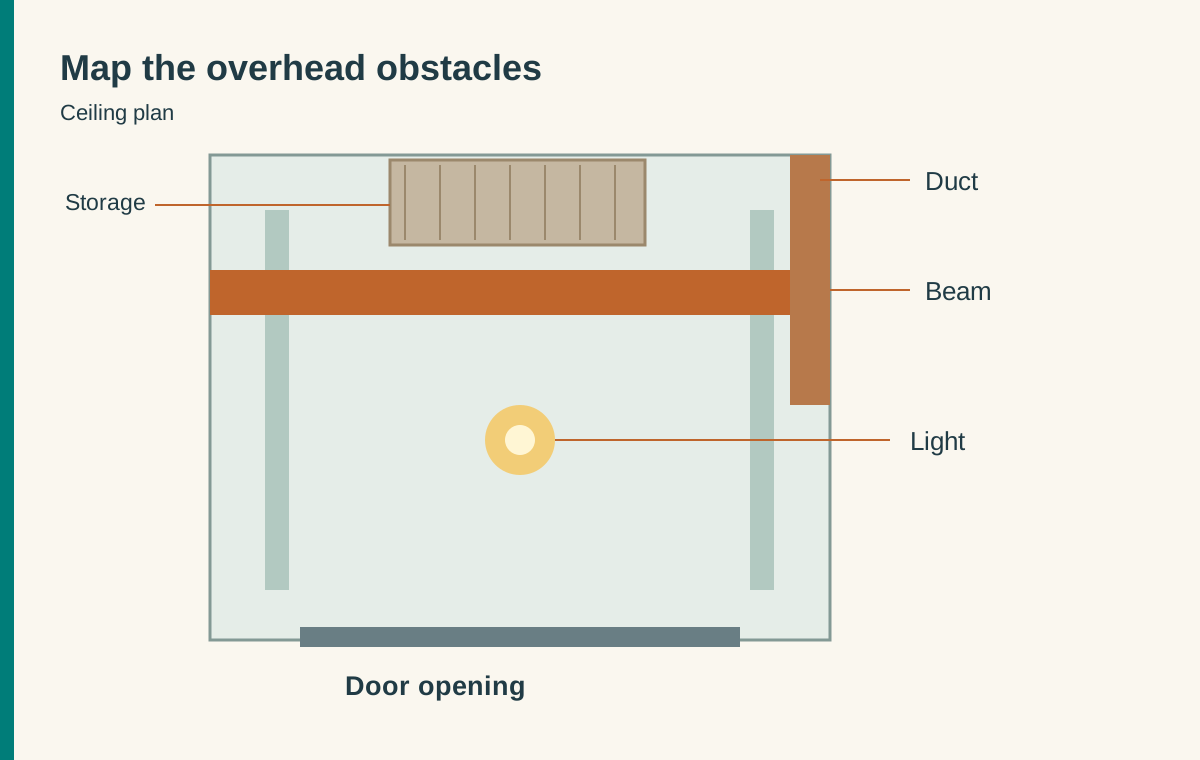
A ceiling can look generous at the header and still have a beam, duct or light in the proposed travel area. Give the installer a map of where each obstruction starts and ends, rather than just the smallest distance you found.
- Identify the lowest obstruction above the opening and anything farther inside the garage.
- Show side walls, shelves and pipes close to either track position.
- Include the proposed rear spring location and the opener’s space, if applicable.
- Explain whether a ceiling rack, workbench, vehicle roof box or lift must remain usable.
 Open full diagram
Photographs from the floor are useful. Keep clear of moving parts and do not run a damaged or binding door to obtain measurements. Leave overhead access and measurements around loaded hardware to the installer. If a proposed solution requires changing a beam, header, joist or other structural member, have that work assessed separately by a qualified building professional. Do not notch framing to make a track fit.
Choose the opener with the track system
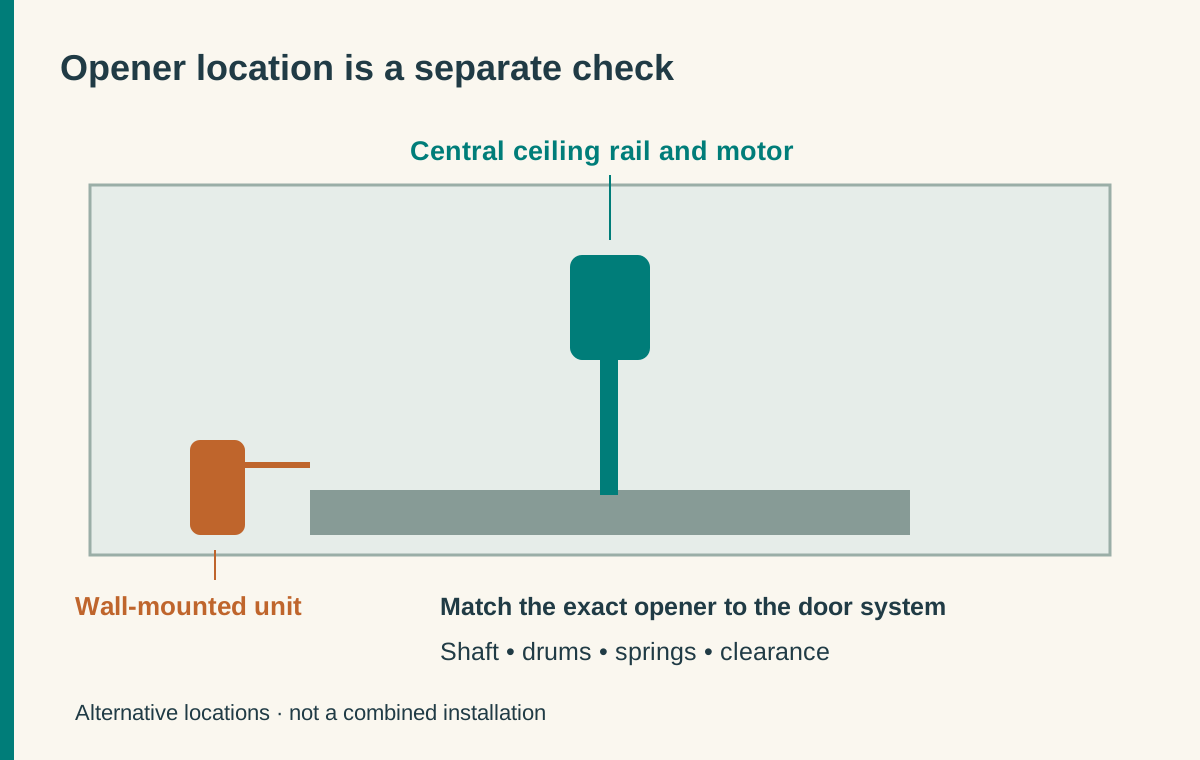
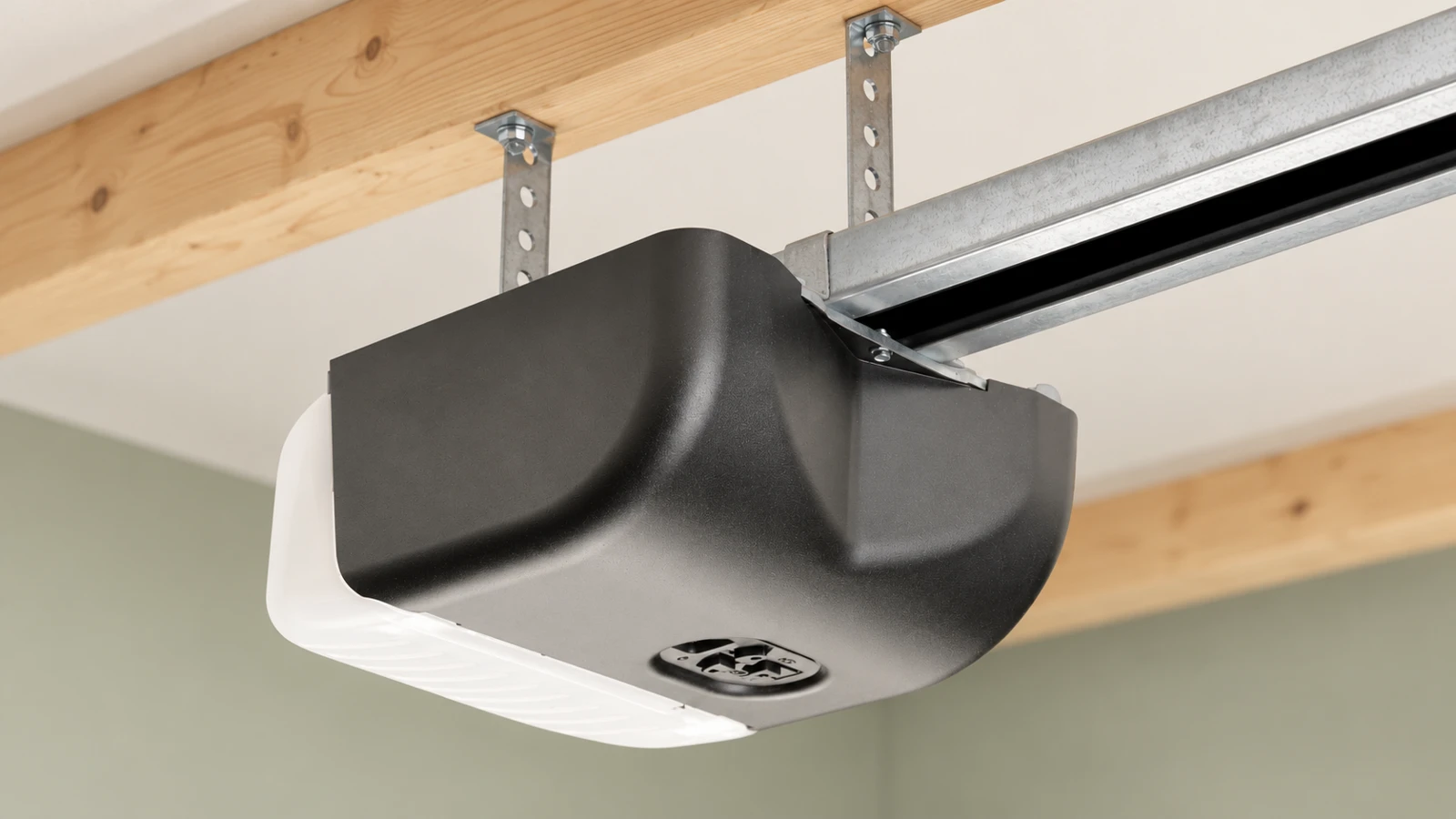
A ceiling-mounted trolley opener needs its own rail, motor and door-connection space. Ask the installer to check the moving top section against the proposed rail and arm arrangement throughout travel. A door-only clearance claim does not confirm an opener-equipped installation.
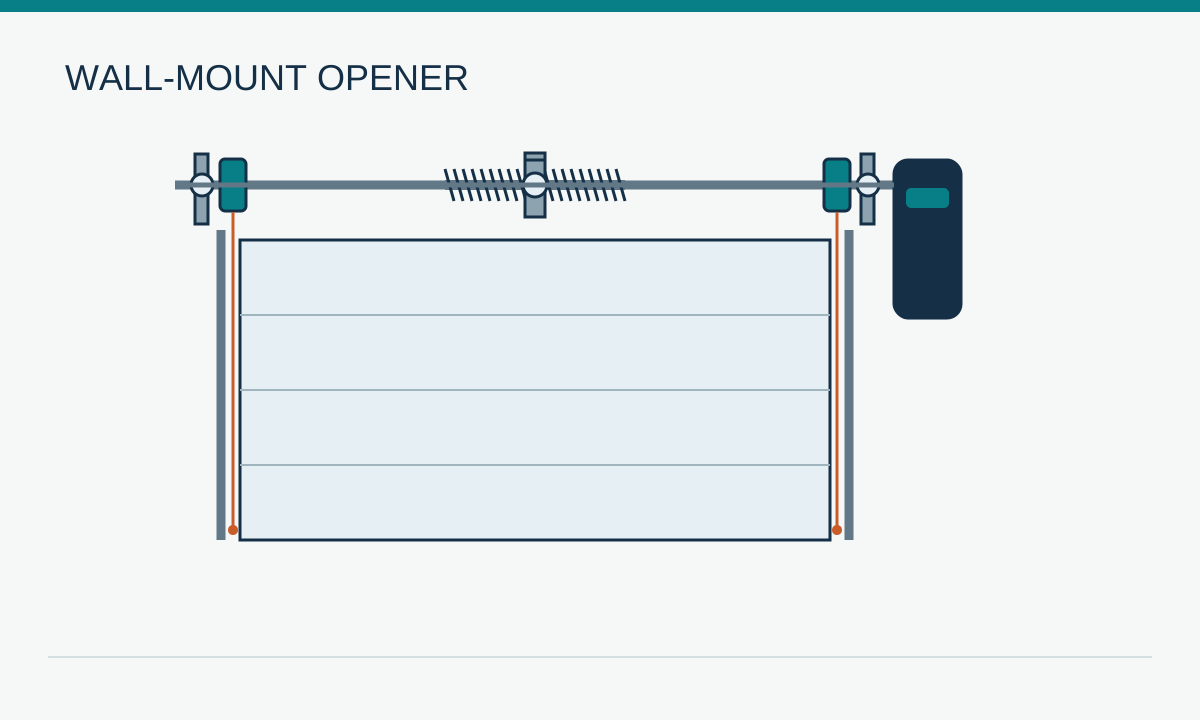
A wall-mounted opener can remove the central ceiling rail, but it does not make every low-headroom configuration compatible. For example, the LiftMaster 98022 manufacturer guide excludes low-headroom tracks with outside pickup drums and doors using extension springs. Its compatibility requirements must be checked against the actual proposed system. See the LiftMaster 98022 user guide, hosted by a garage-door dealer.
 Open full diagram
Ask for the opener model in the quote before ordering. “Side mount” or “works with low headroom” is not enough information to verify a match. If you intend to operate the door manually at first, say whether adding an opener later is a requirement; have that future configuration reviewed now.
Check the usable opening after installation
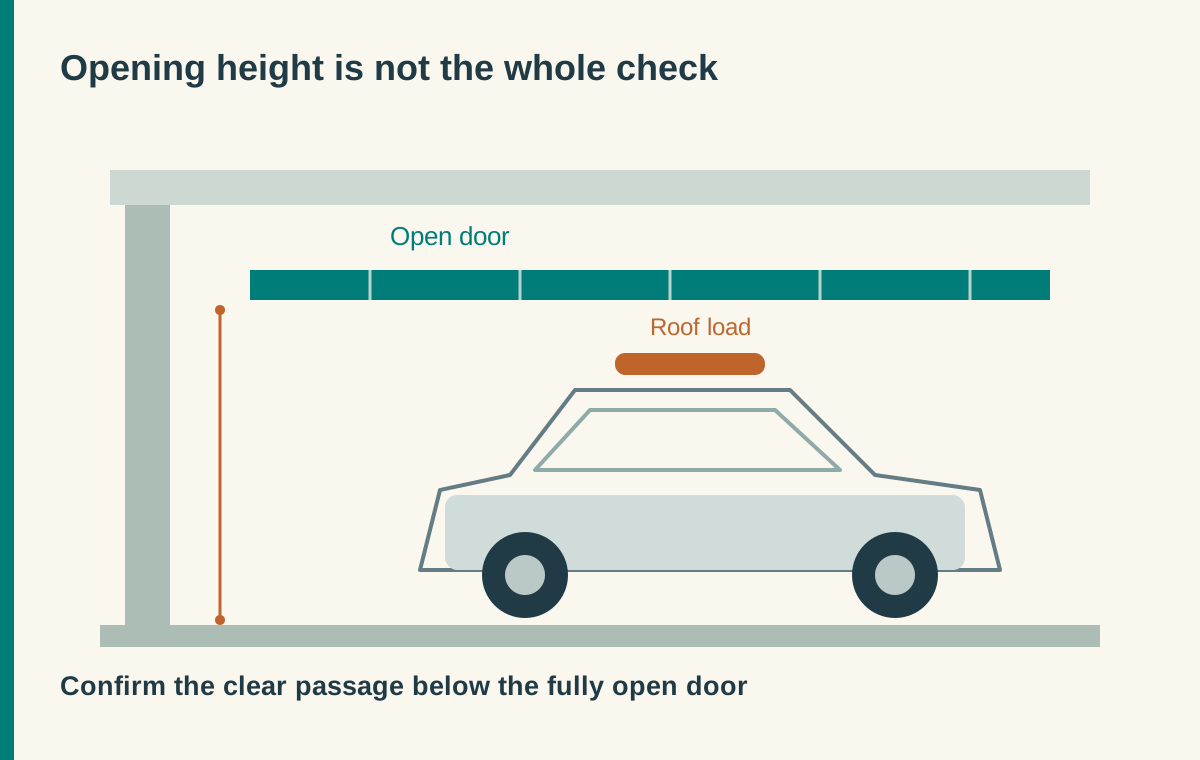
The opening in the wall and the unobstructed passage beneath a fully open door are separate checks. Ask what clear drive-through height will remain with the specified door at its fully open position. Include any roof rack or cargo you routinely carry when discussing your vehicle needs.
 Open full diagram
Do not assume a lower track arrangement increases usable parking height. It addresses space above the opening, while the open door and hardware still occupy part of the garage. Likewise, switching opener type does not by itself move the door closer to the ceiling.
What a useful installation quote should identify
Request enough detail to compare complete systems:
- The door model, size and applicable reinforcement or wind-load requirements.
- The low-headroom track package and counterbalance type, including front or rear location.
- The manufacturer drawing or manual used to confirm the required clearances.
- The exact opener model, or a stated manual-operation plan.
- Conflicts with existing obstructions, proposed remedies and who is responsible for them.
- The expected clear opening and any effect on ceiling storage or vehicle access.
Before approving a proposal, ask: “Does this clearance include the opener and all required door hardware?” Keep the answer with the model-specific documents. Installation, spring changes, cable routing and bracket relocation belong to a trained garage-door technician. Amarr warns that spring-related hardware carries dangerous tension in its installation guidance.
Common questions
What is the minimum headroom for a garage door?
There is no single minimum that covers every door, track, counterbalance and opener combination. Use the applicable manufacturer documents and have the complete installation checked on site.
Can I reuse my existing door with low-headroom tracks?
Possibly, but the installer must identify the door and confirm an approved compatible package. Door condition, size, weight, reinforcement and opener requirements matter. Do not assume a generic conversion kit fits.
Does a wall-mounted opener always solve low headroom?
No. It can free central ceiling space, but its shaft, drum, door and clearance requirements still apply. Some low-headroom arrangements are excluded by specific opener manuals.
Should I move the springs to the back myself?
No. Rear torsion is a complete system configuration involving loaded hardware and supports. Have a qualified installer specify and install it.
Related Posts
 DIY Guide
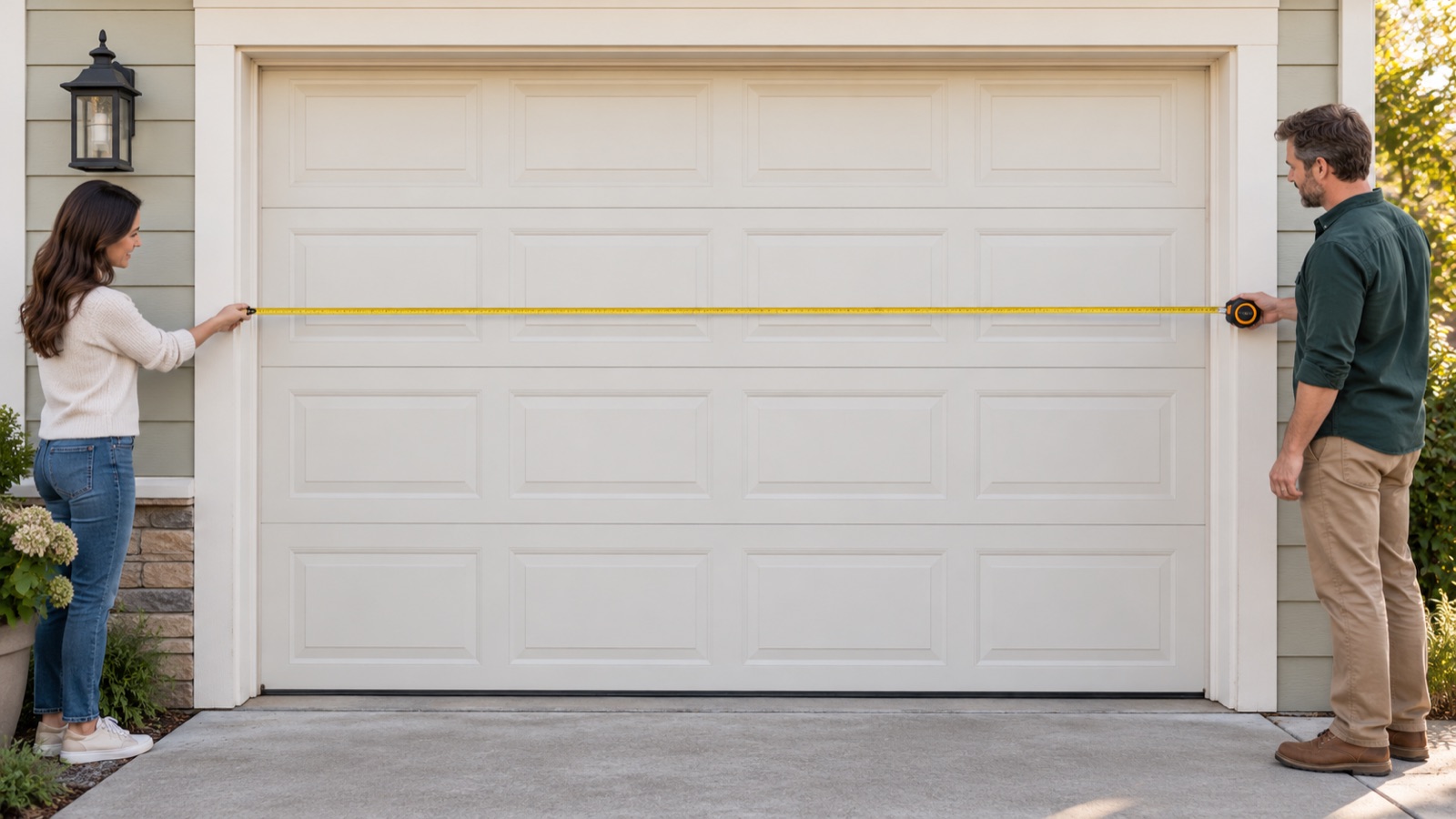
How to Measure a Garage Door Opening and Clearances
Record opening width, height, sideroom, headroom and backroom safely before requesting a garage door quote.
 Planning Guide
What Size Garage Door Opener Do You Need?
Choose an opener by verified door compatibility, height, construction, balance, site clearance, and usage—not a horsepower shortcut.
Can You Install a New Garage Door on Old Tracks?
Understand why new garage doors need matched tracks and hardware, how to evaluate a reuse proposal, and what an installer must verify.
 Practical Guide
Wall-Mount and Jackshaft Openers: How They Work and When They Fit
Learn how wall-mount openers drive a torsion shaft and compare model-specific door, clearance, outlet, lock and sensor requirements before buying.
Sources
Manufacturer instructions and references for this guide. Match the document to your exact product.
- Amarr’s residential instructions, low-headroom supplementgw-assets.assaabloy.com
- track optionswww.clopaydoor.com
- track detail librarydealer.amarr.com
- double-track supplementcdn.clopay.com
- LiftMaster 98022 user guide, hosted by a garage-door dealercentraloregongaragedoor.com
- installation guidancewww.amarr.com