Condensation Inside a Garage Door: Find the Moisture Source First
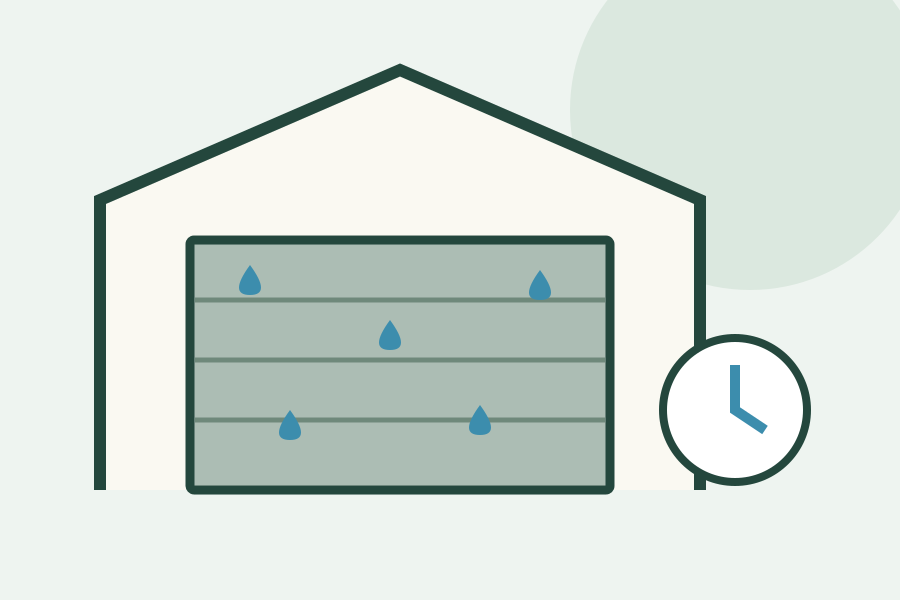
Water beads on the inside of a garage door do not automatically mean the door leaks. Condensation forms when moist air meets a sufficiently cold surface. The useful first question is where the water starts, not which replacement seal to buy. Identify the pattern, remove avoidable moisture, and choose drying measures appropriate to the weather. Door insulation may help with cold surfaces, but it is not a substitute for correcting leaks or indoor moisture sources. [1][2]
Before you start
This is a ground-level observation and moisture-control guide, not a spring, electrical, or mold-remediation procedure. Keep the door closed while observing it and do not reach into hinges, tracks, cables, or the opener. Keep other people from operating the door while you are close to it. Keep the remote control out of use during the check. If water reaches outlets, wiring, or powered equipment, keep clear and call a qualified electrician; do not touch wet equipment or plugs. If the door is damaged, crooked, or unstable, stop using it and arrange professional service.
Never idle a vehicle or run a generator in the garage to warm or dry it. An open garage door does not make that safe. If a carbon-monoxide alarm sounds, leave for fresh air and contact emergency services from outside; do not stay inside looking for the source. Keep the connecting door to the house closed. [3]
1. Record the pattern before wiping it away
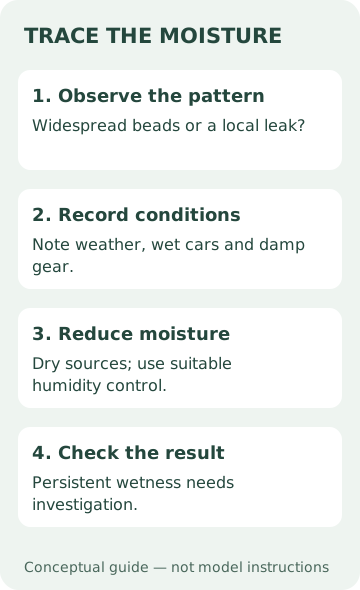
Photograph the first wet area and note the time, weather, recent parking activity, and whether the garage was heated. Look at the door from a safe distance: are droplets spread across the inside face, or does a distinct trail begin above the opening? Check nearby windows and accessible walls without dismantling anything.
The following observations are clues, not a definitive leak test. More than one moisture source can be present. [4]
| What you observe | What to investigate next |
|---|---|
| Fine droplets across the inner door face or glazing, including during dry weather | Indoor humidity and cold surface temperatures |
| A narrow water trail from the header or one upper corner after rain | Roof, flashing, wall, or opening leakage |
| Water at the threshold during wind-driven rain | Exterior drainage and perimeter weather protection |
| Wet floor after a snowy or rainy vehicle enters | Carried-in water and how it is removed |
| Persistent dampness in nearby walls or a musty odor | A wider building-moisture problem, not only the door |
Do not use a hose to flood the opening as an informal test. Documenting naturally occurring conditions is a safer starting point for the installer or building professional.
2. Measure the air, not just the puddle
The dew point is the temperature at which moisture in the air starts to condense. If the door surface is colder than the surrounding air’s dew point, water can collect on it. That explains why droplets can appear without rain, and why relative humidity alone does not tell the whole story. [8]
Use a temperature-and-relative-humidity meter in the garage, positioned according to its instructions and away from direct sun or a heater. Record morning and evening readings and when the door is visibly wet. A simple log with columns for date, temperature, humidity, weather, and wet locations is more useful than one isolated number.
EPA recommends keeping indoor relative humidity below 60%, ideally 30–50% where possible. These are moisture-control guidelines, not a guarantee that every garage-door surface will stay dry. A very cold surface can still collect condensation. An unconditioned garage may also be difficult to keep within a household humidity range throughout the year. Use the readings to identify changes and discuss persistent conditions with a qualified building or HVAC professional. [1][2]
3. Remove water sources you can safely control
Start with visible, accessible sources. Remove standing clean water promptly; dry wet items instead of leaving them against the door or framing. Avoid storing damp cardboard at the opening. If rainwater repeatedly reaches the garage, arrange correction of the drainage or building defect rather than treating the resulting wetness only with a dehumidifier.
Look for obvious plumbing drips or a dryer discharge terminating inside the garage. Do not alter gas piping, combustion vents, or appliance exhaust yourself. Moisture-producing appliances need appropriate outdoor venting; a professional should investigate an incorrect or damaged installation. Outside, gutters and downspouts should direct runoff away from the building, and grading should not funnel water toward it. [1][4]
4. Choose ventilation or dehumidification deliberately
Opening the garage is not a universal cure. EPA distinguishes between using outdoor air when it is cold and dry and dehumidifying when outdoor air is warm and humid. Bringing humid outdoor air onto a cool door can work against the goal. A circulating fan moves air but does not itself remove water from the garage. [2]
If using a dehumidifier, select one whose operating-temperature range suits the garage and follow its electrical, clearance, and drainage instructions. Keep its cord and drain away from the moving door, walkways, and wet areas. Do not improvise wiring or defeat safety devices. If the problem requires permanent ventilation equipment, have its design checked rather than cutting vents into a door.
Do not cover existing ventilation or flood openings to make the garage feel warmer. Garage ventilation can serve purposes beyond humidity, and changing a door’s openings can affect its structural and operational performance. Consult the door manufacturer and an appropriate building professional before alterations. [5]

5. Treat insulation as a door-system decision
Insulation can raise interior surface temperatures in suitable assemblies, but an added panel or lining is not automatically approved for your door. Added material changes weight and may interfere with the counterbalance system, opener, or clearance. Clopay also identifies added weight as a consideration for insulated doors. [9] DASMA advises against attaching material without explicit original-manufacturer instructions. Ask the manufacturer or qualified door technician about an approved solution and any necessary system evaluation; do not adjust springs yourself. [2][6]
Insulation also will not repair rain entry above the door. Keep that issue separate when requesting an estimate.
6. Check whether the change actually helped
Dry the accessible wet area, record what you changed, and compare during similar weather and garage use. Did droplets become less widespread? Does the first wet point still track a rain event? Did humidity fall but a single area remain wet? Share the log and photographs with the relevant professional instead of requesting an unspecified “condensation repair.”
Peeling paint, warped wood, and rust nearby also deserve attention; the wet door may be only the most visible clue. [10]
Act promptly if building materials stay damp. EPA advises drying water-damaged areas within 24–48 hours. Visible mold, contaminated water, extensive wetting, or suspected hidden damage needs assessment beyond this guide. Do not paint or caulk over mold, and seek professional help for extensive growth or contaminated-water damage. [7]
Frequently asked questions
Will replacing the bottom seal stop condensation?
Not necessarily. A seal can address an actual perimeter problem, but it cannot remove moisture already in the garage air. First identify whether water is entering from outside or forming on the inside surface.
Should I leave the garage door partly open all night?
Do not rely on that as a moisture-control plan. The outdoor conditions may not help, and a partly open door introduces access and security concerns. Diagnose the source and choose a suitable drying or professionally designed ventilation method.
Can an insulated garage door still get condensation?
Yes. Condensation depends on moisture in the air and the temperature of the surface it contacts. Insulation does not eliminate indoor moisture or guarantee that every part of the door remains dry.
Does condensation mean the door must be replaced?
No. Start with the moisture source and surface conditions. Replacement becomes a separate decision if inspection finds damage or a door unsuitable for the intended garage conditions.
Sources & manuals
- EPA: Mold Course, Chapter 2
- EPA: Mold Course, Chapter 9
- Health Canada: Preventing carbon-monoxide exposure
- Health Canada: Guide to addressing moisture and mould indoors
- DASMA TDS 173: Garage Doors and Ventilation
- DASMA TDS 176: Adding Weight to a Garage Door Assembly
- EPA: A Brief Guide to Mold, Moisture and Your Home
- EPA: Moisture Control Guidance, condensation and dew point
- Clopay: Insulated vs. Non-Insulated Garage Doors
- DOE Building Science Education: Common Signs of Moisture Problems