Is a High-Lift Garage Door Conversion Right for Your Garage?
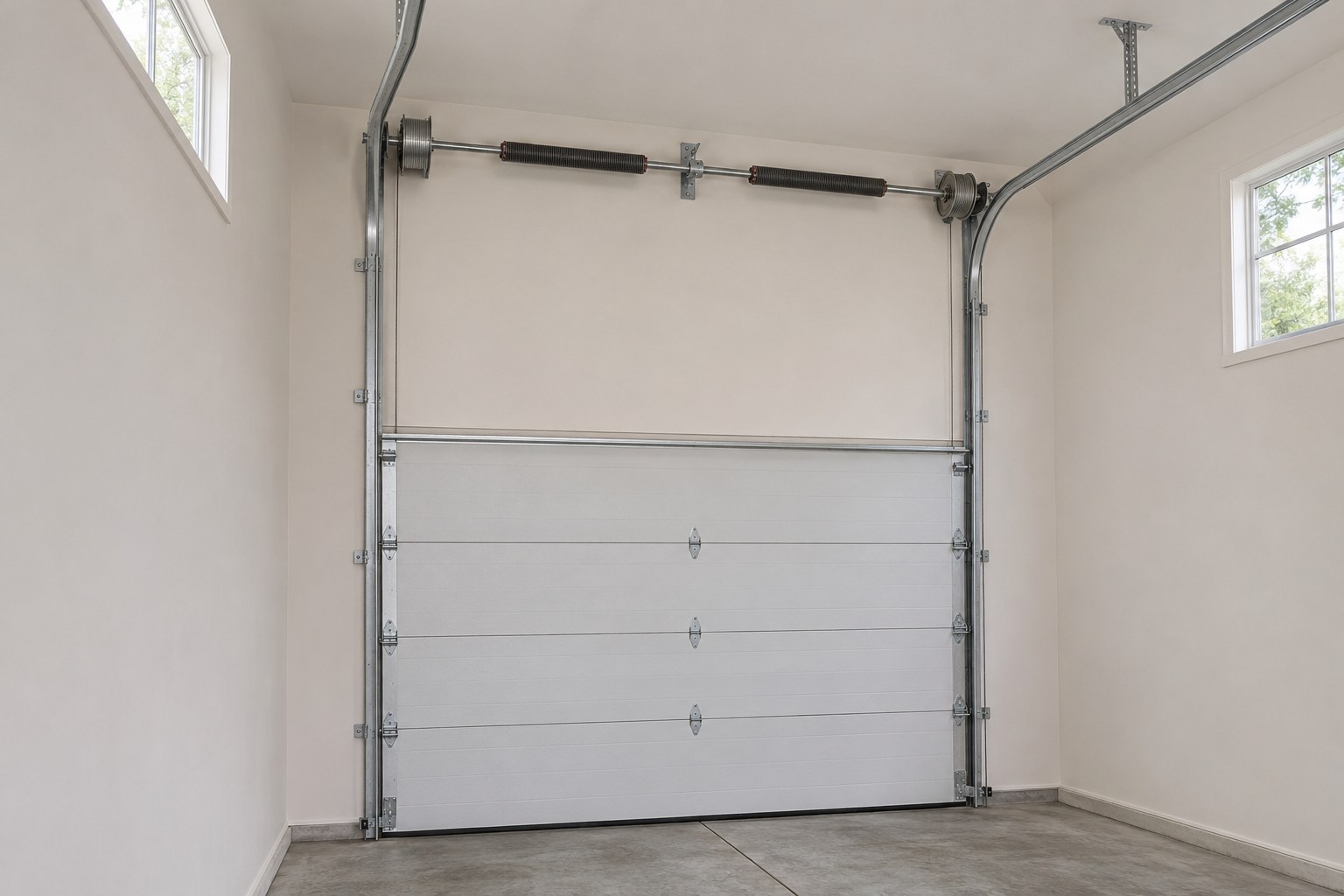
A high ceiling does not automatically make an existing garage door suitable for high lift. The goal is to change the door's travel path, not just move its existing rails higher. Treat the project as a matched door-system design, not a track-extension purchase.
Define the space you need
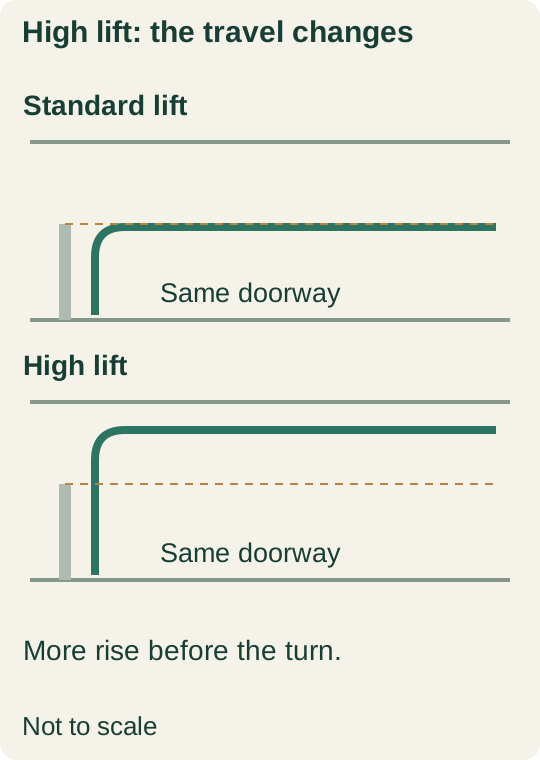
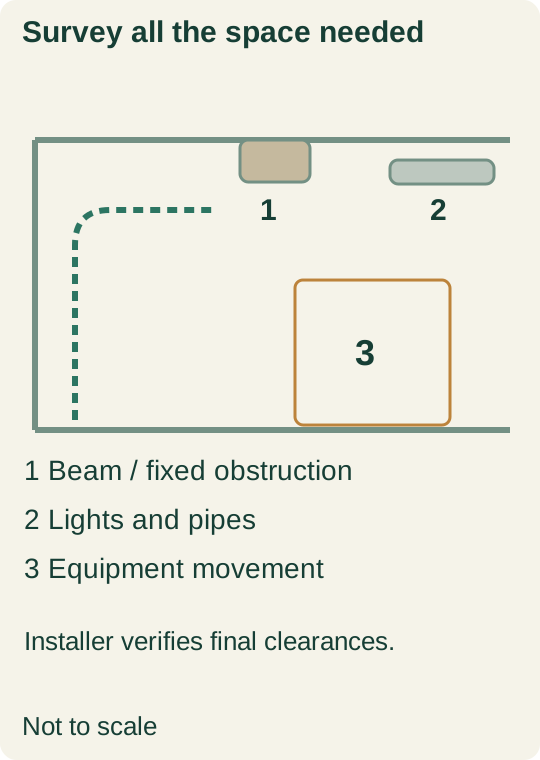
Write down the intended benefit: clearance above a work area, room for equipment, or removal of an overhead conflict. Include the equipment's full operating envelope, not only its parked height. Do not assume a high-lift conversion increases the height of the structural doorway; a taller vehicle still needs to pass through the existing opening.
 Open full diagram
Distinguish the track arrangements
High-lift travel rises farther above the opening before turning overhead. Vertical lift is a different arrangement; low-headroom track solves the opposite constraint. Manufacturer terminology and drawings matter more than a contractor's shorthand. Ask for a side-view drawing that shows the proposed door path in your garage.
Collect an unobstructed survey
From safe positions, photograph the closed door, the ceiling area and both side walls. Mark beams, lights, pipes, storage and equipment on a sketch. Give the installer the door and opener model numbers and your intended use. Do not move track supports or operate a damaged door to take measurements. A professional should verify final dimensions and mounting structure.
 Open full diagram
Request a coordinated proposal
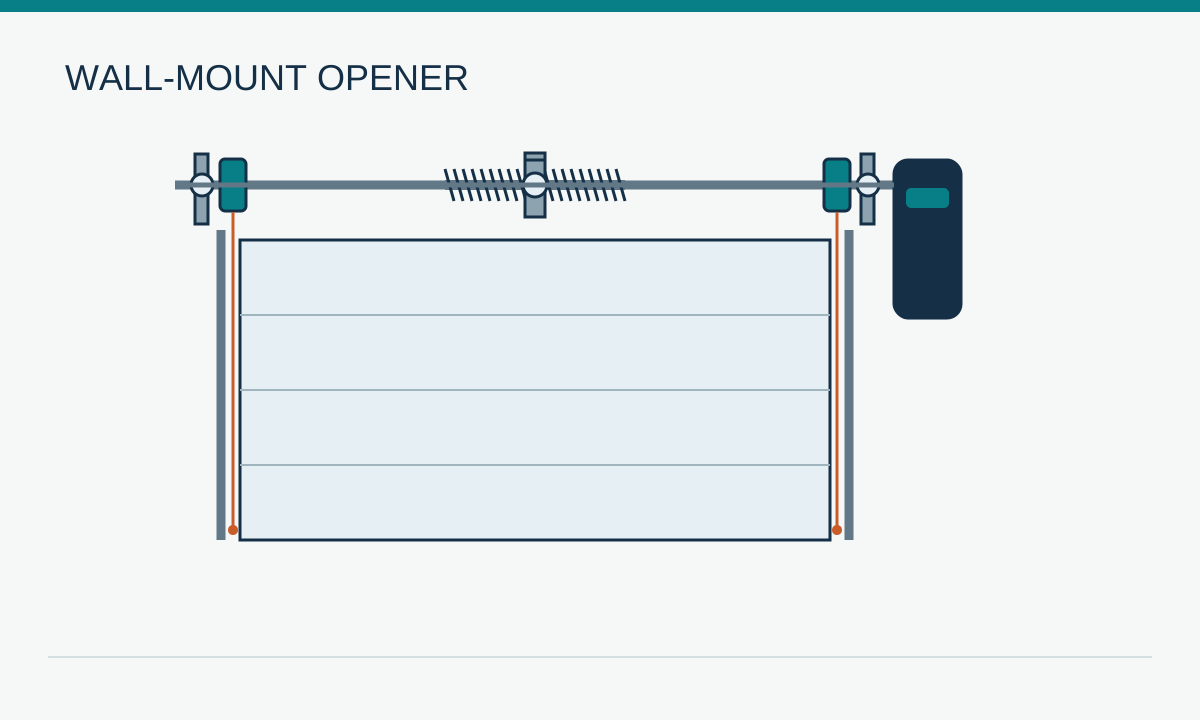
The proposal should identify the door sections being retained or replaced, track arrangement, counterbalance components and opener compatibility. Ask how cables, drums and spring selection will be evaluated for the changed travel. This is not permission to modify them yourself. A wall-mount opener is not a universal solution; exact door configuration and the operator manual still govern eligibility.
Compare scope, not just the headline price
Ask which electrical work, obstructions, finish repairs and commissioning tests are included. Separate an optional opener upgrade from equipment necessary for the conversion. Request a written explanation if the installer recommends retaining the current system instead. If the planned clearance is marginal, insist on a dimensioned design rather than a verbal promise.
Handover and alternatives
Before use, obtain the revised equipment details, demonstration of operation and required safety-test instructions. Review access for future maintenance. If conversion is unsuitable, consider changing equipment placement or a different approved door system; do not remove structural members to force a fit.
A useful quote-comparison checklist
- The proposed side-view path, with the unchanged doorway opening identified.
- All nearby obstructions and the full movement envelope of any equipment below.
- A list of retained and replaced components, with responsibility for compatibility.
- Included electrical work, finish repairs, commissioning and maintenance access.
Common questions
Does high lift make the doorway taller?
No. Changing the travel path does not enlarge the structural opening.
Is any wall-mount opener suitable?
No. Verify the exact door, track and opener combination with the manufacturer and installer.
Can I reuse all existing parts?
Only an assessment can establish that. Do not assume full reuse when comparing proposals.
Related Posts
If the ceiling is too low rather than high, see Garage Doors With Low Headroom: System Options and Constraints. Compare operator architecture in Wall-Mount and Jackshaft Openers: How They Work and When They Fit. Adding power to a manual door is a separate project covered in Can a Manual Garage Door Be Motorized?.
 Practical Guide
Garage Doors With Low Headroom: System Options and Constraints
Compare low-headroom track layouts, front and rear torsion, opener limitations and space conflicts before choosing a complete garage-door system.
 Practical Guide
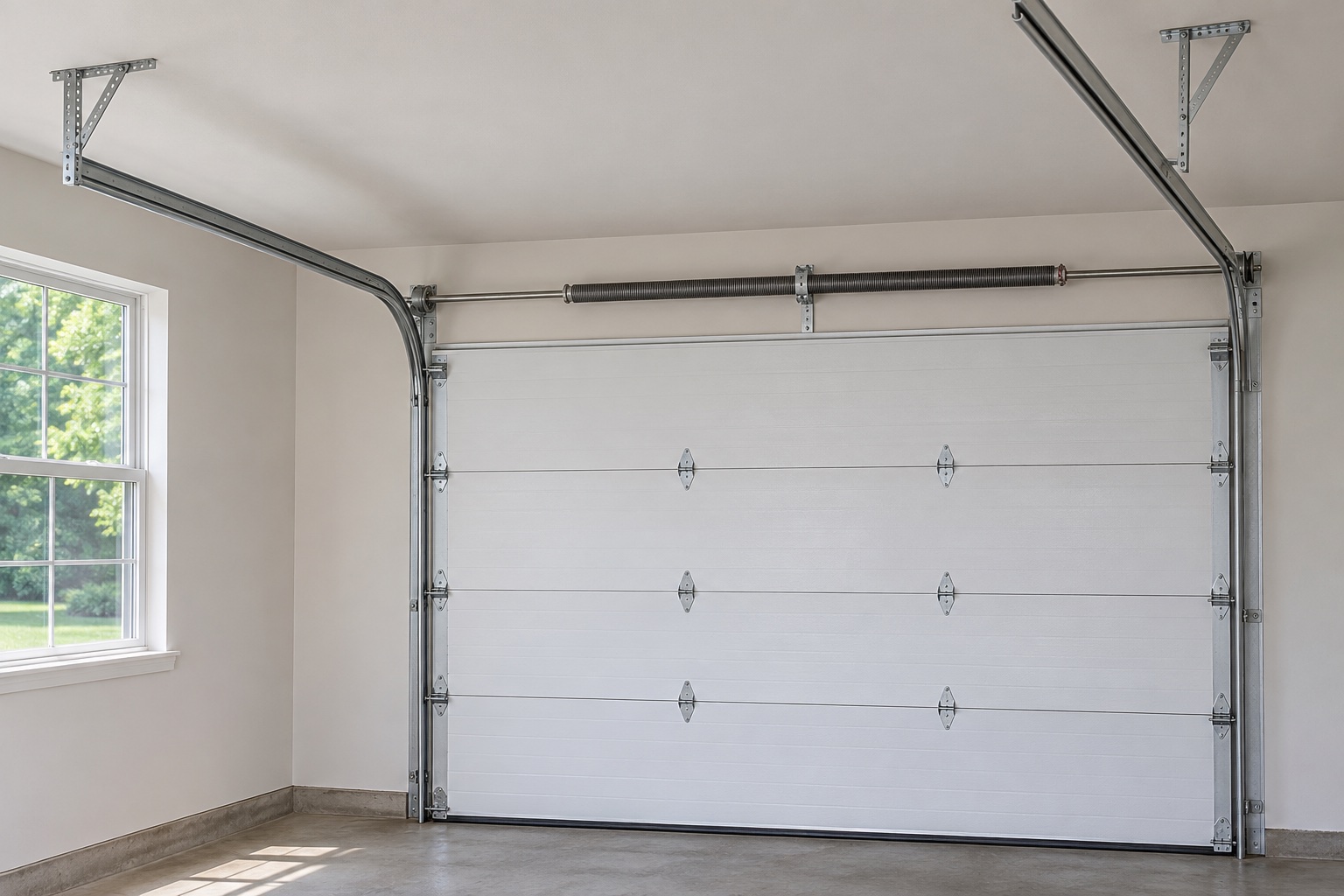
Wall-Mount and Jackshaft Openers: How They Work and When They Fit
Learn how wall-mount openers drive a torsion shaft and compare model-specific door, clearance, outlet, lock and sensor requirements before buying.
 Practical Guide
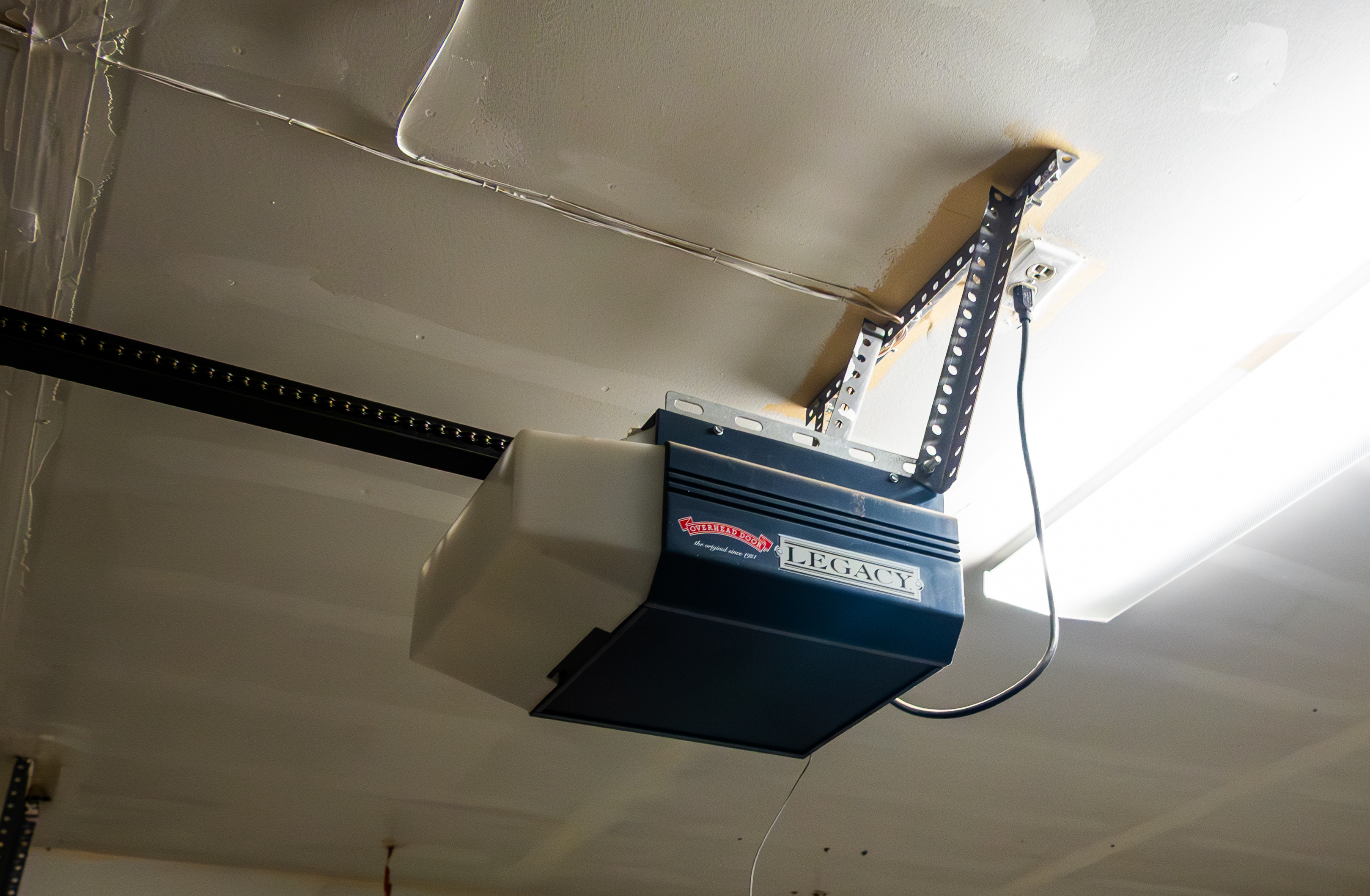
Can a Manual Garage Door Be Motorized?
Find out whether your existing manual garage door can accept an opener, what must change, and what to ask before buying conversion equipment.
 Practical Guide
Plan a Garage Door Opener Installation or Replacement
Prepare for an opener installation with a door assessment, compatible equipment, site survey, clear scope and a safety-focused professional handover.
 Practical Guide
Garage Door Screens: Choosing and Planning a Compatible System
Compare garage screen mechanisms, measure clearances, protect safety sensors, and plan safe operation before choosing a compatible system.
Sources
Manufacturer instructions and references for this guide. Match the document to your exact product.
- Clopay: track configurations and clearanceswww.clopaydoor.com